


Efficacy and safety of posteromedial translation for correction of thoracic curves in adolescent idiopathic scoliosis using a new connection to the spine: the Universal Clamp
- PMID: 19089466
- PMCID: PMC2899338
- DOI: 10.1007/s00586-008-0839-y
Efficacy and safety of posteromedial translation for correction of thoracic curves in adolescent idiopathic scoliosis using a new connection to the spine: the Universal Clamp
Abstract
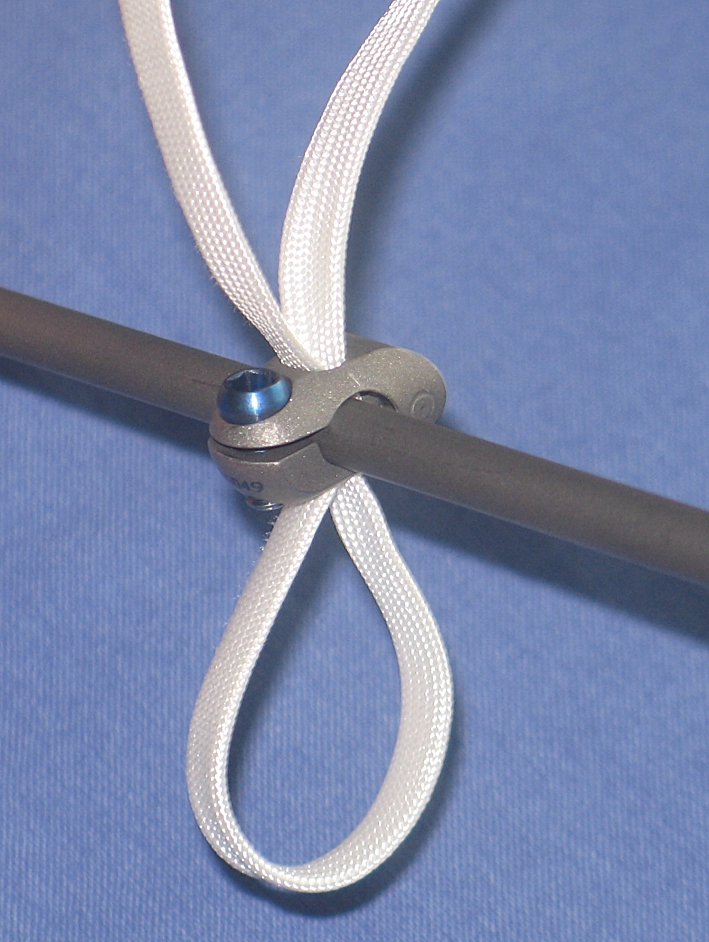
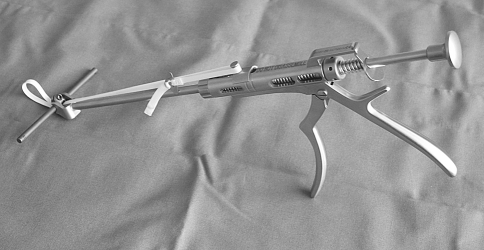
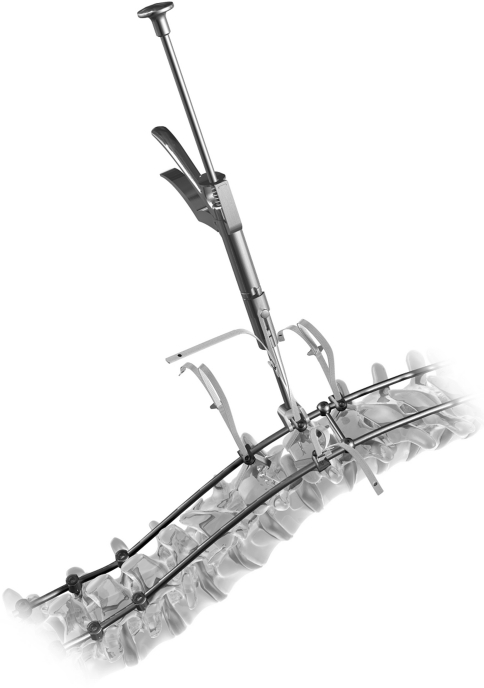
Correction of adolescent idiopathic scoliosis (AIS) has been reported with various systems. All-screw constructs are currently the most popular, but they have been associated with a significant decrease in thoracic kyphosis, with a potential risk of junctional kyphosis, not observed with hybrid constructs in the literature. In addition, it is important to weigh potential advantages of pedicle screw fixation against risks specific to its use. Because hybrid constructs are associated with a lower risk of complications and better sagittal correction than all-screw constructs, at present we use lumbar pedicle screws combined with a new sublaminar connection to the spine (Universal Clamps) at thoracic levels. The purpose of this study was to determine the efficacy and safety of the Universal Clamp (UC) posteromedial translation technique for correction of AIS. Seventy-five consecutive patients underwent posterior spinal fusion and hybrid instrumentation for progressive AIS. Correction was performed at the thoracic level using posteromedial translation. At the lumbar level, correction was performed using in situ contouring and compression/distractions maneuvers. A minimum 2-year follow-up was required. Medical data and radiographs were prospectively analyzed and compared using a paired t test. The average age at surgery was 15 years and 4 months (+/-19 months). The average number of levels fused was 12+/-1.6. The mean follow-up was 30+/-5 months. The average preoperative Cobb angle of the major curve was 60 degrees+/-20 degrees. The immediate postoperative major curve correction averaged 66+/-13%. The average loss of correction of the major curve between the early postoperative assessment and latest follow-up was 3.5 degrees+/-1.4 degrees . The mean Cincinnati correction index was 1.7+/-0.8 postoperatively, and 1.57+/-1 at last follow up. The mean rotation of the apical vertebra was corrected from 23.3 degrees+/-9 degrees preoperatively to 7.3 degrees+/-5 degrees at last follow up (69% improvement, P<0.0001). In the sagittal plane, the mean thoracic kyphosis improved from 23.8 degrees+/-14.2 degrees preoperatively to 32.3 degrees+/-7.3 degrees at last follow up. For the 68 patients who had a normokyphotic or a hypokyphotic sagittal modifier, thoracic kyphosis increased from 20.5 degrees+/-9.9 degrees to 31.8 degrees+/-7.4 degrees, corresponding to a mean kyphosis correction of 55% at last follow up. No intraoperative complication occurred and none of the patients developed proximal junctional kyphosis during the follow up. The principal limitation of the UC technique was the rate of proximal posterior prominence (14.6%), leading us to recommend the use of conventional claws at the upper extremity of the construct. The technique was safe, and reduced operative time, radiation exposure, and blood loss. While achieving correction of deformity in the coronal and axial planes equivalent to the best reported results of all-screw or previous hybrid constructs, the UC hybrid technique appears to provide superior correction in the sagittal plane. The excellent outcome in all three planes was maintained at 2 year follow up.
Figures
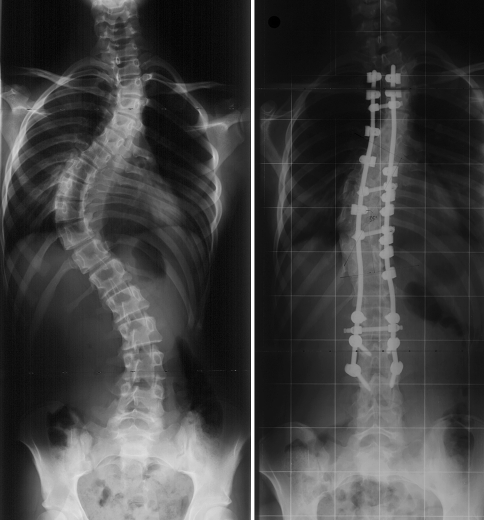
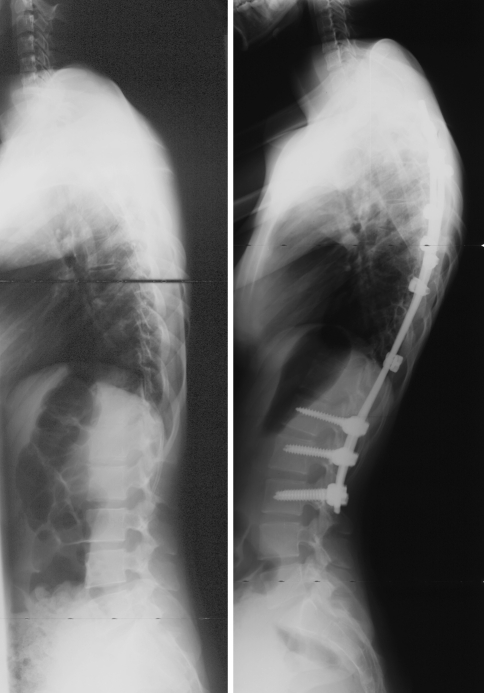
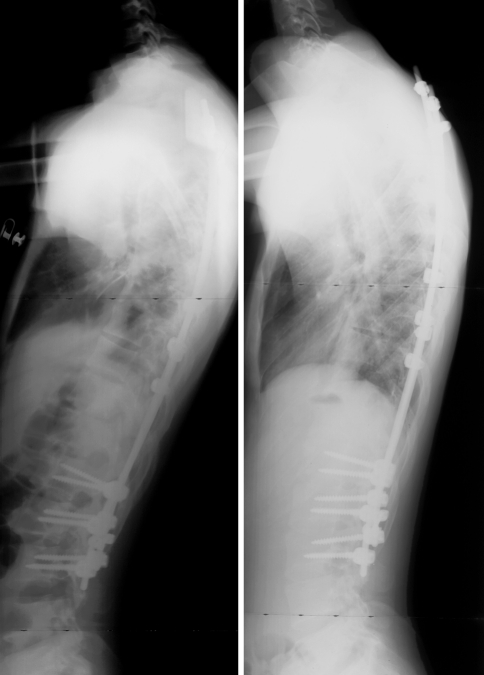
References
-
- Asher MA. Isola spinal instrumentation system for scoliosis. In: Bridwell KH, DeWald RL, editors. The textbook of spinal surgery. Philadelphia: Lippincott-Raven; 1997. pp. 596–606.
-
- Cheng I, Kim Y, Gupta MC, Bridwell KH, Hurford RK, Lee SS, Theerajunyaporn T, Lenke LG. Apical sublaminar wires versus pedicle screws—which provides better results for surgical correction of adolescent idiopathic scoliosis? Spine. 2005;30:2104–2112. doi: 10.1097/01.brs.0000179261.70845.b7. - DOI - PubMed
Publication types
MeSH terms
LinkOut - more resources
Full Text Sources
Other Literature Sources
Medical
