


Methionine depletion with recombinant methioninase: in vitro and in vivo efficacy against neuroblastoma and its synergism with chemotherapeutic drugs
- PMID: 19089915
- PMCID: PMC2700741
- DOI: 10.1002/ijc.24104
Methionine depletion with recombinant methioninase: in vitro and in vivo efficacy against neuroblastoma and its synergism with chemotherapeutic drugs
Abstract
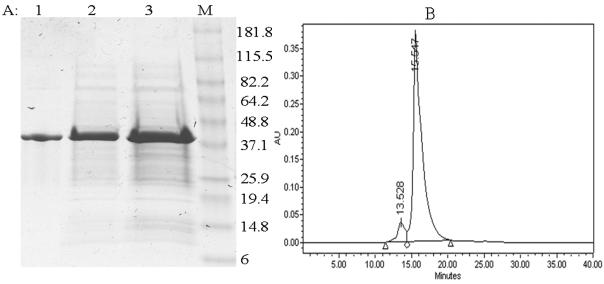
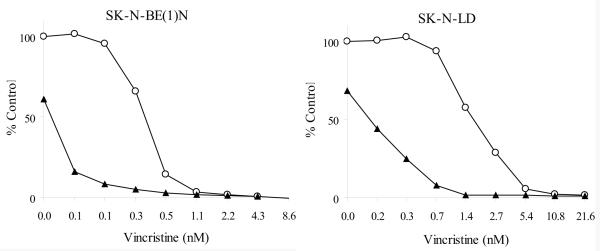
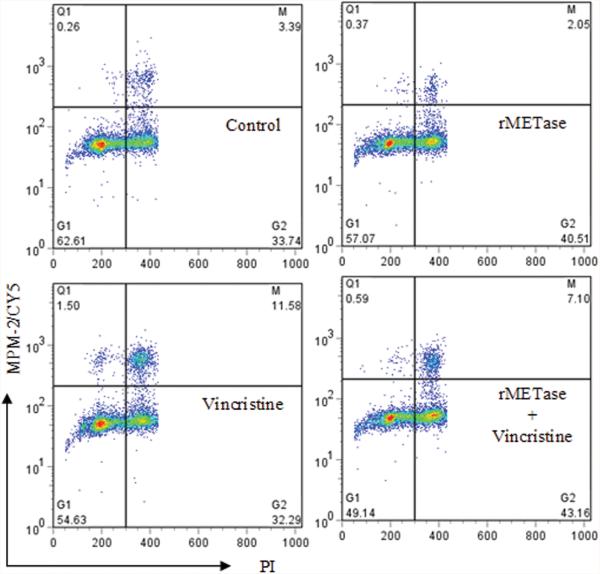
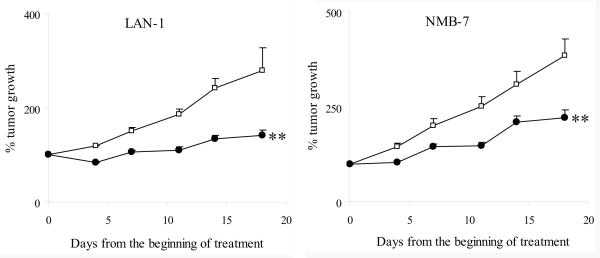
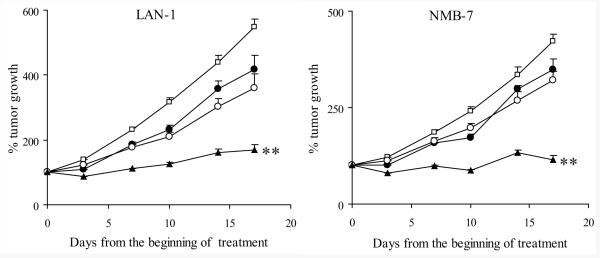
Methionine starvation can modulate gene methylation, cell cycle transition and pathways related to survival following DNA damage. Methionine depletion by recombinant methioninase (rMETase) may have in vitro and in vivo efficacy against neuroblastoma (NB), especially when combined with chemotherapeutic drugs. rMETase from Pseudomonas putida was produced in Escherichia coli and purified by ion-exchange chromatography. rMETase alone inhibited the proliferation of 15/15 NB cell lines in vitro. Among these 15 cell lines, only 66N demonstrated rMETase-induced apoptosis. rMETase alone suppressed LAN-1 and NMB-7 xenografts (p < 0.01) and no toxicities were noted other than reversible weight loss. In vitro efficacy experiments combining rMETase and chemotherapeutic agents were carried out using SK-N-LD and SK-N-BE (1)N established at diagnosis, as well as LAN-1, SK-N-BE (2)C and NMB-7 established at relapse. Microtubule depolymerization agents including vincristine, vinorelbine, vinblatine and mebendazole showed synergism when tested in combination with rMETase in all 5 cell lines. Among DNA damaging agents, synergy with rMETase was observed only in cell lines established at diagnosis and not at relapse. Cell cycle analysis showed that rMETase arrested G2 phase and not M phase. In vivo efficacy experiments using LAN-1 and NMB-7 xenografts showed that rMETase rendered vincristine more effective than vincristine alone in tumor growth suppression (p < 0.001). In conclusion, methionine depletion inhibited NB proliferation and arrested tumor cells at G2 phase. rMETase synergized with microtubule depolymerization agents. Moreover, synergism between rMETase and DNA damaging agents was dependent on whether cell lines were established at diagnosis or at relapse.
Figures
References
-
- Guo H, Lishko VK, Herrera H, Groce A, Kubota T, Hoffman RM. Therapeutic tumor-specific cell cycle block induced by methionine starvation in vivo. Cancer Res. 1993;53:5676–9. - PubMed
-
- Stern PH, Hoffman RM. Enhanced in vitro selective toxicity of chemotherapeutic agents for human cancer cells based on a metabolic defect. J Natl Cancer Inst. 1986;76:629–39. - PubMed
-
- Breillout F, Antoine E, Poupon MF. Methionine dependency of malignant tumors: a possible approach for therapy. J Natl Cancer Inst. 1990;82:1628–32. - PubMed
Publication types
MeSH terms
Substances
Grants and funding
LinkOut - more resources
Full Text Sources
Other Literature Sources
Medical
Research Materials
