


Using a website to build community and enhance outcomes in a group, multi-component intervention promoting healthy diet and exercise in adolescents
- PMID: 19091807
- PMCID: PMC2722139
- DOI: 10.1093/jpepsy/jsn126
Using a website to build community and enhance outcomes in a group, multi-component intervention promoting healthy diet and exercise in adolescents
Abstract
Objective: This article describes website use and behavioral outcomes in a multi-component lifestyle intervention promoting healthy diet and exercise.
Methods: A 2-year randomized clinical trial to improve bone density in 228 adolescent girls, the intervention included a website designed to enhance intervention adherence, retention of participants, and behavioral outcomes. Measures included diet and exercise recalls, surveys, and web-usage data.
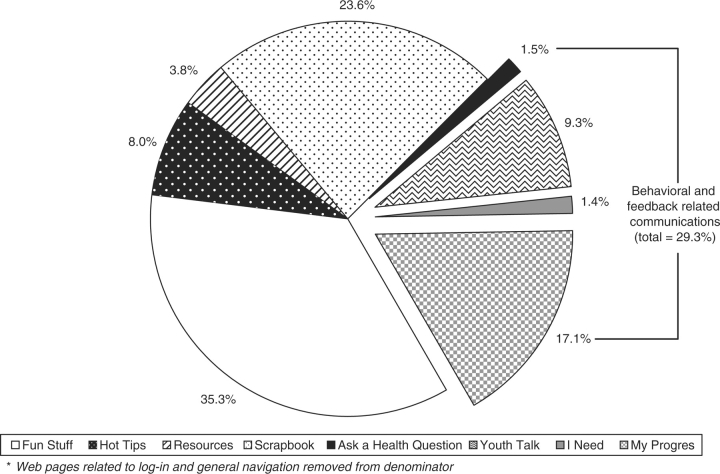
Results: Website use was associated with increases in calcium intake (ss = 69.72, p =.01, ES = 0.15) and high-impact activity (ss = 10.93, p =.04, ES =.13). Use of web pages related to behavioral feedback and communications was not significantly associated with behavioral outcomes. The most visited website pages had content related to incentive points, caption contests, and fun facts.
Conclusions: Web elements of a multi-component intervention may promote retention and engagement in target behaviors. Such websites may be most acceptable to adolescent participants if they blend fun and behavioral elements, rather than exclusively focusing on behavioral changes.
Figures
References
-
- Baranowski T, Baranowski JC, Cullen KW, Thompson DI, Nicklas T, Zakeri IE, et al. The Fun, Food, and Fitness Project (FFFP): the Baylor GEMS pilot study. Ethnicity & Disease. 2003;13:S30–S39. - PubMed
-
- Barrera M, Jr, Glasgow RE, McKay HG, Boles SM, Feil EG. Do Internet-based support interventions change perceptions of social support?: An experimental trial of approaches for supporting diabetes self-management. American Journal of Community Psychology. 2002;30:637–654. - PubMed
-
- Blum M, Harris SS, Must A, Phillips SM, Rand WM, Dawson-Hughes B. Weight and body mass index at menarche are associated with premenopausal bone mass. Osteoporosis International. 2001;12:588–594. - PubMed
-
- Brown BB, Eicher SA, Petrie S. The importance of peer group (“crowd”) affiliation in adolescence. Journal of Adolescence. 1986;9:73–96. - PubMed
