. 2009 May;34(6):1609-24.
doi: 10.1038/npp.2008.220. Epub 2008 Dec 17.

Nicotine exposure during adolescence induces a depression-like state in adulthood

Affiliations

Nicotine exposure during adolescence induces a depression-like state in adulthood

Sergio D Iñiguez et al. Neuropsychopharmacology. 2009 May.

Abstract

There is a strong link between tobacco consumption and mood disorders. It has been suggested that afflicted individuals smoke to manage mood, however, there is evidence indicating that tobacco consumption can induce negative mood. This study was designed to investigate whether nicotine exposure during adolescence influences emotionality/behavioral functioning later in life. Adolescent (postnatal days, PD 30-44) male rats were treated with twice-daily injections of nicotine (0, 0.16, 0.32, or 0.64 mg/kg) for 15 consecutive days, and their behavioral reactivity to various behavioral paradigms (the elevated plus maze (EPM), sucrose preference, locomotor activity in the open field, and forced swim test (FST) was assessed 24 h (short term) or 1-month (long term) after exposure. Separate groups of adult rats received nicotine (0.32 mg/kg) to control for age-dependent effects. We report that nicotine exposure during adolescence-but not adulthood-leads to a depression-like state manifested in decreased sensitivity to natural reward (sucrose), and enhanced sensitivity to stress- (FST) and anxiety-eliciting situations (EPM) later in life. Our data show that behavioral dysregulation can emerge 1 week after drug cessation, and that a single day of nicotine exposure during adolescence can be sufficient to precipitate a depression-like state in adulthood. We further demonstrate that these deficits can be normalized by subsequent nicotine (0.32 mg/kg) or antidepressant (ie fluoxetine or bupropion; 10 mg/kg) treatment in adulthood. These data suggest that adolescent exposure to nicotine results in a negative emotional state rendering the organism significantly more vulnerable to the adverse effects of stress. Within this context, our findings, together with others indicating that nicotine exposure during adolescence enhances risk for addiction later in life, could serve as a potential model of comorbidity.


Figures
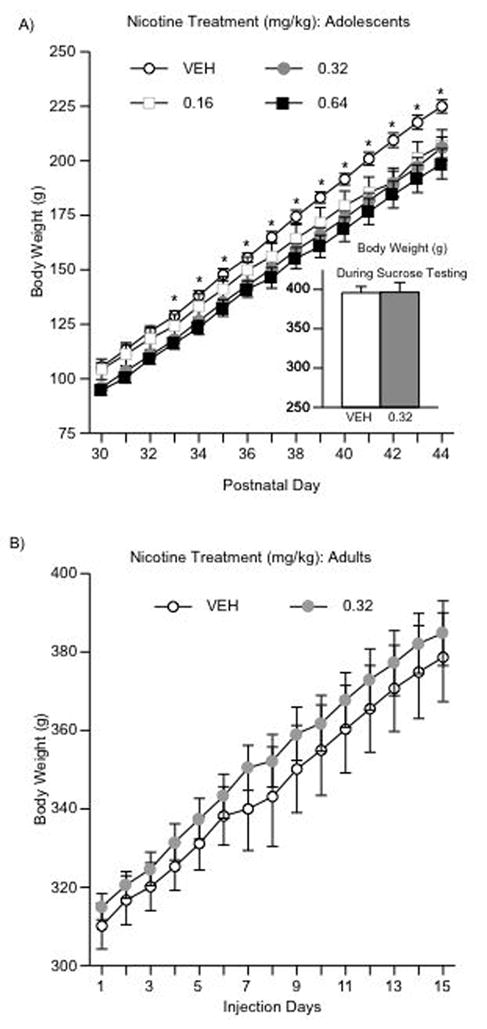
Figure 1
Figure 1
Effects of NIC on weight gain (AB). (A) Adolescents (n = 32): body weight increased across days regardless of condition, and NIC treatment resulted in significantly lower weight gain when compared to control rats. *Significantly different from NIC-treated rats (p < 0.05). (B) Adults (n = 14): no difference in body weight after NIC (0.32 mg/kg) was apparent. Data are presented average weight gain across days and drug treatment (mean ± SEM, in g).
Figure 2
Figure 2
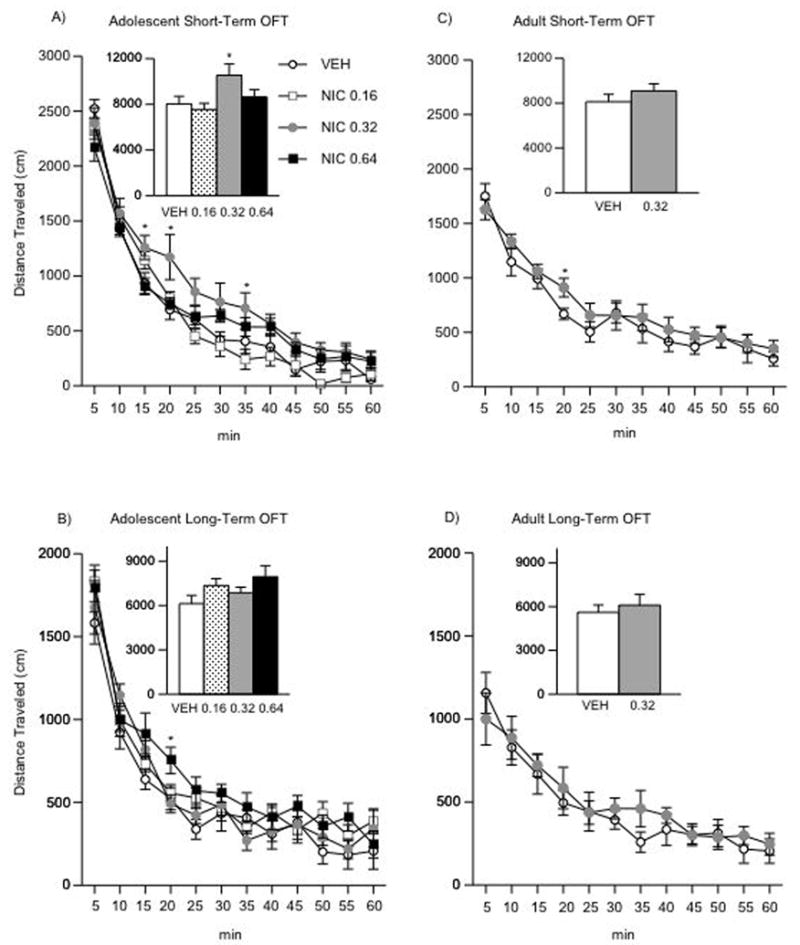
Effects of NIC exposure on locomotor activity (AD). (A) Short-term adolescent (n = 37): rats exposed to 0.32 mg/kg NIC and tested 24 h after treatment had significantly higher levels of distance traveled for the first 30 min of the test: *p < 0.05: different from VEH and the 0.16, 0.64 NIC groups. (B) Long-term adolescent (n = 26): no difference in locomotor activity was observed in adult rats exposed to VEH or NIC during adolescence. (C) Short-term adults (n = 14): NIC (0.32 mg/kg) had no effects on distance traveled in adult rats tested 24 h after exposure. (D) Long-term adults (n = 12): NIC (0.32 mg/kg) had no effects on distance traveled in adult rats tested 4 weeks after exposure. Data are presented as mean total distance traveled (mean ± SEM, in cm).
Figure 3
Figure 3
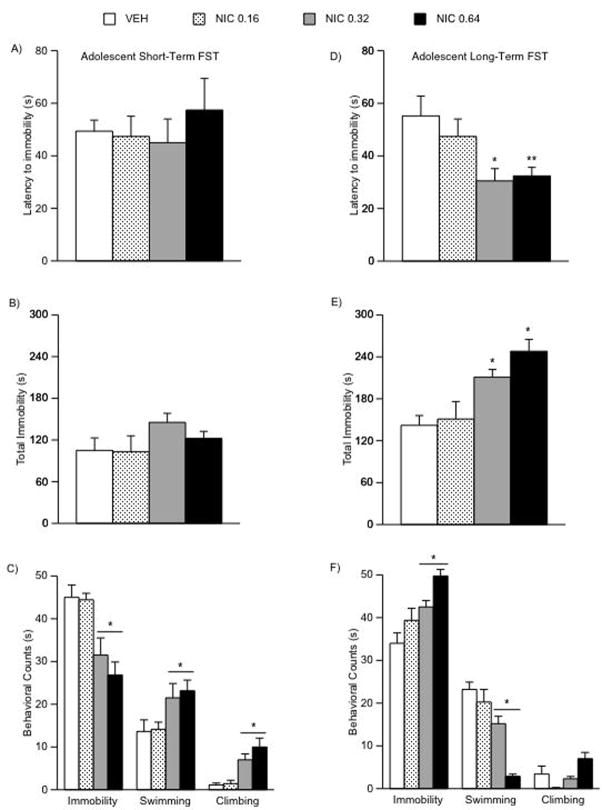
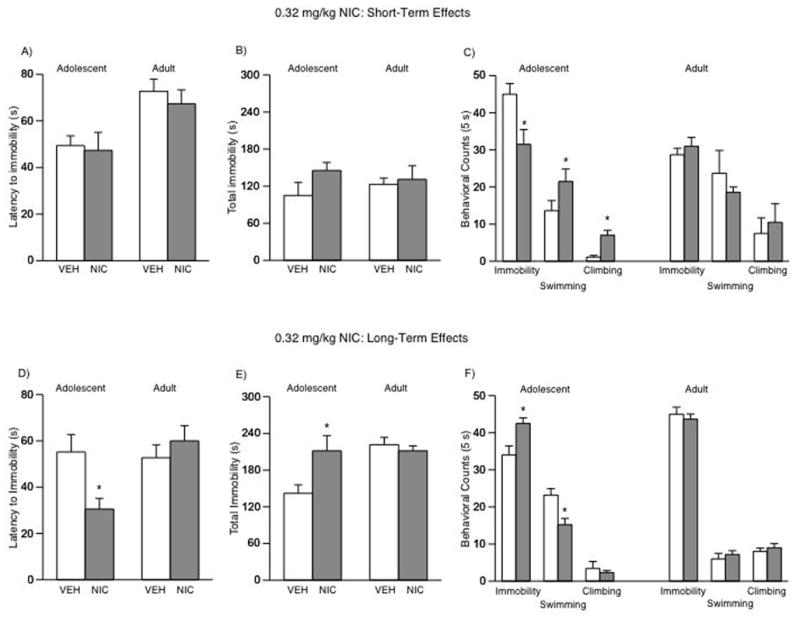
Effects of NIC exposure during adolescence on forced swimming behaviors (AF). (A) Short-term (n = 30): no significant differences in latency or (B) total immobility were found in NIC-exposed adolescent rats tested 24 h after exposure. (C) Rats exposed to 0.32 or 0.64 mg/kg NIC had significantly lower immobility, and significantly higher swimming and climbing counts (*p < 0.05: different from VEH and 0.16 NIC). (D) Long-term (n = 36): adult rats exposed to 0.32 (*p < 0.05) or 0.64 (**p < 0.05) mg/kg NIC during adolescence had significantly shorter latency to immobility than the VEH and the 0.16 NIC rats on day 2 of the FST. (E) These rats show higher levels of total immobility and (E) immobility counts, and lower levels of swimming and climbing (*p < 0.05: different from VEH and 0.16 NIC). Data are presented as latencies to become immobile, total immobility (in seconds), swimming and climbing counts (mean ± SEM).
Figure 4
Figure 4
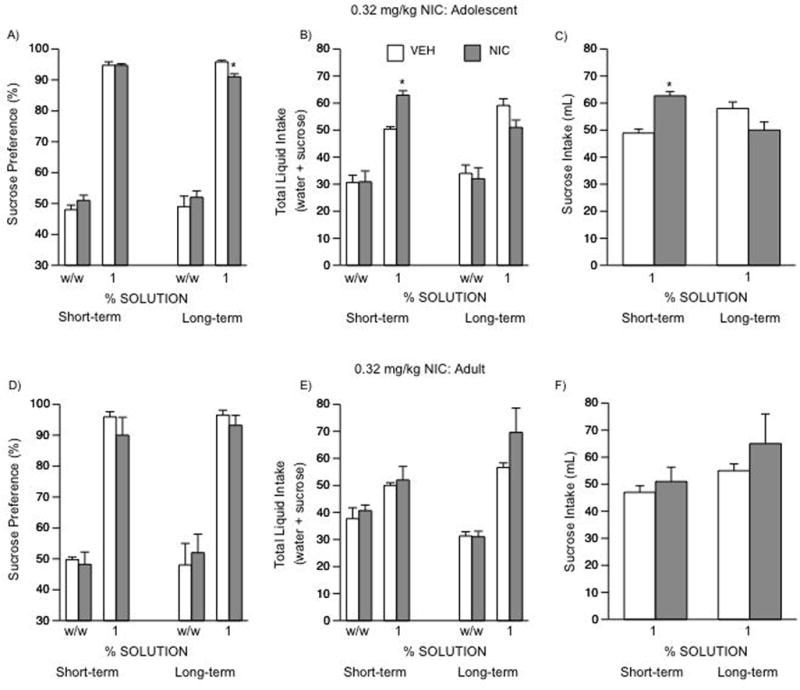
Effects of NIC exposure in adolescent and adult rats on sucrose preference (AF). No differences in bottle/side preference (w/w) were observed across the various groups. Short-term (n = 16): (A: left panel) no differences in sucrose preference detected in adolescent rats 24 h after NIC exposure. (B: left panel) these rats showed significantly higher levels of total liquid (sucrose + water) intake (*p < 0.05), and (C: left panel) total sucrose consumed (*p < 0.05) than the VEH-treated rats. Long-term (n = 20): (A: right panel) adolescent treatment with NIC (0.32 mg/kg) resulted in a significant decrease in sucrose preference in adulthood (*p < 0.05). These rats showed no differences in total liquid (sucrose + water) intake (B: right panel), or (C: right panel) in total sucrose consumed. Adult rats short-term (n = 14): no differences in sucrose preference detected (DF: left panel). Adult rats long-term (n = 14): no differences in sucrose preference detected (DF: right panel). Data are presented as percent preference or total mL consumed between VEH- and NIC-exposed rats.
Figure 5
Figure 5
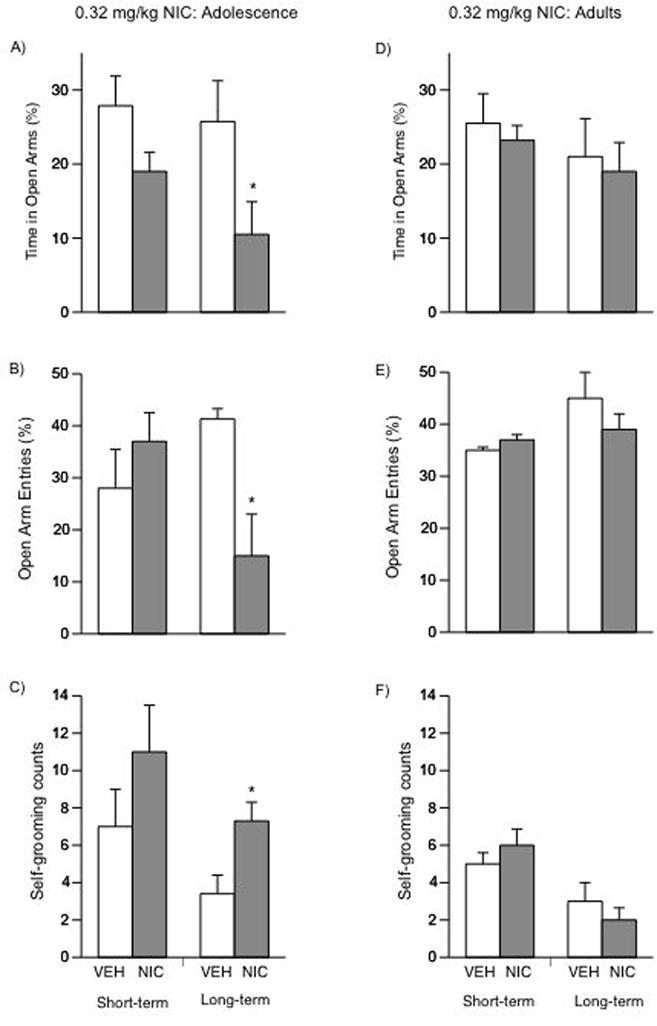
Effects of NIC exposure in adolescent and adult rats on anxiety-like behaviors in the EPM (AF). Short-term (n = 15): (A: left panel) no differences in time spent in the open arms of the EPM were observed in adolescent rats. No changes in entries into the open arms (B: left panel) or self-grooming in the closed arms (C: left panel) were detected. Long-term (n = 16): (A: right panel) adolescent rats treated with NIC and tested in adulthood showed a significant decrease in time spent in the open arms of the EPM when compared to controls (*p < 0.05). (B: right panel) these rats demonstrated significant decreases in the percent of entries into the open arms of the EPM (*p < 0.05), and (C: right panel) increased self-grooming behavior (*p < 0.05) as compared to controls. Adult rats short-term (n = 12): NIC exposure had no short-term effects in adult rats (DF: left panel). Adult rats long-term (n = 14): NIC had no long-terms effects in adult rats (DF: right panel). Data are presented as percent time spent (mean ± SEM) and percent entries into the open arms, and as self-grooming counts (mean ± SEM) in the closed arms.
Figure 6
Figure 6
Effects of NIC exposure in adolescent and adult rats on behavioral responsivity to forced swim stress (AF). Note that the data for adolescent rats (short- and long-term) are the same as presented in Figure 3 (0.32 mg/kg). Short-term (n = 16): (A: left panel) no significant differences in latency to immobility or (B: left panel) total immobility were found in adolescent rats exposed to 0.32 mg/kg NIC and tested 24 h after treatment. (C: left panel) these rats had significantly lower levels of immobility, and higher swimming and climbing counts (*p < 0.05: different from VEH). Long-term (n = 20): (D: left panel) rats exposed to NIC during adolescence and tested as adults had significantly shorter latency to immobility than the VEH rats (*p < 0.05) on day 2 of the FST. (E: right panel) these rats also show significantly higher levels of total immobility and (F: right panel) immobility counts, while showing lower levels of swimming and climbing (*p < 0.05: different from VEH). No significant differences found in rats treated with NIC as adults and tested at the short- (n = 16) or long-term (n = 18) time points (AF). Data are presented as latencies to become immobile, total immobility (in seconds) or swimming counts (mean ± SEM).
Figure 7
Figure 7
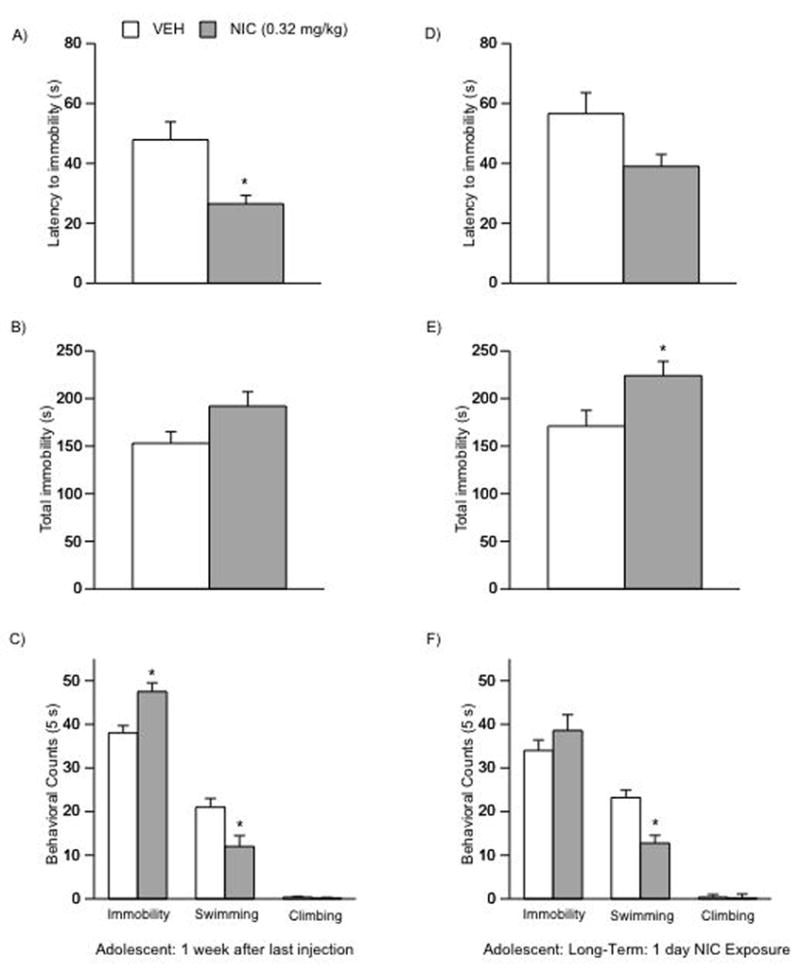
Effects of NIC exposure in adolescent rats: 1-week after chronic exposure (AC), and 1-month after a single day of exposure (DF) on behavioral responsivity in the FST. After 1-week (n = 18): (A) NIC resulted in a significant decrease in latency to immobility of day 2 of the FST (*p < 0.05: different from VEH). (C) These rats show significantly higher immobility counts (*p < 0.05) and lower swimming counts (*p < 0.05) when compared to controls. 1-month after a single day exposure (n = 18): (D) these rats show no statistical significant changes in latency to immobility, (E) but demonstrate significantly higher levels of total immobility (*p < 0.05), and (F) lower swimming counts (*p < 0.05) when compared to controls. Data are presented as latencies to become immobile, total immobility (in seconds) or swimming counts (mean ± SEM).
Figure 8
Figure 8
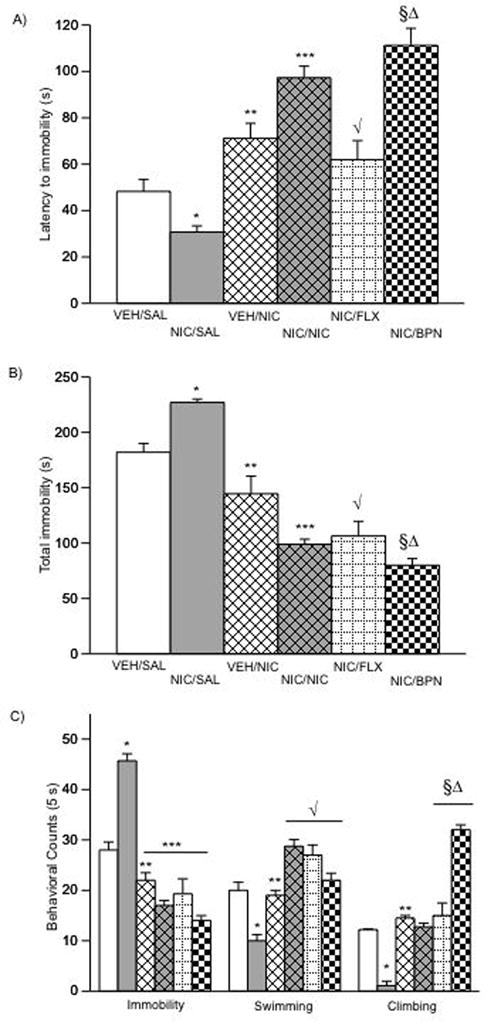
NIC, FLX, and BPN reverse NIC-induced behavioral deficits on behavioral responsivity in the FST (AC). (A) NIC significantly decreased latency to immobility (*p < 0.05 vs. VEH/SAL). NIC (***p < 0.05), and BPN (§p < 0.05) significantly increased latency to immobility when compared to the VEH/SAL and NIC/SAL groups. (**p < 0.05 vs. NIC/SAL; √p < 0.05 vs. NIC/SAL; §Δp < 0.05 vs. VEH/NIC and NIC/FLX.) (B) Complementary pattern of results as measured by total immobility, as well as (C) immobility (**p < 0.05 vs. NIC/SAL; ***p < 0.05 vs. NIC/SAL), swimming (*p < 0.05 vs. VEH/SAL; **p < 0.05 vs. NIC/NIC and NIC/FLX; √p < 0.05 vs. NIC/SAL), and climbing counts (*p < 0.05 vs. VEH/SAL; **p < 0.05 vs. NIC/SAL; §Δp < 0.05 vs. all other conditions; n = 48). Data are presented as latencies to become immobile, total immobility (in seconds) or swimming counts (mean ± SEM).

References

    1. Abreu-Villaca Y, Seidler FJ, Tate CA, Slotkin TA. Nicotine is a neurotoxin in the adolescent brain: critical periods, patterns of exposure, regional selectivity, and dose thresholds for macromolecular alterations. Brain Res. 2003;979(1–2):114–128. - PubMed
    1. Adriani W, Deroche-Gamonet V, Le Moal M, Laviola G, Piazza PV. Preexposure during or following adolescence differently affects nicotine-rewarding properties in adult rats. Psychopharmacology (Berl) 2006;184(3–4):382–390. - PubMed
    1. Adriani W, Laviola G. Windows of vulnerability to psychopathology and therapeutic strategy in the adolescent rodent model. Behav Pharmacol. 2004;15(5–6):341–352. - PubMed
    1. Adriani W, Spijker S, Deroche-Gamonet V, Laviola G, Le Moal M, Smit AB, et al. Evidence for enhanced neurobehavioral vulnerability to nicotine during periadolescence in rats. J Neurosci. 2003;23(11):4712–4716. - PMC - PubMed
    1. Alvarado GF, Breslau N. Smoking and young people’s mental health. Curr Opin Psychiatry. 2005;18(4):397–400. - PubMed

Publication types

MeSH terms