Review
. 2009 Feb;8(2):754-69.
doi: 10.1021/pr800858h.

A perspective on the Maillard reaction and the analysis of protein glycation by mass spectrometry: probing the pathogenesis of chronic disease

Affiliations
Review

A perspective on the Maillard reaction and the analysis of protein glycation by mass spectrometry: probing the pathogenesis of chronic disease

Qibin Zhang et al. J Proteome Res. 2009 Feb.

Abstract

The Maillard reaction, starting from the glycation of protein and progressing to the formation of advanced glycation end-products (AGEs), is implicated in the development of complications of diabetes mellitus, as well as in the pathogenesis of cardiovascular, renal, and neurodegenerative diseases. In this perspective review, we provide an overview on the relevance of the Maillard reaction in the pathogenesis of chronic disease and discuss traditional approaches and recent developments in the analysis of glycated proteins by mass spectrometry. We propose that proteomics approaches, particularly bottom-up proteomics, will play a significant role in analyses of clinical samples leading to the identification of new markers of disease development and progression.


Figures
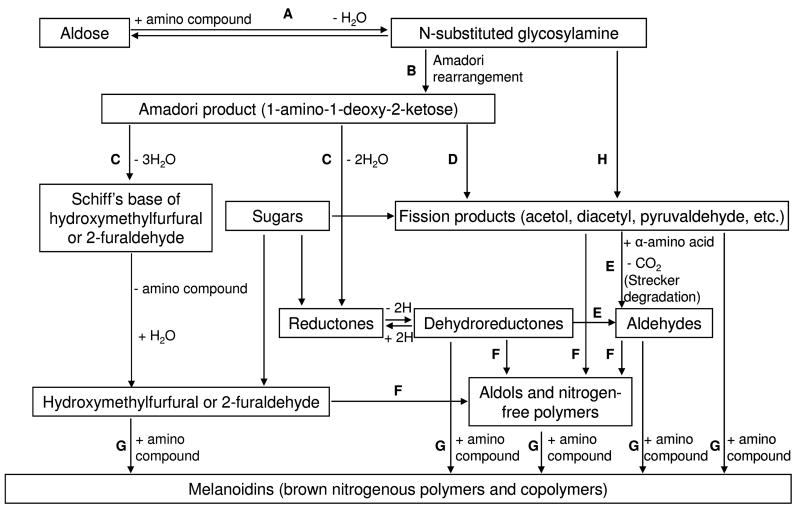
Figure 1
Figure 1. The Hodge Diagram
A) The initial reaction between a reducing sugar and amino group forms an unstable Schiff base; B) The Schiff base slowly rearranges to form the Amadori product; C) Degradation of the Amadori product; D) Formation of reactive carbonyl and dicarbonyl compounds; E) Formation of Strecker aldehydes of amino acids and aminoketones; F) Aldol condensation of furfurals, reductones, and aldehydes produced in Steps C, D, and E without intervention of amino compounds; G) Reaction of furfurals, reductones, and aldehydes produced in Steps C, D, and E with amino compounds to form melanoidins; H) Free radical-mediated formation of carbonyl fission products from the reducing sugar (Namiki pathway)., Reproduced from Trends in Food Science and Technology, 1, Ames JM, Control of the Maillard reaction in food systems, pp. 150–154, 1990, with permission from Elsevier.
Figure 2
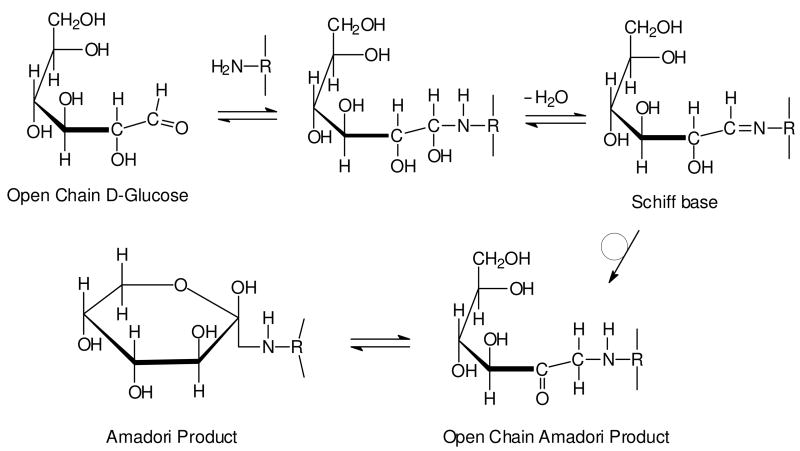
Figure 2. Reaction between glucose and amino group of protein to form the Amadori product
Nucleophilic attack by a free amino group of protein on the aldehyde of glucose initially forms a carbinolamine, which subsequently dehydrates to a Schiff base. The Schiff base then undergoes a slow rearrangement to form the Amadori product. While only a single cyclic isoform of the Amadori product is shown, it is important to note that it exists as a mixture of several isoforms.
Figure 3
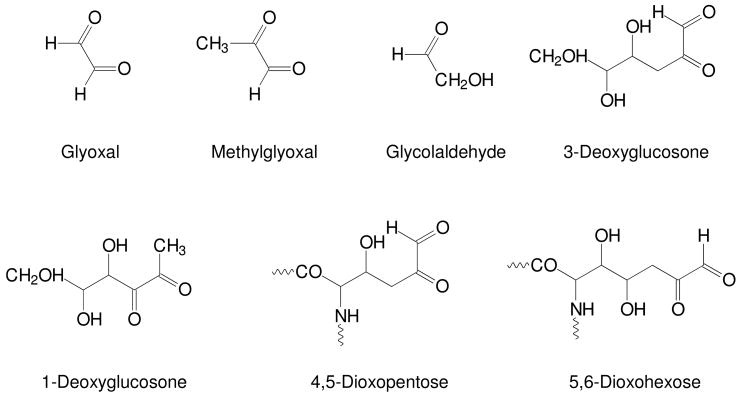
Figure 3. Representative intermediate glycation products
Oxidative decomposition of the Amadori product leads to the formation of a wide range of reactive carbonyl and dicarbonyl compounds. These intermediate glycation products (IGPs) include glyoxal, methylglyoxal, glycolaldehyde, 3-deoxyglucosone, 1-deoxyglucosone, 4,5-dioxopentose, and 5,6-dioxohexose. These IGPs can also be produced by autoxidation of glucose or, in the case of glyoxal and methylglyoxal, by peroxidation of lipids.
Figure 4
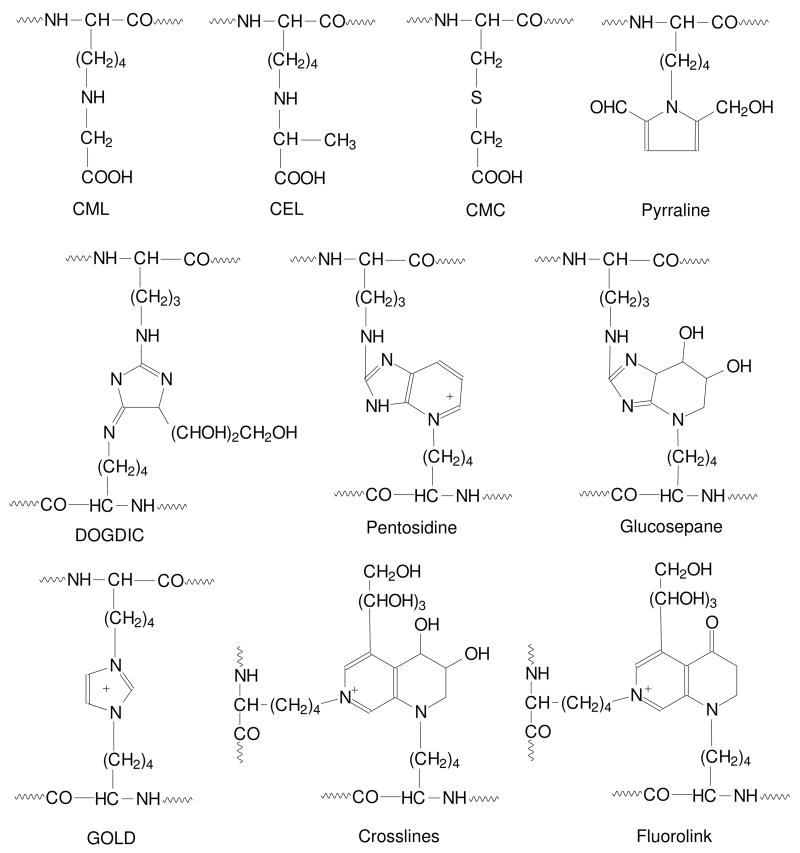
Figure 4. Representative advanced glycation end-products
Oxidative decomposition of the Amadori product or reaction of tissue proteins with reactive carbonyl and dicarbonyl compounds can lead to the formation of advanced glycation end-products (AGEs). AGEs include Nε-(carboxymethyl)lysine (CML), Nε-(carboxylethyllysine) (CEL), S-(carboxymethyl)cysteine (CMC), pyrraline, 3-deoxyglucosone-derived imidazolium crosslink (DOGDIC), pentosidine, glucosepane, glyoxal lysine dimer (GOLD), crosslines, and fluorolink.
Figure 5
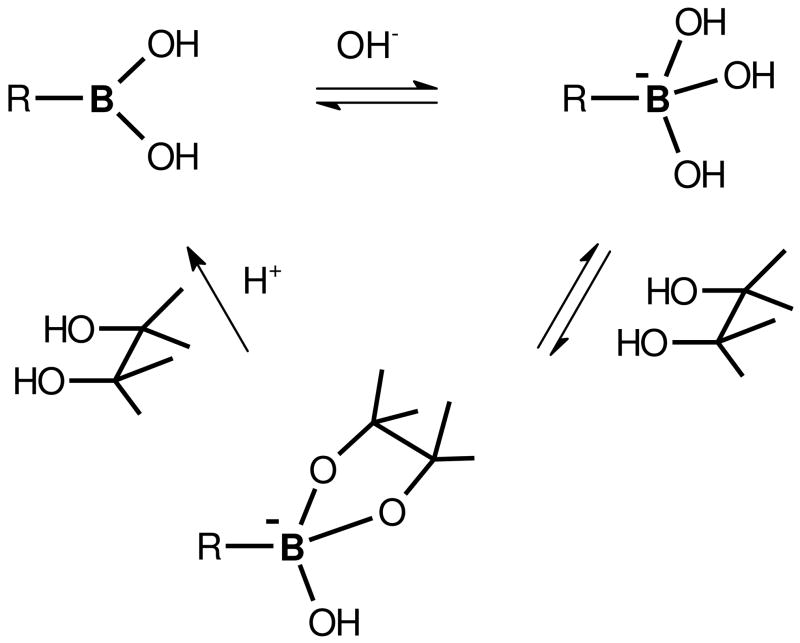
Figure 5. The equilibria between boronic acid and CIS-diol-containing compounds
Affinity attachment, elution, and regeneration of boronic acid are shown. Reproduced from the Journal of Proteome Research, 7, Zhang Q et al., Enrichment and analysis of nonenzymatically glycated peptides: boronate affinity chromatography coupled with electron-transfer dissociation mass spectrometry, pp. 2323–2330, 2007, with permission from the American Chemical Society.
Figure 6
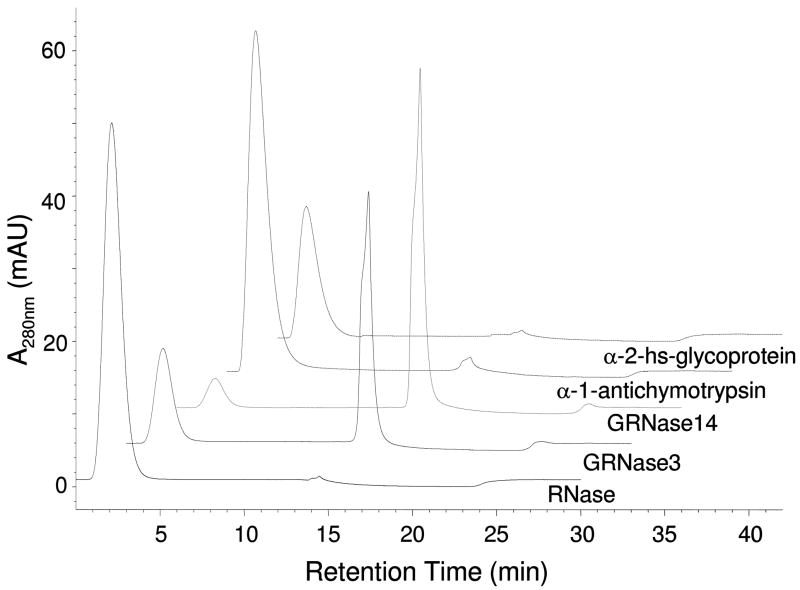
Figure 6. Boronate affinity chromatography with different standard proteins
The traces are labeled with the respective sample name. GRNase 3, RNase lycated in vitro for 3 days; GRNase 14, RNase glycated in vitro for 14 days. Peaks at approximately 2 min are non-glycated proteins, and glycated proteins elute near 15 min. Reproduced from the Journal of Proteome Research, 7, Zhang Q et al., Enrichment and analysis of nonenzymatically glycated peptides: boronate affinity chromatography coupled with electron-transfer dissociation mass spectrometry, pp. 2323–2330, 2007, with permission from the American Chemical Society.
Figure 7
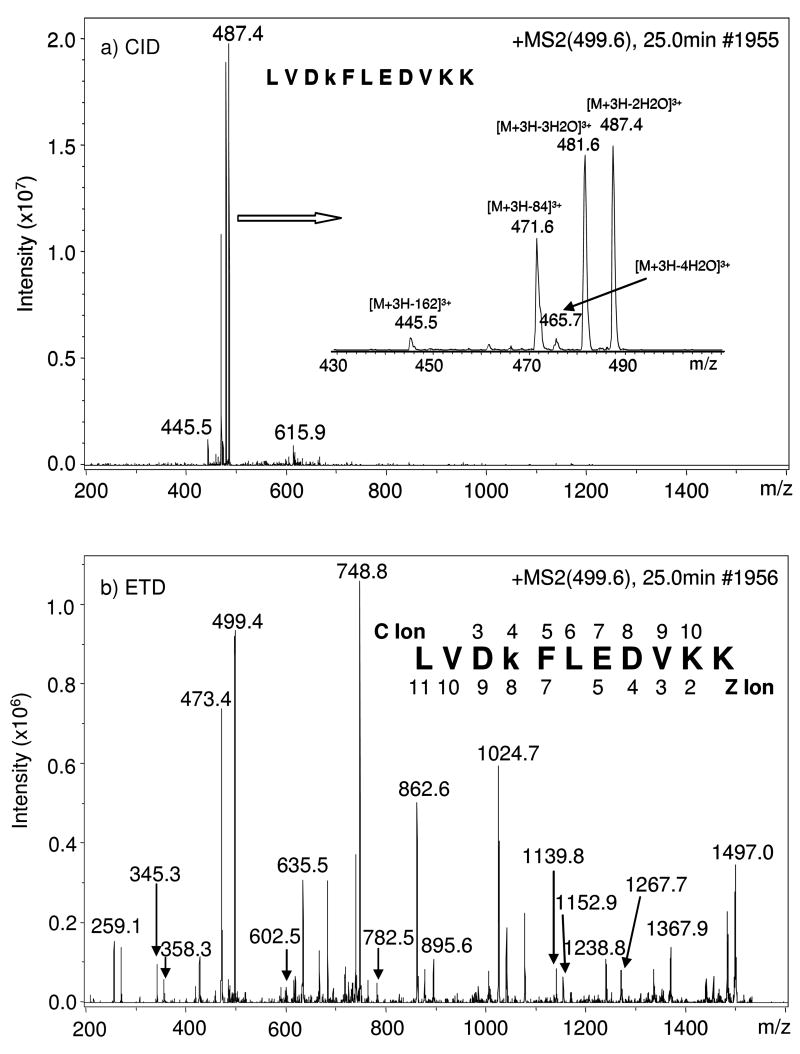
Figure 7. Comparison of spectra obtained under CID- and ETD-MS/MS
MS/MS spectra obtained under CID (a) and ETD (b) fragmentation modes, respectively, of m/z 499.6, the [M + 3H]3+ of peptide LVDkFLEDVKK from α-1-antitrypsin precursor. “k” represents Amadori modification of lysine glucose. Inset in (a) is the zoom in view of the ions between m/z 445.5 and m/z 487.4; the identified c and z ions were labeled above and below the sequence in (b). Reproduced from the Journal of Proteome Research, 7, Zhang Q et al., Enrichment and analysis of nonenzymatically glycated peptides: boronate affinity chromatography coupled with electron-transfer dissociation mass spectrometry, pp. 2323–2330, 2007, with permission from the American Chemical Society.
Figure 8
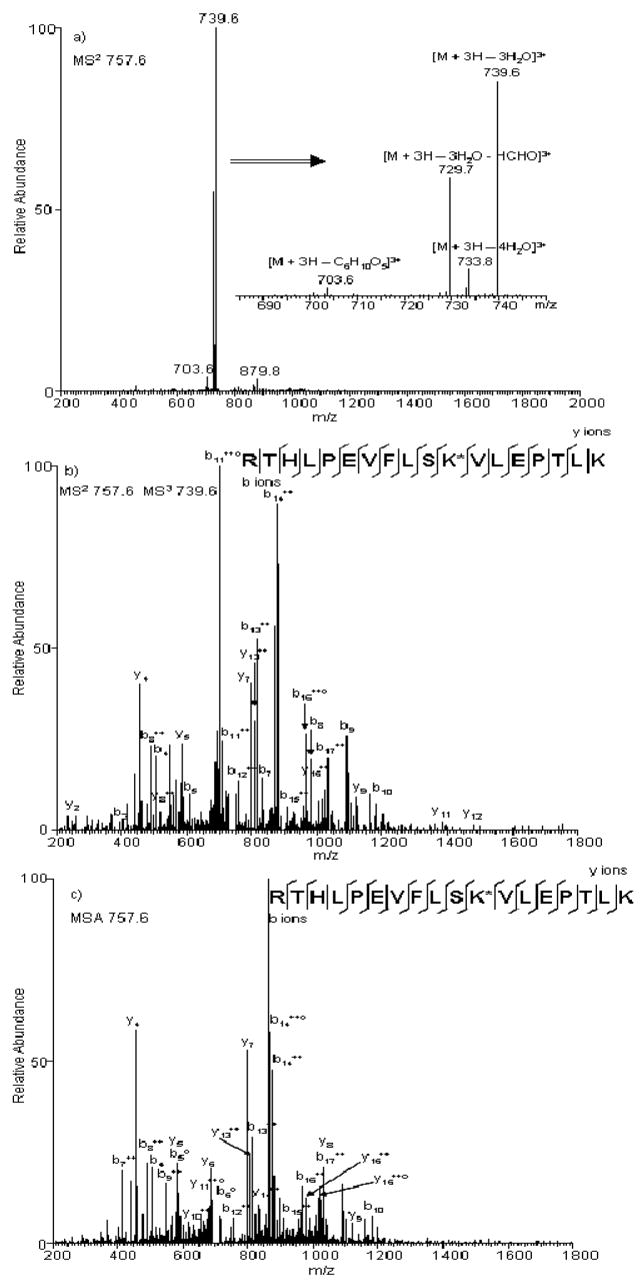
Figure 8. Comparison of spectra obtained under standard and advanced CID-MS/MS
(a) Product-ion spectrum produced from CID-MS/MS fragmentation of the [M + 3H]3+ ion of peptide RTHLPEVFLSK*VLEPTLK, where * represents the Amadori modification site. Different neutral-losses are shown in the zoomed inset. Product-ion spectra produced from the [M + 3H]3+ ion of peptide RTHLPEVFLSK*VLEPTLK under b) NLMS triggered by neutral-loss of 3 H2O or c) MSA triggered by neutral-loss of 3 H2O, where * represents the Amadori adduct modification site.

References

    1. Maillard LC. Action of amino acids on sugars. Formation of melanoidins in a methodical way. Compt Rend. 1912;154:66–68.
    1. Nursten HE. The Maillard Reaction. Chemistry, Biochemistry, and Implications. Royal Society of Chemistry; Cambridge: 2005.
    1. Li S, Patapoff TW, Overcashier D, Hsu C, Nguyen TH, Borchardt RT. Effects of reducing sugars on the chemical stability of human relaxin in the lyophilized state. J Pharm Sci. 1996;85(8):873–877. - PubMed
    1. Quan C, Alcala E, Petkovska I, Matthews D, Canova-Davis E, Taticek R, Ma S. A study in glycation of a therapeutic recombinant humanized monoclonal antibody: where it is, how it got there, and how it affects charge-based behavior. Anal Biochem. 2008;373(2):179–191. - PubMed
    1. Zhang B, Yang Y, Yuk I, Pai R, McKay P, Eigenbrot C, Dennis M, Katta V, Francissen KC. Unveiling a glycation hot spot in a recombinant humanized monoclonal antibody. Anal Chem. 2008;80(7):2379–2390. - PubMed

Publication types