


Apocynin: molecular aptitudes
- PMID: 19096513
- PMCID: PMC2593395
- DOI: 10.1155/2008/106507
Apocynin: molecular aptitudes
Abstract
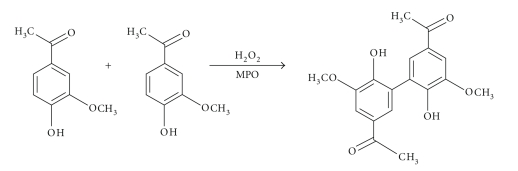
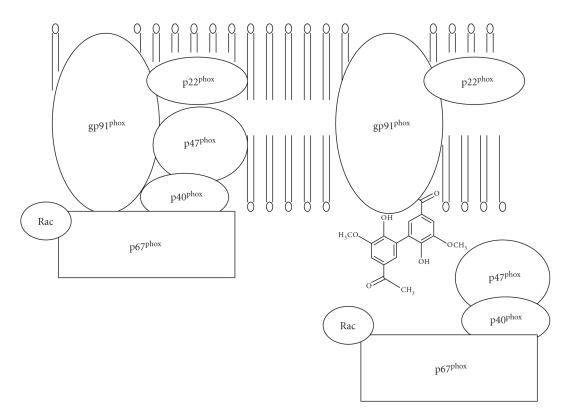
Apocynin is a naturally occurring methoxy-substituted catechol, experimentally used as an inhibitor of NADPH-oxidase. It can decrease the production of superoxide (O(2)(-)) from activated neutrophils and macrophages while the ability of phagocytosis remains unaffected. The anti-inflammatory activity of apocynin has been demonstrated in a variety of cell and animal models of inflammation. Apocynin, after metabolic conversion, inhibits the assembly of NADPH-oxidase that is responsible for reactive oxygen species (ROS) production. It is, therefore, extensively used to reveal the role of this enzyme in cell and experimental models. Although some of the ROS serve as signaling molecules in the cells, excessive production is damaging and has been implicated to play an important role in the progression of many disease processes. This is why in many studies apocynin presents a promising potential treatment for some disorders; however, its utility with inflammatory diseases remains to be determined. Since its mode of action is not well defined, we tried to get a more precise insight into the mechanisms by which apocynin exerts its activity. Considering the anti-inflammatory activities of apocynin, we may conclude that this compound definitely deserves further study.
Figures
References
-
- Chlopicki S, Olszanecki R, Janiszewski M, Laurindo FRM, Panz T, Miedzobrodzki J. Functional role of NADPH oxidase in activation of platelets. Antioxidants & Redox Signaling. 2004;6(4):691–698. - PubMed
-
- Stolk J, Hiltermann TJ, Dijkman JH, Verhoeven AJ. Characteristics of the inhibition of NADPH oxidase activation in neutrophils by apocynin, a methoxy-substituted catechol. American Journal of Respiratory Cell and Molecular Biology. 1994;11(1):95–102. - PubMed
-
- Li J-M, Gall NP, Grieve DJ, Chen M, Shah AM. Activation of NADPH oxidase during progression of cardiac hypertrophy to failure. Hypertension. 2002;40(4):477–484. - PubMed
-
- Luchtefeld R, Luo R, Stine K, Alt ML, Chernovitz PA, Smith RE. Dose formulation and analysis of diapocynin. Journal of Agricultural and Food Chemistry. 2008;56(2):301–306. - PubMed
-
- Hougee S, Hartog A, Sanders A, et al. Oral administration of the NADPH-oxidase inhibitor apocynin partially restores diminished cartilage proteoglycan synthesis and reduces inflammation in mice. European Journal of Pharmacology. 2006;531(1–3):264–269. - PubMed
Publication types
MeSH terms
Substances
LinkOut - more resources
Full Text Sources
Other Literature Sources
