


Personal digital assistants to collect tuberculosis bacteriology data in Peru reduce delays, errors, and workload, and are acceptable to users: cluster randomized controlled trial
- PMID: 19097925
- PMCID: PMC2673336
- DOI: 10.1016/j.ijid.2008.09.015
Personal digital assistants to collect tuberculosis bacteriology data in Peru reduce delays, errors, and workload, and are acceptable to users: cluster randomized controlled trial
Abstract
Objectives: To evaluate the effectiveness of a personal digital assistant (PDA)-based system for collecting tuberculosis test results and to compare this new system to the previous paper-based system. The PDA- and paper-based systems were evaluated based on processing times, frequency of errors, and number of work-hours expended by data collectors.
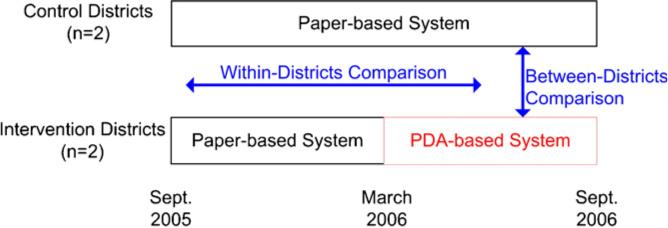
Methods: We conducted a cluster randomized controlled trial in 93 health establishments in Peru. Baseline data were collected for 19 months. Districts (n=4) were then randomly assigned to intervention (PDA) or control (paper) groups, and further data were collected for 6 months. Comparisons were made between intervention and control districts and within-districts before and after the introduction of the intervention.
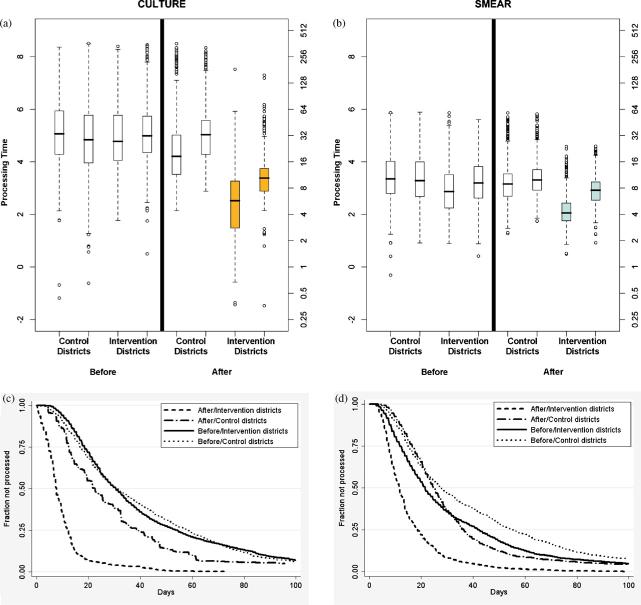
Results: The PDA-based system had a significant effect on processing times (p<0.001) and errors (p=0.005). In the between-districts comparison, the median processing time for cultures was reduced from 23 to 8 days and for smears was reduced from 25 to 12 days. In that comparison, the proportion of cultures with delays >90 days was reduced from 9.2% to 0.1% and the number of errors was decreased by 57.1%. The intervention reduced the work-hours necessary to process results by 70% and was preferred by all users.
Conclusions: A well-designed PDA-based system to collect data from institutions over a large, resource-poor area can significantly reduce delays, errors, and person-hours spent processing data.
Figures

References
-
- Kushniruk AW, Triola MM, Borycki EM, Stein B, Kannry JL. Technology induced error and usability: the relationship between usability problems and prescription errors when using a handheld application. Int J Med Inform. 2005;74:519–26. - PubMed
-
- Caro JJ, Sr, Caro I, Caro J, Wouters F, Juniper EF. Does electronic implementation of questionnaires used in asthma alter responses compared to paper implementation? Qual Life Res. 2001;10:683–91. - PubMed
Publication types
MeSH terms
Grants and funding
LinkOut - more resources
Full Text Sources
Other Literature Sources
