


Ectopic expression of VvMybPA2 promotes proanthocyanidin biosynthesis in grapevine and suggests additional targets in the pathway
- PMID: 19098092
- PMCID: PMC2633825
- DOI: 10.1104/pp.108.131862
Ectopic expression of VvMybPA2 promotes proanthocyanidin biosynthesis in grapevine and suggests additional targets in the pathway
Abstract
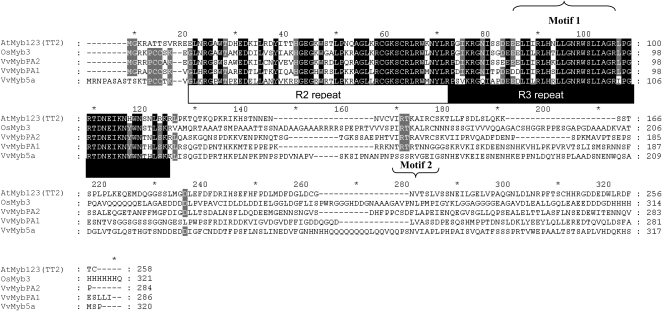
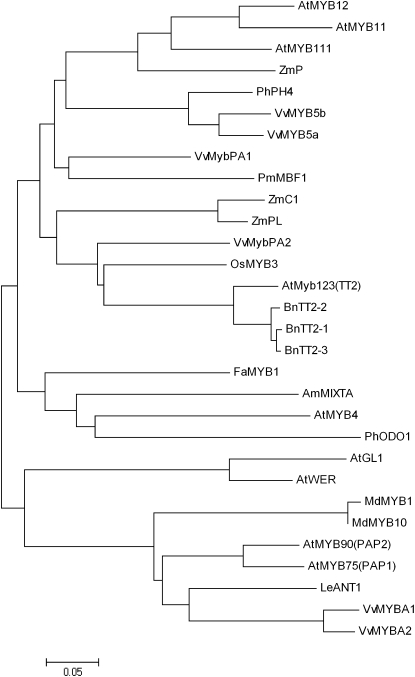
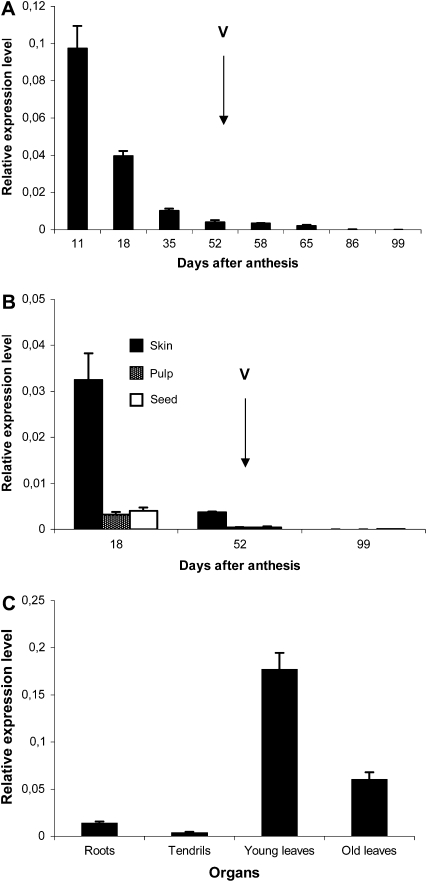
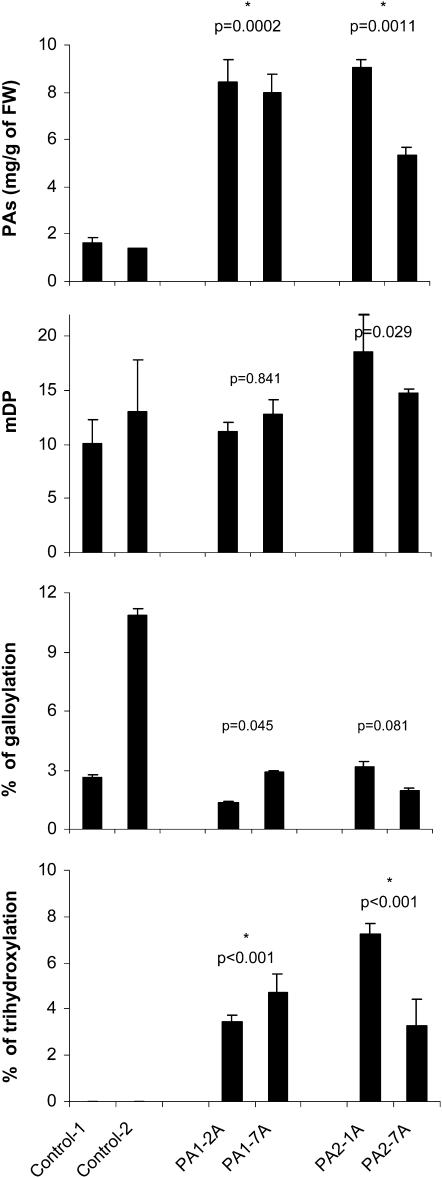
Grapevine (Vitis vinifera) proanthocyanidins contribute to plant defense mechanisms against biotic stress and also play a critical role in organoleptic properties of wine. In grapevine berry, these compounds are mainly accumulated in exocarps and seeds in the very early stages of development. A previous study has already identified VvMybPA1 as the first transcription factor involved in the regulation of the proanthocyanidin pathway during seed development in grapevine. A novel Myb factor, VvMybPA2, which is described in this study, is in contrast mainly expressed in the exocarp of young berries and in the leaves. This transcription factor shows very high protein sequence homology with other plant Myb factors, which regulate flavonoid biosynthesis. Ectopic expression of either VvMybPA1 or VvMybPA2 in grapevine hairy roots induced qualitative and quantitative changes of the proanthocyanidin profiles. High-throughput transcriptomic analyses of transformed grapevine organs identified a large set of putative targets of the VvMybPA1 and VvMybPA2 transcription factors. Both genes significantly activated enzymes of the flavonoid pathway, including anthocyanidin reductase and leucoanthocyanidin reductase 1, the specific terminal steps in the biosynthesis of epicatechin and catechin, respectively, but not leucoanthocyanidin reductase 2. The functional annotation of the genes whose expression was modified revealed putative new actors of the proanthocyanidin pathway, such as glucosyltransferases and transporters.
Figures
References
-
- Ageorges A, Fernandez L, Vialet S, Merdinoglu D, Terrier N, Romieu C (2006) Four specific isogenes of the anthocyanin metabolic pathway are systematically co-expressed with the red colour of grape berries. Plant Sci 170 372–383
-
- Batistic O, Kudla J (2004) Integration and channeling of calcium signaling through the CBL calcium sensor/CIPK protein kinase network. Planta 219 915–924 - PubMed
-
- Baxter IR, Young JC, Armstrong G, Foster N, Bogenschutz N, Cordova T, Peer WA, Hazen SP, Murphy AS, Harper JF (2005) A plasma membrane H+-ATPase is required for the formation of proanthocyanidins in the seed coat endothelium of Arabidopsis thaliana. Proc Natl Acad Sci USA 102 2649–2654 - PMC - PubMed
MeSH terms
Substances
LinkOut - more resources
Full Text Sources
Other Literature Sources
