


Effect of daily oral minodronate on vertebral fractures in Japanese postmenopausal women with established osteoporosis: a randomized placebo-controlled double-blind study
- PMID: 19101754
- PMCID: PMC2708326
- DOI: 10.1007/s00198-008-0816-7
Effect of daily oral minodronate on vertebral fractures in Japanese postmenopausal women with established osteoporosis: a randomized placebo-controlled double-blind study
Abstract
SUMMARY; A randomized placebo-controlled trial was conducted to examine the effect of daily oral 1 mg minodronate on vertebral fractures in 704 postmenopausal women with established osteoporosis for 24 months. Minodronate treatment reduced vertebral fractures by 59% without serious adverse events. Minodronate is a safe and effective bisphosphonate for osteoporosis treatment.
Introduction: Minodronate increases bone mineral density (BMD) in postmenopausal osteoporotic patients. However, its efficacy in reducing osteoporotic fractures has not been tested.
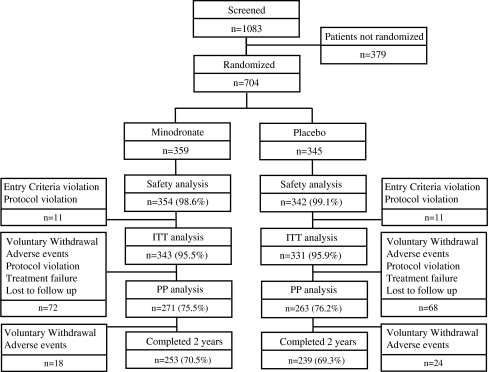
Methods: To examine anti-fracture efficacy and safety of daily oral minodronate in postmenopausal women with established osteoporosis, a randomized, double-blind, placebo-controlled trial was conducted in 704 postmenopausal women (55 to 80 years) with one to five vertebral fractures and low BMD. Subjects were randomly assigned to receive daily oral 1 mg minodronate (n = 359) or placebo (n = 345) for 24 months, with daily supplements of 600 mg calcium and 200 IU vitamin D(3).
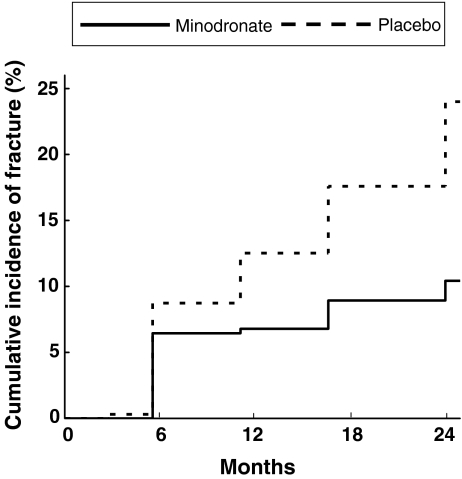
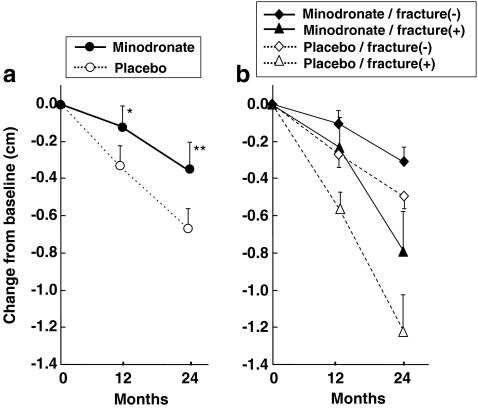
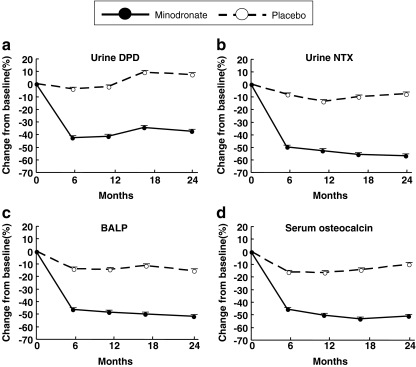
Results: Daily 1 mg minodronate for 24 months reduced the risk of vertebral fractures by 59% (95% CI, 36.6-73.3%). Furthermore, when fractures during the first 6 months were eliminated, the risk of vertebral fractures from 6 to 24 months was reduced by 74% in minodronate-treated group. Minodronate treatment also reduced height loss. Bone turnover markers were suppressed by about 50% after 6 months of minodronate treatment and remained suppressed thereafter. The overall safety profile including gastrointestinal safety was similar between the two groups.
Conclusions: Daily oral minodronate is safe, well-tolerated, and is effective in reducing vertebral fracture risk in postmenopausal women with established osteoporosis.
Trial registration: ClinicalTrials.gov NCT00212667.
Figures
References
-
- Ettinger B, Black DM, Nevitt MC et al (1992) Contribution of vertebral deformities to chronic back pain and disability. The study of osteoporotic fractures research group. J Bone Miner Res 7:449–456 - PubMed
-
- Ensrud KE, Thompson DE, Cauley JA et al (2000) Prevalent vertebral deformities predict mortality and hospitalization in older women with low bone mass. Fracture intervention trial research group. J Am Geriatr Soc 48:241–249 - PubMed
Publication types
MeSH terms
Substances
Associated data
LinkOut - more resources
Full Text Sources
Medical
