


24-h smoking abstinence potentiates fMRI-BOLD activation to smoking cues in cerebral cortex and dorsal striatum
- PMID: 19107465
- PMCID: PMC2810714
- DOI: 10.1007/s00213-008-1436-9
24-h smoking abstinence potentiates fMRI-BOLD activation to smoking cues in cerebral cortex and dorsal striatum
Abstract
Rationale: Exposure to smoking-related cues can trigger relapse in smokers attempting to maintain abstinence.
Objectives: In the present study, we evaluated the effect of 24-h smoking abstinence on brain responses to smoking-related cues using functional magnetic resonance imaging (fMRI).
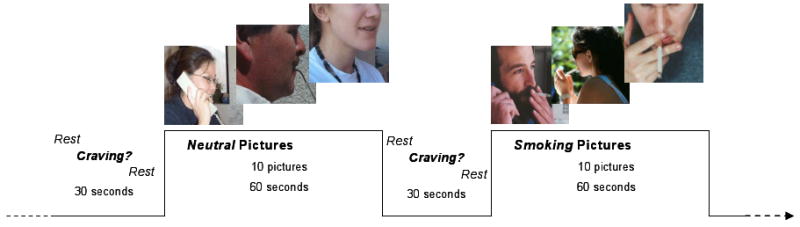
Materials and methods: Eighteen adult smokers underwent fMRI scanning following smoking as usual (satiated condition) and following 24-h abstinence (abstinent condition). During scanning, they viewed blocks of photographic smoking and control cues.
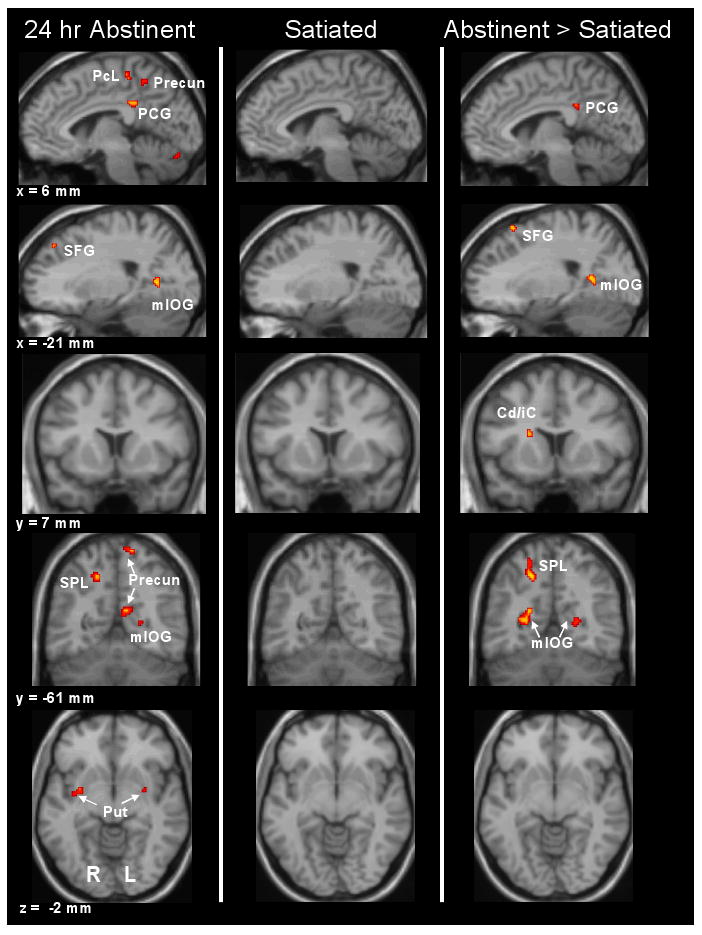
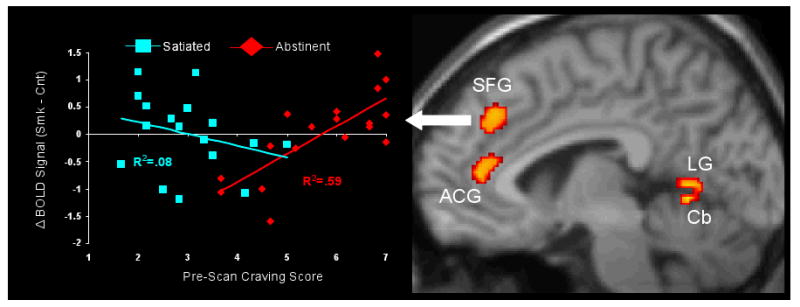
Results: Following abstinence, greater activation was found in response to smoking cues compared to control cues in parietal (BA 7/31), frontal (BA 8/9), occipital (BA 19), and central (BA 4) cortical regions and in dorsal striatum (putamen) and thalamus. In contrast, no smoking cue greater than control cue activations were observed following smoking as usual. Direct comparisons between conditions (satiated vs. abstinent) showed greater brain reactivity in response to smoking cues following abstinence. In addition, positive correlations between pre-scan craving in the abstinent condition and smoking cue activation were observed in right dorsomedial prefrontal cortex (dmPFC) including superior frontal gyrus (BA 6/10), anterior cingulate gyrus (BA 32), and supplementary motor area (BA 6).
Conclusions: The present findings indicate that smoking abstinence significantly potentiates neural responses to smoking-related cues in brain regions subserving visual sensory processing, attention, and action planning. Moreover, greater abstinence-induced craving was significantly correlated with increased smoking cue activation in dmPFC areas involved in action planning and decision making. These findings suggest that drug abstinence can increase the salience of conditioned cues, which is consistent with incentive-motivation models of addiction.
Figures
References
-
- Brody AL, Mandelkern MA, London ED, Childress AR, Lee GS, Bota RG, Ho ML, Saxena S, Baxter LR, Jr, Madsen D, Jarvik ME. Brain metabolic changes during cigarette craving. Archives of General Psychiatry. 2002;59:1162–72. - PubMed
-
- Bush G, Luu P, Posner MI. Cognitive and emotional influences in anterior cingulate cortex. Trends Cogn Sci. 2000;4:215–222. - PubMed
-
- Cabeza R, Nyberg L. Imaging cognition II: An empirical review of 275 PET and fMRI studies. Journal of Cognitive Neuroscience. 2000;12:1–47. - PubMed
-
- Carter BL, Tiffany ST. Meta-analysis of cue-reactivity in addiction research. Addiction. 1999;94:327–40. - PubMed
Publication types
MeSH terms
Substances
Grants and funding
LinkOut - more resources
Full Text Sources
Medical
