. 2008 Dec 28;14(48):7345-52.
doi: 10.3748/wjg.14.7345.

Disruption of colonic barrier function and induction of mediator release by strains of Campylobacter jejuni that invade epithelial cells

Affiliations

Disruption of colonic barrier function and induction of mediator release by strains of Campylobacter jejuni that invade epithelial cells

Johannes Beltinger et al. World J Gastroenterol. .

Abstract

Aim: To study the mechanisms by which Campylobacter jejuni (C. jejuni) causes inflammation and diarrhea. In particular, direct interactions with intestinal epithelial cells and effects on barrier function are poorly under-stood.

Methods: To model the initial pathogenic effects of C. jejuni on intestinal epithelium, polarized human colonic HCA-7 monolayers were grown on permeabilized filters and infected apically with clinical isolates of C. jejuni. Integrity of the monolayer was monitored by changes in monolayer resistance, release of lactate dehydrogenase, mannitol fluxes and electron microscopy. Invasion of HCA-7 cells was assessed by a modified gentamicin protection assay, translocation by counting colony forming units in the basal chamber, stimulation of mediator release by immunoassays and secretory responses in monolayers stimulated by bradykinin in an Ussing chamber.

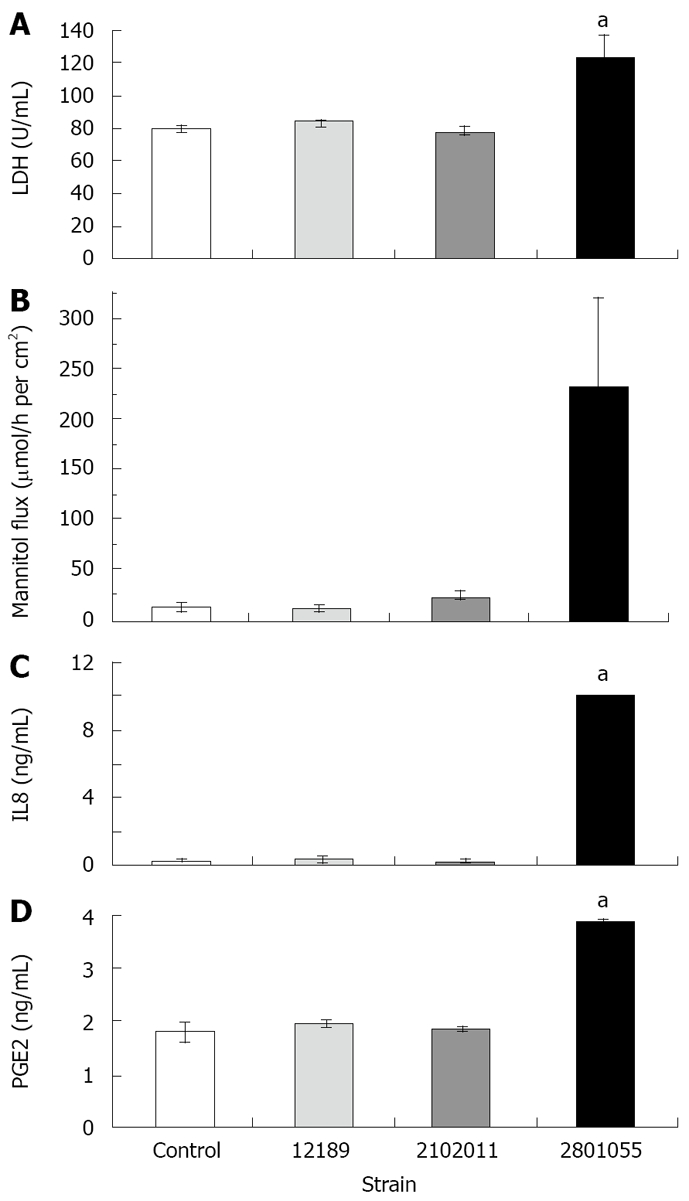
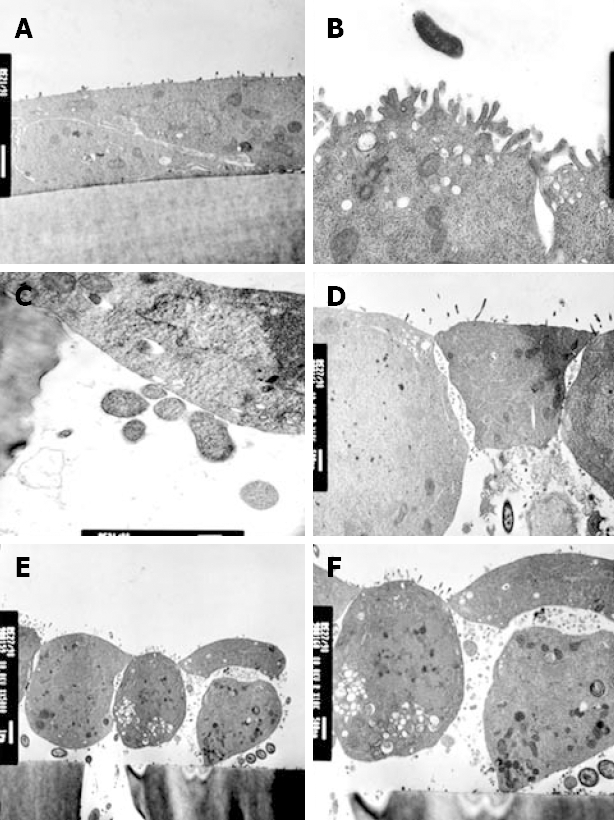
Results: All strains translocated across monolayers but only a minority invaded HCA-7 cells. Strains that invaded HCA-7 cells destroyed monolayer resistance over 6 h, accompanied by increased release of lactate dehydrogenase, a four-fold increase in permeability to [(3)H] mannitol, and ultrastructural disruption of tight junctions, with rounding and lifting of cells off the filter membrane. Synthesis of interleukin (IL)-8 and prostaglandin E(2) was increased with strains that invaded the monolayer but not with those that did not.

Conclusion: These data demonstrate two distinct effects of C. jejuni on colonic epithelial cells and provide an informative model for further investigation of initial host cell responses to C. jejuni.


Figures
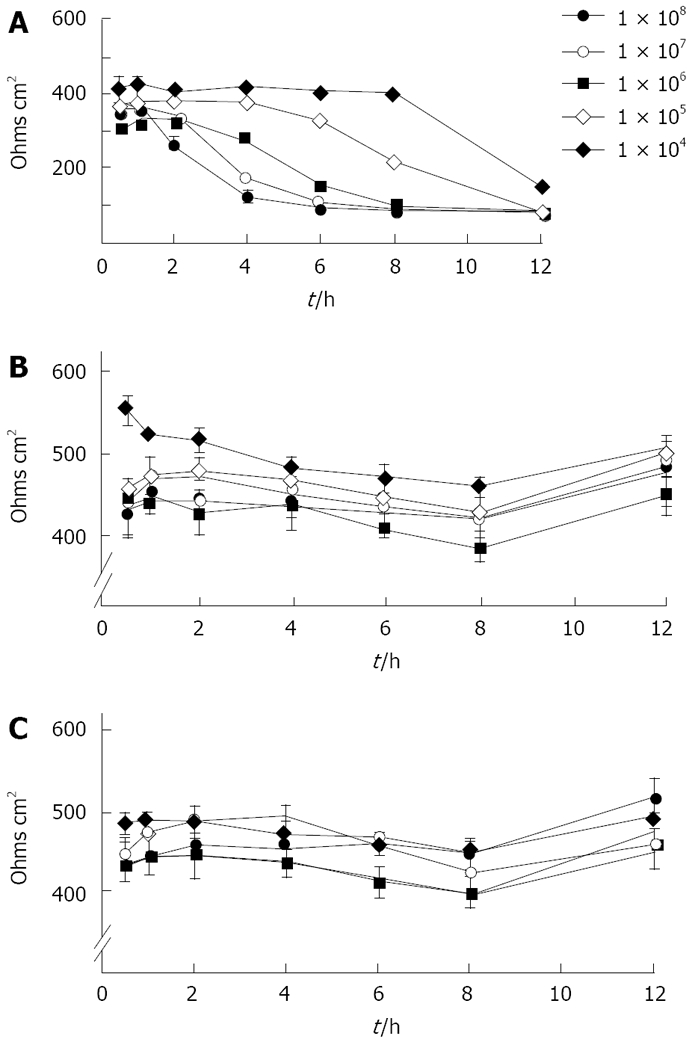
Figure 1
Figure 1
Time course and dose-response of changes in transepithelial resistance after inoculation of T84 cells with three different strains of C jejuni. A: Strain 2801055 reduced resistance to baseline over 6 h in a time- and dose-dependent manner [data are mean ± SE, n = 3 for each bacterial concentration; P < 0.05 compared with controls (uninfected monolayers)]. Baseline resistance across the filter membrane was 100 Ω.cm2; B: Strain 12189 had no effect on resistance across the monolayer; C: Strain 2102011 had no effect on resistance across the monolayer.
Figure 2
Figure 2
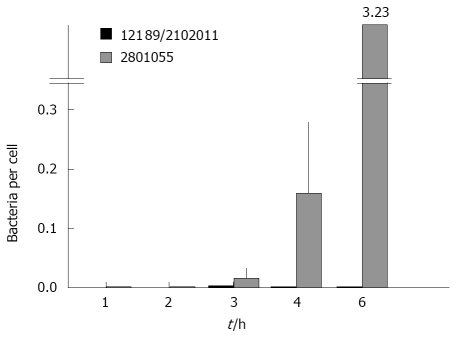
Invasion of monolayers of HCA-7 cells determined by a gentamicin protection assay, corrected for the number of cells remaining per monolayer. C. jejuni strain 2801055 invaded the cells of the monolayer in a time-dependent manner, while strains 12189 and 2102011 showed no cellular invasion. Data are mean ± SE, n = 4. Analysis of variance showed that the total number of C. jejuni per monolayer was higher for those strains that abrogated transepithelial resistance compared to those that did not (P = 0.033), and that this increased with time (P = 0.02).
Figure 3
Figure 3
HCA-7 monolayer release of LDH, [3H] mannitol flux and release of IL8 and PGE2 after inoculation with different strains of C. jejuni. All data are mean ± SE at 4 h, (n = 4). A: Strain 2801055 showed a significantly higher LDH release after 4 h (aP < 0.05) incubation compared to the other two strains, which were similar to control values; B: Strain 2801055 induced a significantly higher flux rate across the monolayer after 4 h (aP < 0.05) incubation compared to the other two strains, which were similar to control values; C: Strain 2801055 showed a significantly higher IL8 release after 4 h (aP < 0.05) incubation compared to the other two strains, which were similar to control values; D: Strain 2801055 showed a significantly higher PGE2 release after 4 h (aP < 0.05) incubation compared to the other two strains, which were similar to control values.
Figure 4
Figure 4
Comparison of the effects of strains 12189 and 2801055 on transmission electron micrograph appearance of monolayers of HCA-7 cells. A: Following inoculation of strain 12189, 107 bacteria/0.5 mL, on the apical side for 6 h, there was no disruption of monolayer integrity; B: There were normal tight junctions and normal apical microvilli; C: Close cell-to-cell contact is seen with occasional bacteria located in the pores of the filter membrane; D: Following inoculation of strain 12189, 107 bacteria/0.5 mL, on the apical side for 6 h, monolayer integrity was compromised with disruption of tight junctions; E: Monolayers showed condensation of the plasma membrane with lifting and rounding of cells off the supporting membrane. C. jejuni are also seen beneath a cell which is lifting off the membrane; F: Changes are seen at higher power.
Figure 5
Figure 5
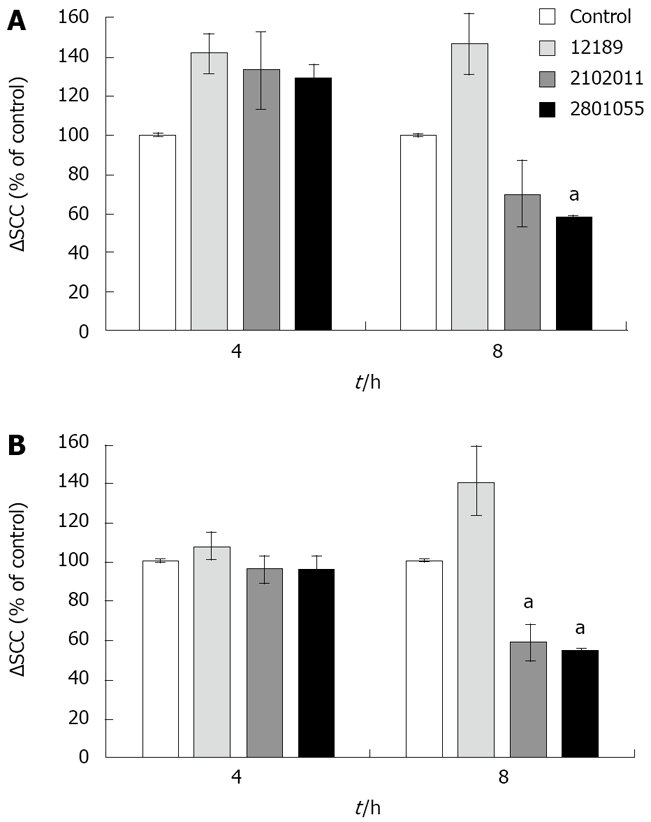
ΔSCC after stimulation with bradykinin (10-6 mol/L) and carbachol (10-4 mol/L) in monolayers inoculated with different strains of C. jejuni. Data are mean ± SE (n = 4) and are shown as percentage of control. A: Reduced chloride secretory response (represented by SCC) to bradykinin after 8 h inoculation with strain 2801055. aP < 0.05; B: Reduced chloride secretory response to carbachol after 8 h inoculation with strains 2801055 and 2102011. aP < 0.05.

References

    1. Snelling WJ, Matsuda M, Moore JE, Dooley JS. Campylobacter jejuni. Lett Appl Microbiol. 2005;41:297–302. - PubMed
    1. Young KT, Davis LM, Dirita VJ. Campylobacter jejuni: molecular biology and pathogenesis. Nat Rev Microbiol. 2007;5:665–679. - PubMed
    1. Dorrell N, Wren BW. The second century of Campylobacter research: recent advances, new opportunities and old problems. Curr Opin Infect Dis. 2007;20:514–518. - PubMed
    1. Jorgensen F, Bailey R, Williams S, Henderson P, Wareing DR, Bolton FJ, Frost JA, Ward L, Humphrey TJ. Prevalence and numbers of Salmonella and Campylobacter spp. on raw, whole chickens in relation to sampling methods. Int J Food Microbiol. 2002;76:151–164. - PubMed
    1. Yao R, Burr DH, Guerry P. CheY-mediated modulation of Campylobacter jejuni virulence. Mol Microbiol. 1997;23:1021–1031. - PubMed

Publication types

MeSH terms