


Early immunological predictors of neurodevelopmental outcomes in HIV-infected children
- PMID: 19115969
- PMCID: PMC3671733
- DOI: 10.1086/595885
Early immunological predictors of neurodevelopmental outcomes in HIV-infected children
Abstract
Background: A previous analysis of children infected with human immunodeficiency virus (HIV) in the Women and Infants Transmission Study showed a strong correlation between low activated CD8(+) T lymphocytes in the first 2 months of life and good immunological prognosis. We sought to extend these observations to neurodevelopmental prognosis.
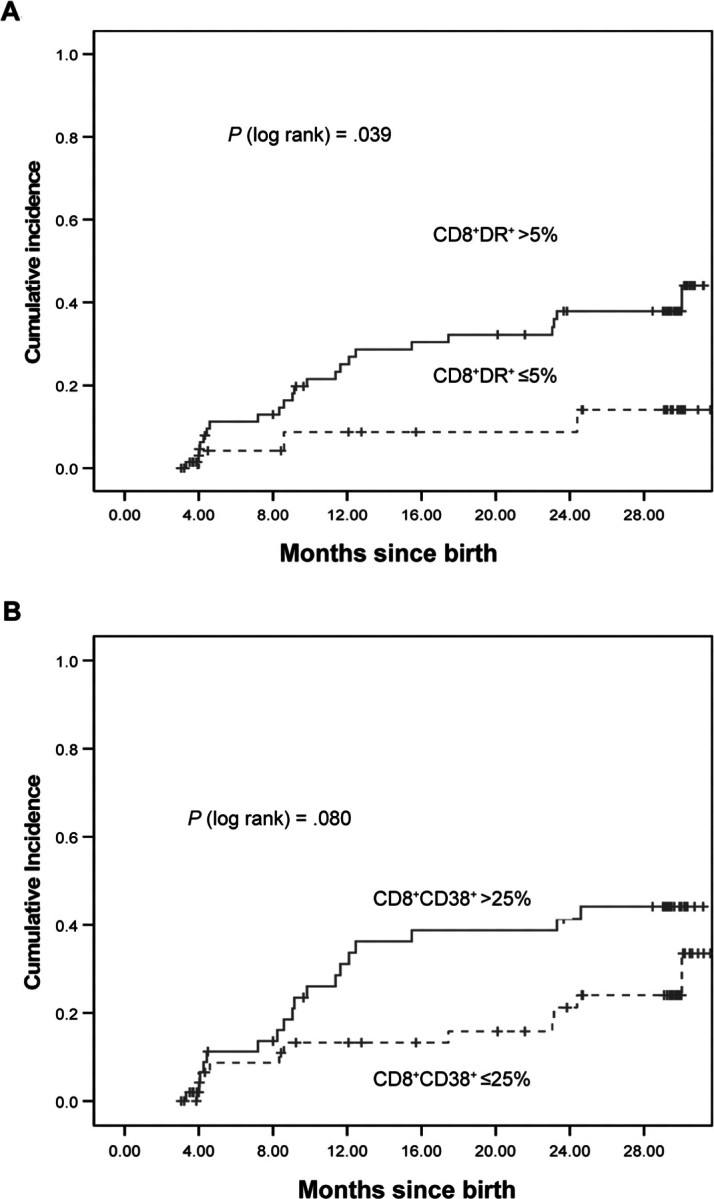
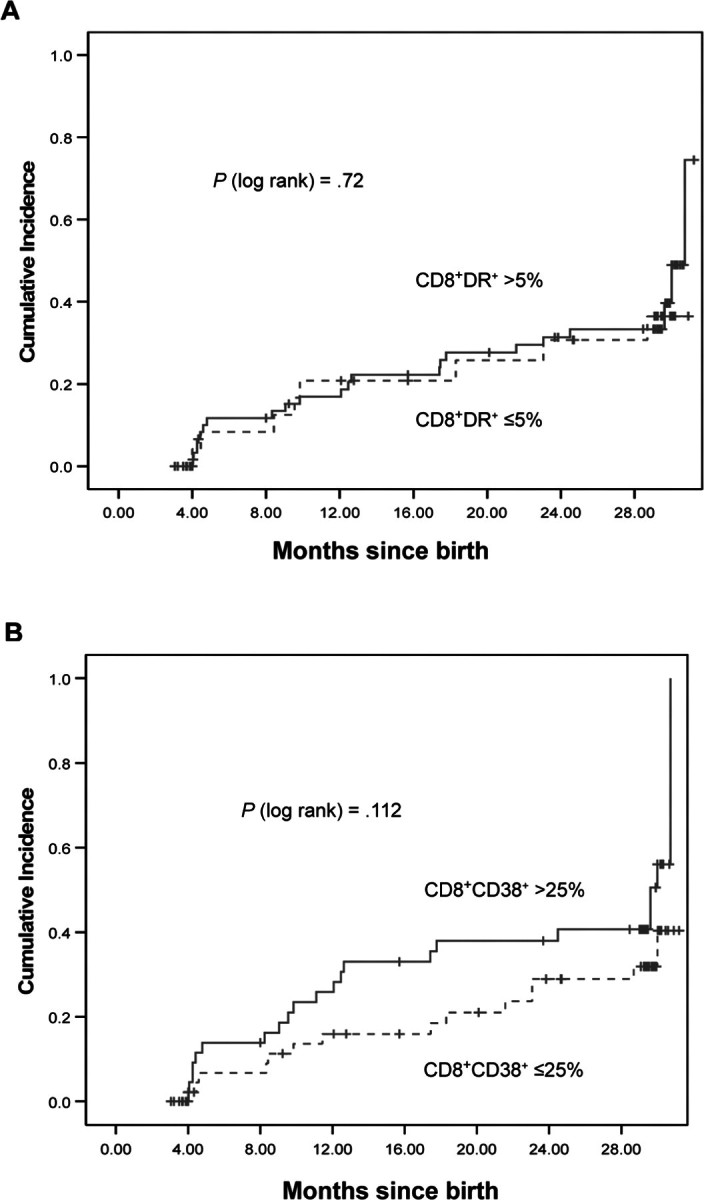
Methods: Ninety-eight HIV-infected children born before 1994 with flow cytometric data from the first 2 months of life and adequate neurodevelopmental testing through age 30 months were studied. Children were divided into those with low (<or=5% CD8(+)HLA-DR(+) cells or <or=25% CD8(+)CD38(+) cells) or high (>5% CD8(+)HLA-DR(+) cells or >25% CD8(+)CD38(+) cells) immune activation at 1 and/or 2 months of age. Analysis was performed using survival analysis, Cox's proportional hazard regression, and longitudinal regression models.
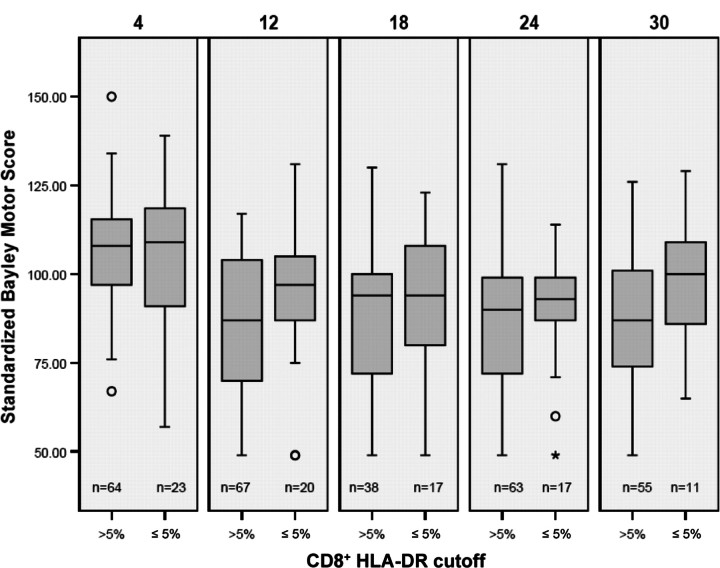
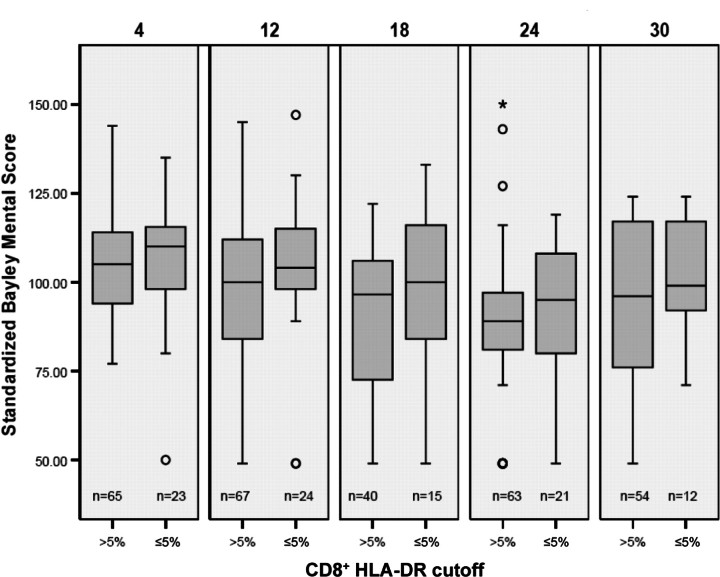
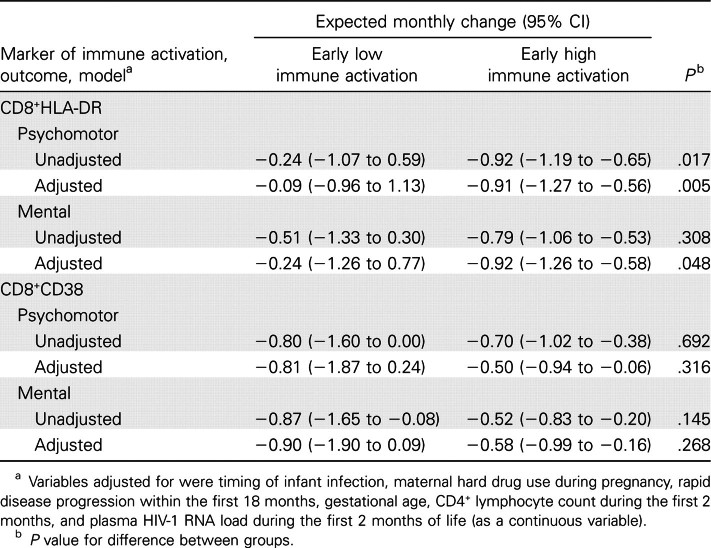
Results: Absence of immune activation, measured as <or=5% CD8(+)HLA-DR(+) cells, was strongly associated with better performance on the psychomotor developmental index of the Bayley scales of infant development through the third year of life. This association persisted after adjustment for CD4 cell count, viral load, and progression to acquired immunodeficiency syndrome (P= .005). An association with the mental development index was also present (P= .048). Significant association between neurodevelopmental outcomes and <or=25% CD8(+)CD38(+) cells was not seen.
Conclusions: In this prospective cohort study of HIV-infected children, there was a significant favorable association of low immune activation in peripheral T cells at age 1 or 2 months, measured by a low percentage of CD8(+)HLA-DR(+) cells, with subsequent psychomotor and mental development. This association was independent of other indices of severity and progression of HIV infection.
Figures
Comment in
-
Early immune activation predicts central nervous system disease in HIV-infected infants: implications for early treatment.Clin Infect Dis. 2009 Feb 1;48(3):347-9. doi: 10.1086/595886. Clin Infect Dis. 2009. PMID: 19115973 No abstract available.
References
-
- Wolters P, Brouwers P. Evaluation of neurodevelopmental deficits in children with HIV infection. In: Gendelman HE, Grant I, Lipton SA, Everall I, Swindells S, editors. The neurology of AIDS. 2nd ed. London: Oxford University Press; 2005. pp. 667–82.
-
- Chase C, Ware J, Hittelman J, et al. Early cognitive and motor development among infants born to women infected with human immunodeficiency virus. Women and Infants Transmission Study Group. Pediatrics. 2000;106:25. - PubMed
-
- Weinberg GA, Burchett SK. Pediatric human immunodeficiency virus infection. In: Mandell GL, Bennett JE, Dolin R, editors. Mandell, Douglas, and Bennett's principles and practice of infectious diseases. 6th ed. Philadelphia: Churchill Livingstone; 2005. pp. 1638–54.
-
- Belman AL, Muenz LR, Marcus JC, et al. Neurologic status of human immunodeficiency virus 1-infected infants and their controls: a prospective study from birth to 2 years. Mothers and Infants Cohort Study. Pediatrics. 1996;98:1109–18. - PubMed
-
- Cooper ER, Hanson C, Diaz C, et al. Encephalopathy and progression of human immunodeficiency virus disease in a cohort of children with perinatally acquired human immunodeficiency virus infection. Women and Infants Transmission Study Group. J Pediatr. 1998;132:808–12. - PubMed
Publication types
MeSH terms
Grants and funding
- K01 RR000188/RR/NCRR NIH HHS/United States
- M01 RR000645/RR/NCRR NIH HHS/United States
- 9U01 DA 15054/DA/NIDA NIH HHS/United States
- RR00645/RR/NCRR NIH HHS/United States
- U01 AI 34841/AI/NIAID NIH HHS/United States
- RR00188/RR/NCRR NIH HHS/United States
- U01 DA015053/DA/NIDA NIH HHS/United States
- U01 AI 34858/AI/NIAID NIH HHS/United States
- U01 AI034841/AI/NIAID NIH HHS/United States
- U01 AI 50274-01/AI/NIAID NIH HHS/United States
- U01 DA 15053/DA/NIDA NIH HHS/United States
- U01 AI050274/AI/NIAID NIH HHS/United States
- RR02174/RR/NCRR NIH HHS/United States
- U01 AI034858/AI/NIAID NIH HHS/United States
- U01 DA015054/DA/NIDA NIH HHS/United States
- N01 AI085339/AI/NIAID NIH HHS/United States
- M01 RR000188/RR/NCRR NIH HHS/United States
- U01 HD 41983/HD/NICHD NIH HHS/United States
- HD-3-6117/HD/NICHD NIH HHS/United States
- U01 HD041983/HD/NICHD NIH HHS/United States
LinkOut - more resources
Full Text Sources
Medical
Research Materials
