


Effect of bimonthly supplementation with oral cholecalciferol on serum 25-hydroxyvitamin D concentrations in HIV-infected children and adolescents
- PMID: 19117833
- PMCID: PMC3110671
- DOI: 10.1542/peds.2008-0176
Effect of bimonthly supplementation with oral cholecalciferol on serum 25-hydroxyvitamin D concentrations in HIV-infected children and adolescents
Erratum in
- Pediatrics. 2009 May;123(5):1437
Abstract
Objective: Vitamin D insufficiency occurs commonly in HIV-infected youth in the United States. In light of the importance of vitamin D for skeletal and nonskeletal health, including innate immunity, developing methods for improving vitamin D status in HIV-infected children and adolescents is an important area of clinical research. The objective of this study was to evaluate the effect of administration of oral cholecalciferol, 100,000 IU every 2 months, and 1 g/day calcium on serum 25-hydroxyvitamin D concentrations, serum and urine calcium, and HIV disease progression during a 12-month period.
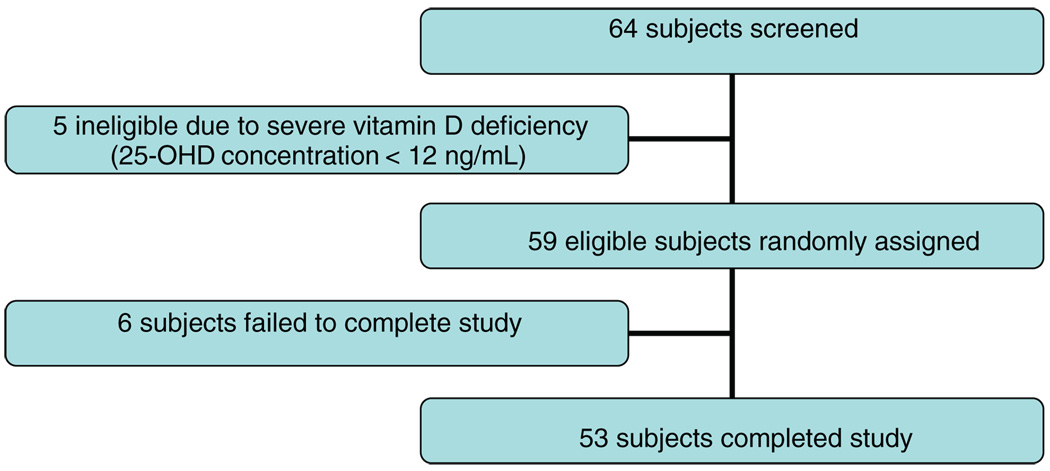
Methods: HIV-infected children and adolescents who were aged 6 to 16 years were randomly assigned to receive vitamin D (100,000 IU bimonthly) and calcium (1 g/day; n = 29) or double placebo (n = 27). Serum 25-hydroxyvitamin D concentrations as measured by radioimmunoassay, albumin-corrected calcium concentrations, and spot urinary calcium-creatinine ratios were determined monthly.
Results: No abnormalities in serum calcium concentration were observed. One participant who received placebo developed hypercalciuria. No group differences were seen in the change in CD4 count or CD4% or viral load during 12 months. The overall mean monthly serum 25-hydroxyvitamin D concentrations were higher in the group that received vitamin D and calcium than in the placebo group, as was the monthly serum 25-hydroxyvitamin D area under the curve. After completing 12 months of study, 2 (6.7%) participants in the group that received vitamin D and calcium had a trough serum 25-hydroxyvitamin D concentration <20 ng/mL compared with 14 (50%) in the placebo group. Twelve (44.4%) in the group that received vitamin D and calcium had a trough serum 25-hydroxyvitamin D concentration of > or =30 ng/mL compared with 3 (11.1%) in the placebo group.
Conclusions: Administration of oral cholecalciferol to HIV-infected children and adolescents at a dosage of 100,000 IU every 2 months, together with 1 g/day calcium, is safe and results in significant increases in serum 25-hydroxyvitamin D concentrations.
Figures

References
-
- Stephensen CB, Maquis GS, Kruzich LA, Douglas SD, Altrovandi GM, Wilson CM. Vitamin D status in adolescents and young adults with HIV infection. Am J Clin Nutr. 2006;83(5):1135–1141. - PubMed
-
- United States Pharmacopeia. Rockville, MD: United States Pharmacopeial Convention, Inc; 2002.
-
- Centers for Disease Control and Prevention. 1994 revised classification system for human immunodeficiency virus infection in children less than 13 years of age. MMWR Morb Mortal Wkly Rep. 1994;43(RR-12):1–19.
Publication types
MeSH terms
Substances
Grants and funding
LinkOut - more resources
Full Text Sources
Medical
Research Materials
