


Review series on helminths, immune modulation and the hygiene hypothesis: the broader implications of the hygiene hypothesis
- PMID: 19120493
- PMCID: PMC2632706
- DOI: 10.1111/j.1365-2567.2008.03007.x
Review series on helminths, immune modulation and the hygiene hypothesis: the broader implications of the hygiene hypothesis
Abstract
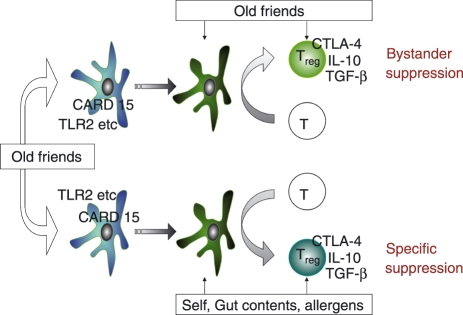
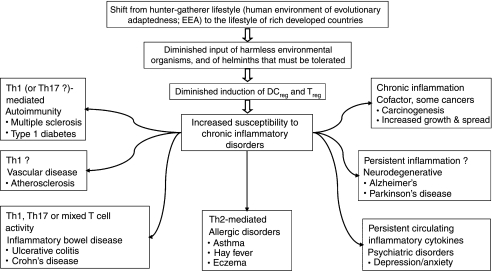
Man has moved rapidly from the hunter-gatherer environment to the living conditions of the rich industrialized countries. The hygiene hypothesis suggests that the resulting changed and reduced pattern of exposure to microorganisms has led to disordered regulation of the immune system, and hence to increases in certain inflammatory disorders. The concept began with the allergic disorders, but there are now good reasons for extending it to autoimmunity, inflammatory bowel disease, neuroinflammatory disorders, atherosclerosis, depression associated with raised inflammatory cytokines, and some cancers. This review discusses these possibilities in the context of Darwinian medicine, which uses knowledge of evolution to cast light on human diseases. The Darwinian approach enables one to correctly identify some of the organisms that are important for the 'Hygiene' or 'Old Friends' hypothesis, and to point to the potential exploitation of these organisms or their components in novel types of prophylaxis with applications in several branches of medicine.
Figures
References
-
- Bach JF. The effect of infections on susceptibility to autoimmune and allergic diseases. N Engl J Med. 2002;347:911–20. - PubMed
-
- Matricardi PM, Franzinelli F, Franco A, et al. Sibship size, birth order, and atopy in 11,371 Italian young men. J Allergy Clin Immunol. 1998;101:439–44. - PubMed
-
- Riedler J, Braun-Fahrlander C, Eder W, et al. Exposure to farming in early life and development of asthma and allergy: a cross-sectional survey. Lancet. 2001;358:1129–33. - PubMed
Publication types
MeSH terms
LinkOut - more resources
Full Text Sources
Other Literature Sources
Miscellaneous
