


Angiotensin II type 1 receptor-mediated reduction of angiotensin-converting enzyme 2 activity in the brain impairs baroreflex function in hypertensive mice
- PMID: 19124678
- PMCID: PMC2695598
- DOI: 10.1161/HYPERTENSIONAHA.108.123844
Angiotensin II type 1 receptor-mediated reduction of angiotensin-converting enzyme 2 activity in the brain impairs baroreflex function in hypertensive mice
Abstract
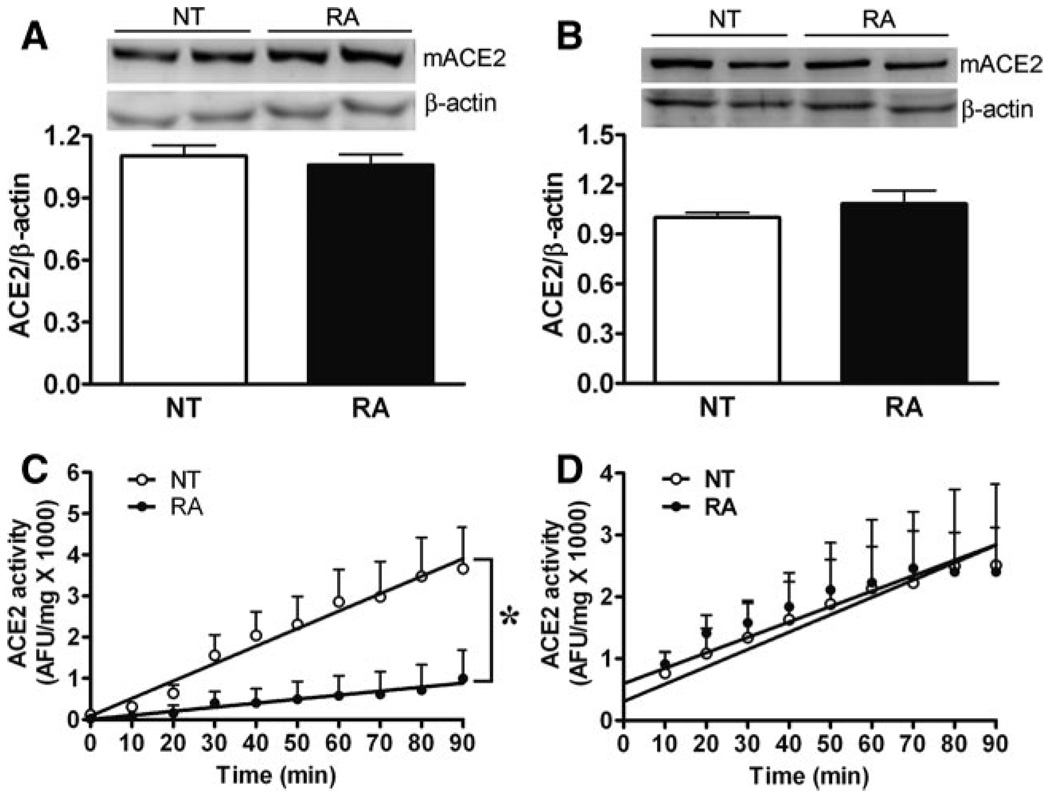
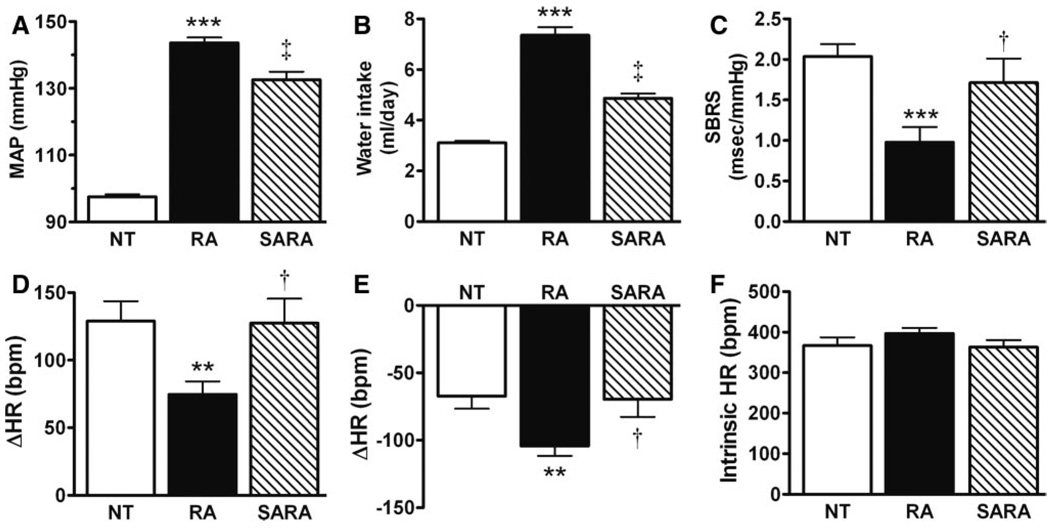
Angiotensin-converting enzyme 2 (ACE2), a new component of the brain renin-angiotensin system, has been suggested to participate in the central regulation of blood pressure (BP). To clarify the relationship between ACE2 and other brain renin-angiotensin system components, we hypothesized that central angiotensin II type 1 receptors reduce ACE2 expression/activity in hypertensive mice, thereby impairing baroreflex function and promoting hypertension. To test this hypothesis, chronically hypertensive mice (RA) with elevated angiotensin II levels were treated with losartan (angiotensin II type 1 receptor blocker) or PD123319 (angiotensin II type 2 antagonist; 10 mg/kg per day, SC) for 2 weeks. Baseline spontaneous baroreflex sensitivity and brain ACE2 activity were dramatically decreased in RA compared with nontransgenic mice, whereas peripheral ACE2 activity/expression remained unaffected. Losartan, but not PD123319, increased central ACE2 activity, spontaneous baroreflex sensitivity, and normalized BP in RA mice. To confirm the critical role of central ACE2 in BP regulation, we generated a triple-transgenic model with brain ACE2 overexpression on a hypertensive RA background. Triple-transgenic-model mice exhibit lower BP and blunted water intake versus RA, suggesting lower brain angiotensin II levels. Moreover, the impaired spontaneous baroreflex sensitivity, parasympathetic tone, and increased sympathetic drive, observed in RA, were normalized in triple-transgenic-model mice. These data suggest that angiotensin II type 1 receptors inhibit ACE2 activity in RA mice brain, thus contributing to the maintenance of hypertension. In addition, overexpression of ACE2 in the brain reduces hypertension by improving arterial baroreflex and autonomic function. Together, our data suggest that angiotensin II type 1 receptor-mediated ACE2 inhibition impairs baroreflex function and support a critical role for ACE2 in the central regulation of BP and the development of hypertension.
Figures


References
-
- Paul M, Poyan Mehr A, Kreutz R. Physiology of local renin-angiotensin systems. Physiol Rev. 2006;86:747–803. - PubMed
-
- von Bohlen und Halbach O, Albrecht D. The CNS renin-angiotensin system. Cell Tissue Res. 2006;326:599–616. - PubMed
-
- Carey RM, Padia SH. Angiotensin AT2 receptors: control of renal sodium excretion and blood pressure. Trends Endocrinol Metab. 2008;19:84–87. - PubMed
-
- Gao L, Wang W, Wang W, Li H, Sumners C, Zucker IH. Effects of angiotensin type 2 receptor overexpression in the rostral ventrolateral medulla on blood pressure and urine excretion in normal Rats. Hypertension. 2008;51:521–527. - PubMed
-
- Lazartigues E, Feng Y, Lavoie JL. The two fACEs of the tissue renin-angiotensin systems: implication in cardiovascular diseases. Curr Pharm Des. 2007;13:1231–1245. - PubMed
Publication types
MeSH terms
Substances
Grants and funding
LinkOut - more resources
Full Text Sources
Medical
Molecular Biology Databases
