


Identification of suitable internal control genes for expression studies in Coffea arabica under different experimental conditions
- PMID: 19126214
- PMCID: PMC2629470
- DOI: 10.1186/1471-2199-10-1
Identification of suitable internal control genes for expression studies in Coffea arabica under different experimental conditions
Abstract
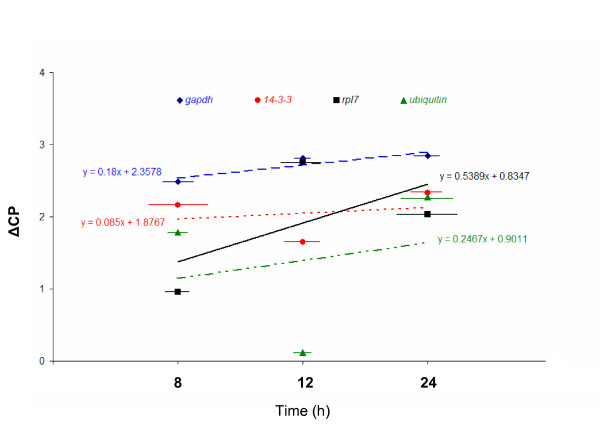
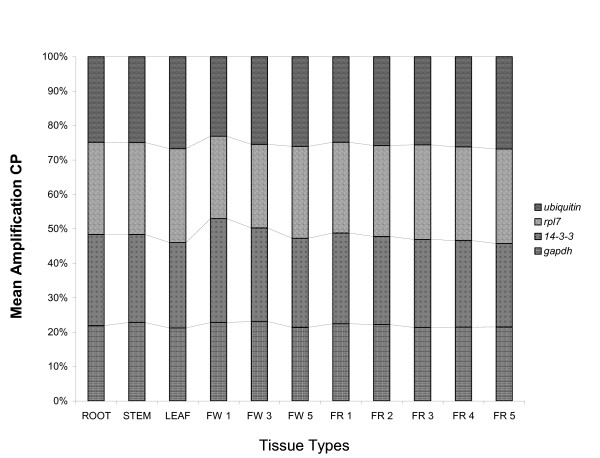
Background: Quantitative data from gene expression experiments are often normalized by transcription levels of reference or housekeeping genes. An inherent assumption for their use is that the expression of these genes is highly uniform in living organisms during various phases of development, in different cell types and under diverse environmental conditions. To date, the validation of reference genes in plants has received very little attention and suitable reference genes have not been defined for a great number of crop species including Coffea arabica. The aim of the research reported herein was to compare the relative expression of a set of potential reference genes across different types of tissue/organ samples of coffee. We also validated the expression profiles of the selected reference genes at various stages of development and under a specific biotic stress.
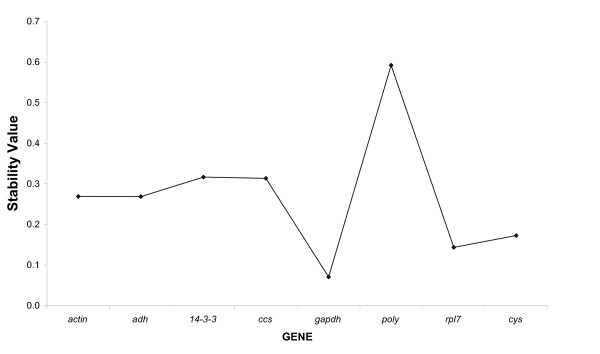
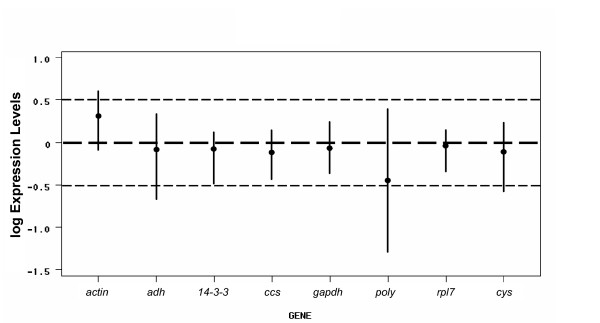
Results: The expression levels of five frequently used housekeeping genes (reference genes), namely alcohol dehydrogenase (adh), 14-3-3, polyubiquitin (poly), beta-actin (actin) and glyceraldehyde-3-phosphate dehydrogenase (gapdh) was assessed by quantitative real-time RT-PCR over a set of five tissue/organ samples (root, stem, leaf, flower, and fruits) of Coffea arabica plants. In addition to these commonly used internal controls, three other genes encoding a cysteine proteinase (cys), a caffeine synthase (ccs) and the 60S ribosomal protein L7 (rpl7) were also tested. Their stability and suitability as reference genes were validated by geNorm, NormFinder and BestKeeper programs. The obtained results revealed significantly variable expression levels of all reference genes analyzed, with the exception of gapdh, which showed no significant changes in expression among the investigated experimental conditions.
Conclusion: Our data suggests that the expression of housekeeping genes is not completely stable in coffee. Based on our results, gapdh, followed by 14-3-3 and rpl7 were found to be homogeneously expressed and are therefore adequate for normalization purposes, showing equivalent transcript levels in different tissue/organ samples. Gapdh is therefore the recommended reference gene for measuring gene expression in Coffea arabica. Its use will enable more accurate and reliable normalization of tissue/organ-specific gene expression studies in this important cherry crop plant.
Figures
References
Publication types
MeSH terms
Substances
LinkOut - more resources
Full Text Sources
Research Materials
