


Is 21st century neuroscience too focussed on the rat/mouse model of brain function and dysfunction?
- PMID: 19127284
- PMCID: PMC2605402
- DOI: 10.3389/neuro.05.005.2008
Is 21st century neuroscience too focussed on the rat/mouse model of brain function and dysfunction?
Abstract
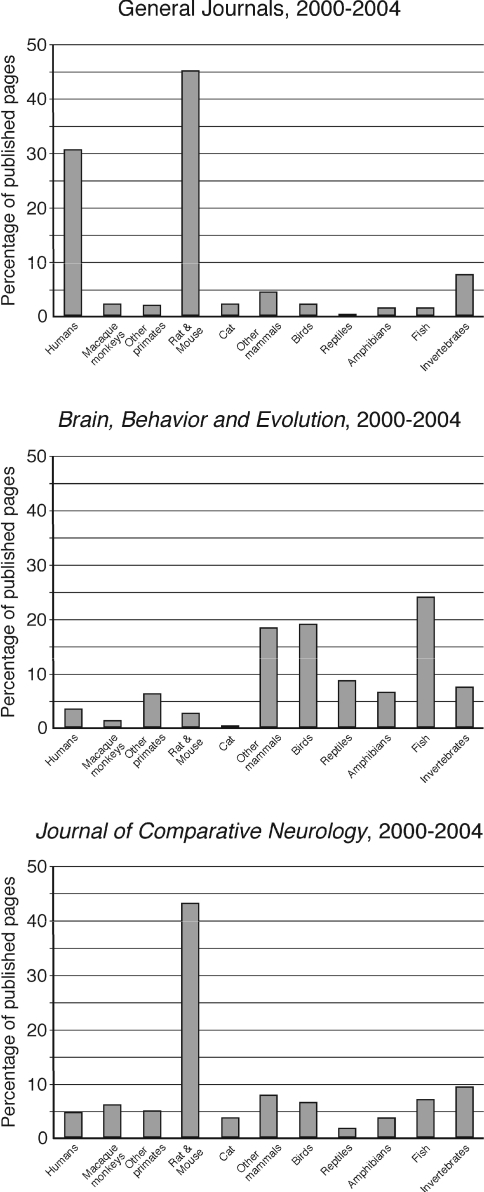
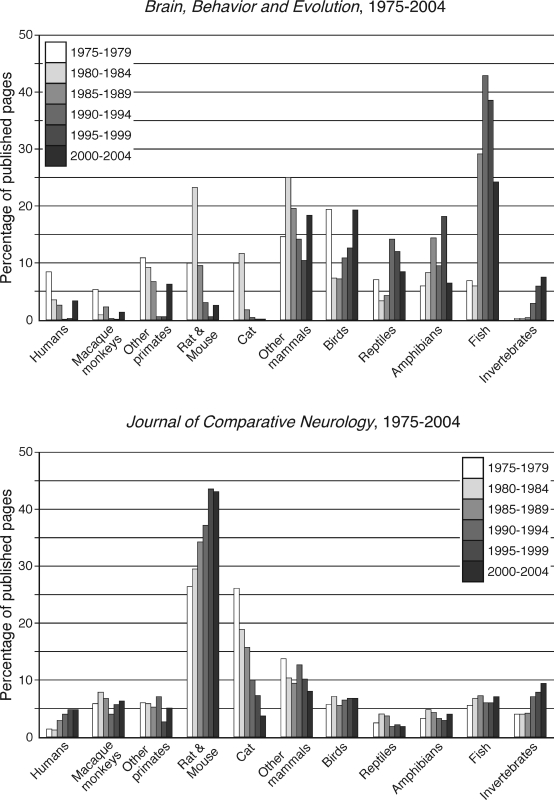
Studies in the basic neurosciences are heavily reliant upon rat and mouse models. The brain is one of the most distinguishing features of the human species, but is enough being done to fully understand the evolution of the human brain and brain diversity in general? Without a clear understanding of the evolution of the nervous system we may be investing a great deal of effort into some limited specific animal models that may prove to be erroneous in terms of the overall usefulness in clinically applied research. Here we present an analysis that demonstrates that 75% of our research efforts are directed to the rat, mouse and human brain, or 0.0001% of the nervous systems on the planet. This extreme bias in research trends may provide a limited scope in the discovery of novel aspects of brain structure and function that would be of importance in understanding both the evolution of the human brain and in selecting appropriate animal models for use in clinically related research. We offer examples both from the historical and recent literature indicating the usefulness of comparative neurobiological investigation in elucidating both normal and abnormal structure and function of the brain.
Keywords: animal models; central nervous system; evolution; invertebrate; vertebrate.
Figures
References
-
- Blinkov S. M., Glezer I. I. (1968). The Human Brain in Figures and Tables. A Quantitative Handbook. New York, Plenum Press.
-
- Cajal S. R. (1888). Estructura de los centros nerviosos de las aves. Rev. Trimest. Histol. Norm. Patol. (Barcelona) 1, 1–10
LinkOut - more resources
Full Text Sources
