. 2009 Feb;1791(2):92-102.
doi: 10.1016/j.bbalip.2008.12.002. Epub 2008 Dec 16.

Expression of phospholipases A2 in primary human lung macrophages: role of cytosolic phospholipase A2-alpha in arachidonic acid release and platelet activating factor synthesis

Affiliations

Expression of phospholipases A2 in primary human lung macrophages: role of cytosolic phospholipase A2-alpha in arachidonic acid release and platelet activating factor synthesis

Giorgio Giannattasio et al. Biochim Biophys Acta. 2009 Feb.

Abstract

Macrophages are a major source of lipid mediators in the human lung. Expression and contribution of cytosolic (cPLA(2)) and secreted phospholipases A(2) (sPLA(2)) to the generation of lipid mediators in human macrophages are unclear. We investigated the expression and role of different PLA(2)s in the production of lipid mediators in primary human lung macrophages. Macrophages express the alpha, but not the zeta isoform of group IV and group VIA cPLA(2) (iPLA(2)). Two structurally-divergent inhibitors of group IV cPLA(2) completely block arachidonic acid release by macrophages in response to non-physiological (Ca(2+) ionophores and phorbol esters) and physiological agonists (lipopolysaccharide and Mycobacterium protein derivative). These inhibitors also reduce by 70% the synthesis of platelet-activating factor by activated macrophages. Among the full set of human sPLA(2)s, macrophages express group IIA, IID, IIE, IIF, V, X and XIIA, but not group IB and III enzymes. Me-Indoxam, a potent and cell impermeable inhibitor of several sPLA(2)s, has no effect on arachidonate release or platelet-activating factor production. Agonist-induced exocytosis is not influenced by cPLA(2) inhibitors at concentrations that block arachidonic acid release. Our results indicate that human macrophages express cPLA(2)-alpha, iPLA(2) and several sPLA(2)s. Cytosolic PLA(2)-alpha is the major enzyme responsible for lipid mediator production in human macrophages.


Figures
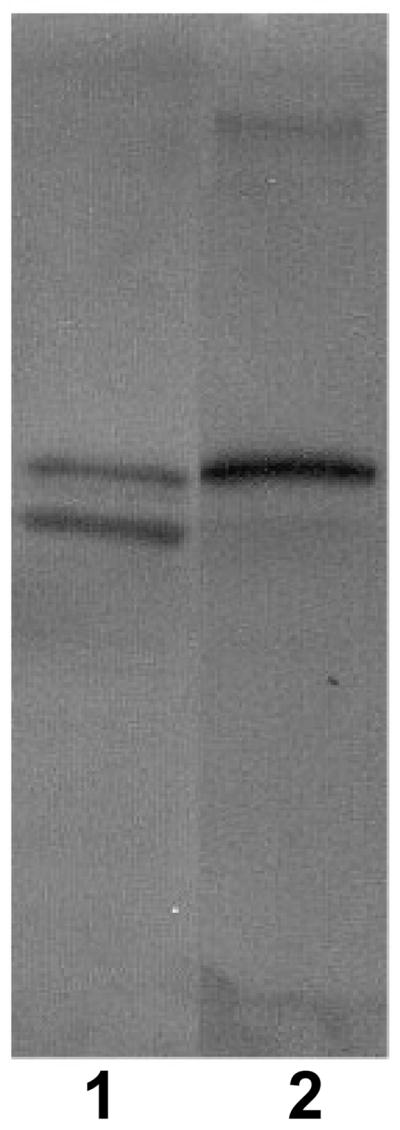
Figure 1
Figure 1. Western blot detection of cPLA2-α in human lung macrophages
Lane 1 is macrophage lysate, and lane 2 is recombinant cPLA2-α protein. Additional details are given in Experimental Procedures.
Figure 2
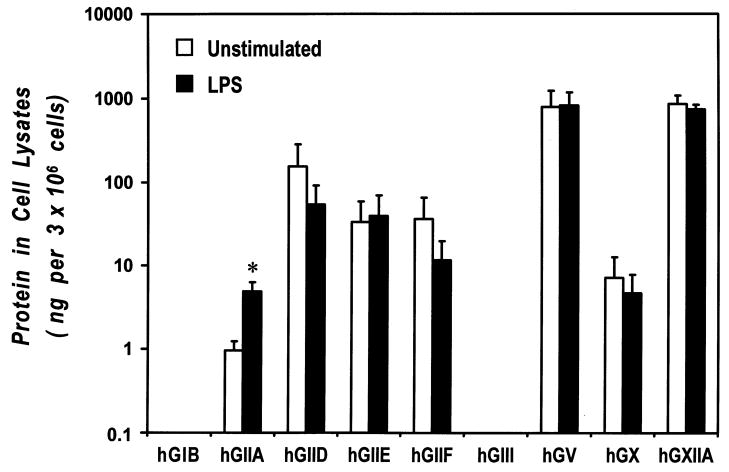
Figure 2. Presence of sPLA2s in human lung macrophages
Macrophage lysates were analyzed for sPLA2 protein content by time-resolved fluorescence immunoassay (See “Methods”). Approximate detection limits (pg sPLA2 per assay well) were: GIB, 10; GIIA, 20; GIID, 500; GIIE, 40; GIIF, 300; GIII, 300; GV, 60; GX, 4; GXIIA, 600. Data are expressed as ng of sPLA2/3×106 cells and are the mean ± SE of five different donors. * p < 0.05 vs. respective unstimulated.
Figure 3
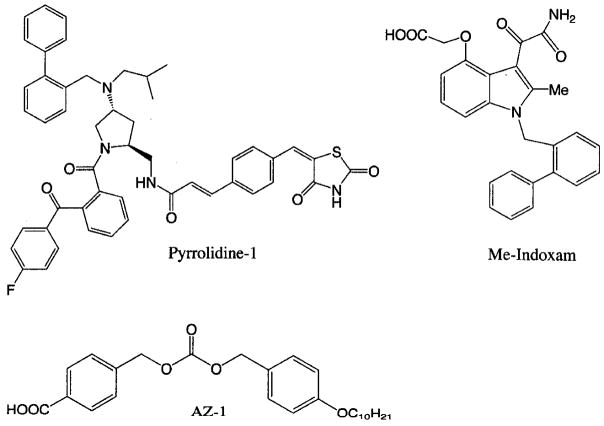
Figure 3
Structures of the cPLA2-α and sPLA2 inhibitors used in this study.
Figure 4
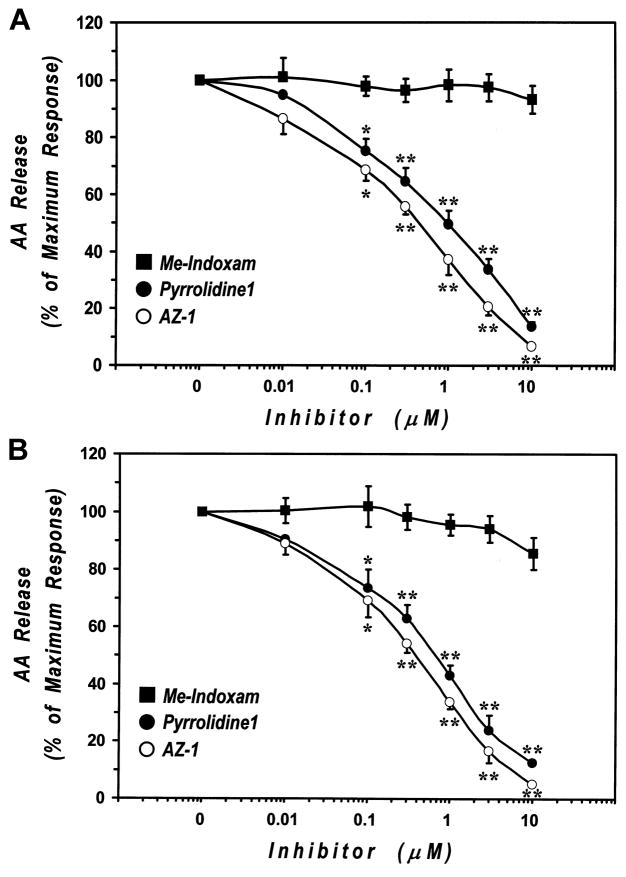
Figure 4. Effect of cPLA2 and sPLA2 inhibitors on AA release from PMA-(upper panel) and A23187-stimulated (lower panel) human lung macrophages
[3H]AA-labeled human lung macrophages were preincubated (30 min, 37°C) with increasing concentrations (0.01–10 μM) of AZ-1 (○), pyrrolidine-1 (●) or Me-Indoxam (■) and then stimulated (30 min, 37°C) with 1 μM PMA (upper panel) or A23187 (lower panel). At the end of the incubation, supernatants were collected and centrifuged twice (1000 g, 4°C, 5 min) for subsequent determination of AA release. Values are the mean ± SE of four different experiments. * p < 0.05 vs. respective stimulus alone ** p < 0.01 vs. respective stimulus alone
Figure 5
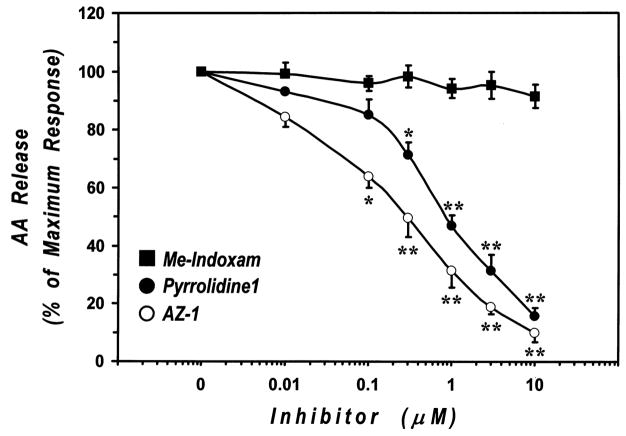
Figure 5. Effect of cPLA2 and sPLA2 inhibitors on AA release from PMA + A23187-stimulated human lung macrophages
[3H]AA-labeled human lung macrophages were preincubated (30 min, 37°C) with increasing concentrations (0.01–10 μM) of AZ-1 (○), pyrrolidine-1 (●) or Me-Indoxam (■) and then stimulated with 1 μM PMA (10 min, 37°C) and subsequently with 1 μM A23187 (30 min, 37°C). At the of the incubation, supernatants were collected and centrifuged twice (1000 g, 4°C, 5 min) for subsequent determination of AA release. Values are the mean ± SE of three different experiments. * p < 0.05 vs. PMA + A23187 ** p < 0.01 vs. PMA + A23187
Figure 6
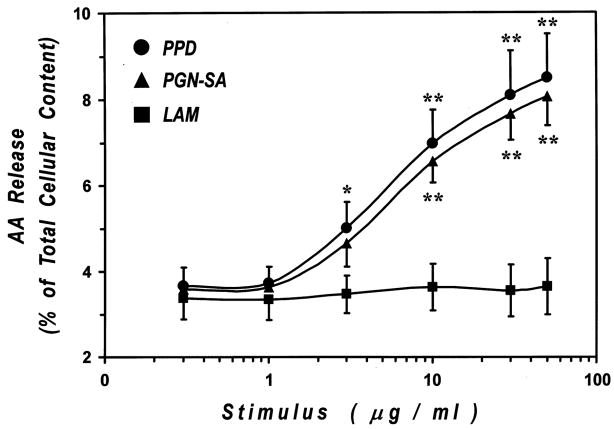
Figure 6. Effects of PPD, LAM and PGN-SA on AA release from human lung macrophages
[3H]AA-labeled human lung macrophages were stimulated (1 h, 37°C) with increasing concentrations (0.3–50 μg/ml) of PPD, LAM, or PGN-SA. At the end of the incubation, supernatants were collected and centrifuged twice (1000 g, 4°C, 5 min) for subsequent determination of AA release. Values are the mean ± SE of three different experiments. * p < 0.05 vs. unstimulated ** p < 0.01 vs. unstimulated
Figure 7
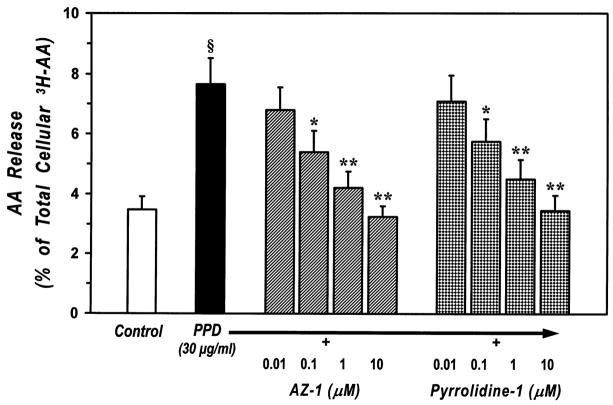
Figure 7. Effect of cPLA2 inhibitors on AA release from PPD-stimulated human lung macrophages
[3H]AA-labeled human lung macrophages were preincubated (30 min, 37°C) with increasing concentrations (0.01–10 μM) of AZ-1 or pyrrolidine-1 and then stimulated (1 h, 37°C) with 30 μg/ml PPD. At the end of the incubation, supernatants were collected and centrifuged twice (1000 g, 4°C, 5 min) for subsequent determination of AA release. Values are the mean ± SE of three different experiments. § p < 0.01 vs. unstimulated * p < 0.05 vs. PPD alone ** p < 0.01 vs. PPD alone
Figure 8
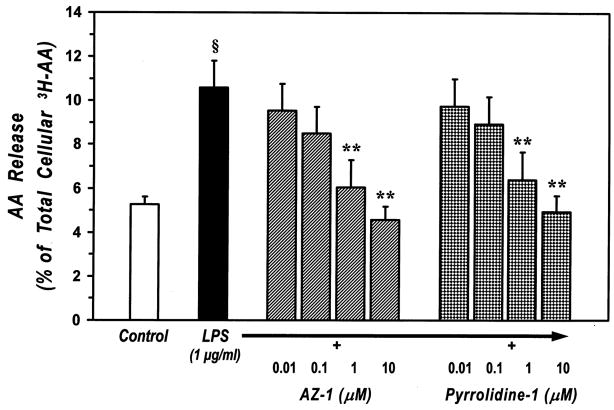
Figure 8. Effect of cPLA2 inhibitors on AA release from LPS-stimulated human lung macrophages
[3H]AA-labeled human lung macrophages were preincubated (30 min, 37°C) with increasing concentrations (0.01–10 μM) of AZ-1 or pyrrolidine-1 and then stimulated (2 h, 37°C) with 1 μg/ml LPS. At the end of the incubation, supernatants were collected and centrifuged twice (1000 g, 4°C, 5 min) for subsequent determination of AA release. Values are the mean ± SE of three different experiments. § p < 0.01 vs. unstimulated ** p < 0.01 vs. LPS alone
Figure 9
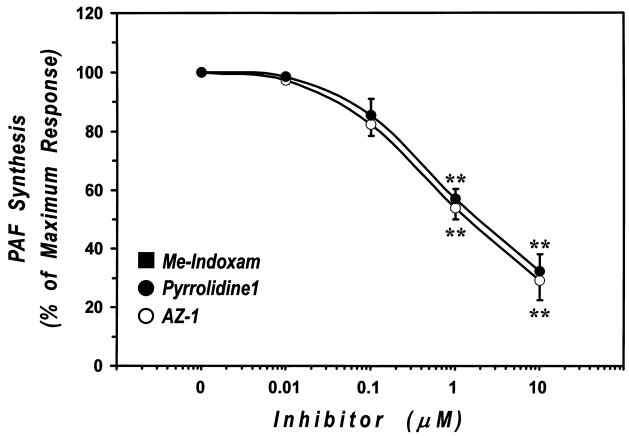
Figure 9. Effect of cPLA2 inhibitors on PAF synthesis from A23187-stimulated human lung macrophages
Human lung macrophages were preincubated (30 min, 37°C) with increasing concentrations (0.01–10 μM) of AZ–1 (○) or pyrrolidine–1 (●) and then stimulated with 1 μM A23187 (10 min, 37°C) in the presence of [3H]acetic acid. At the end of the incubation, lipid were extracted from both cells and supernatants by the Bligh and Dyer technique. PAF was separated by TLC and quantitated by lipid scintillation counting. Values are the mean ± SE of three different experiments. ** p < 0.01 vs. A23187 alone
Figure 10
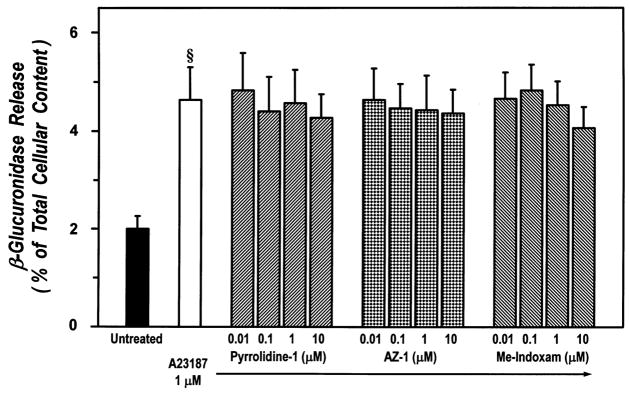
Figure 10. Effect of cPLA2 and sPLA2 inhibitors on β-glucuronidase release from A23187-stimulated human lung macrophages
Human lung macrophages were preincubated (30 min, 37°C) with increasing concentrations (0.01–10 μM) of pyrrolidine-1, AZ-1 or Me-Indoxam and then stimulated with 1 μM A23187 (90 min, 37°C). At the of the incubation, supernatants were collected and centrifuged twice (1000 g, 4°C, 5 min). β-Glucuronidase release was determined by a colorimetric technique. The values are expressed as the percentage of the total cellular content determined in cell aliquots lysed with 0.1% Triton X-100. The data are the mean ± SE of three different experiments. § p < 0.01 vs. unstimulated.

References

    1. Barnes PJ. Alveolar macrophages as orchestrators of COPD. Copd. 2004;1:59–70. - PubMed
    1. Peters-Golden M. The alveolar macrophage: the forgotten cell in asthma. Am J Respir Cell Mol Biol. 2004;31:3–7. - PubMed
    1. Reynolds HY. Lung inflammation and fibrosis: an alveolar macrophage-centered perspective from the 1970s to 1980s. Am J Respir Crit Care Med. 2005;171:98–102. - PubMed
    1. Marriott HM, Dockrell DH. The role of the macrophage in lung disease mediated by bacteria. Exp Lung Res. 2007;33:493–505. - PubMed
    1. Sica A, Allavena P, Mantovani A. Cancer related inflammation: the macrophage connection. Cancer Lett. 2008;267:204–215. - PubMed

Publication types

MeSH terms

LinkOut - more resources