


Procedural confidence in hospital based practitioners: implications for the training and practice of doctors at all grades
- PMID: 19138395
- PMCID: PMC2651872
- DOI: 10.1186/1472-6920-9-2
Procedural confidence in hospital based practitioners: implications for the training and practice of doctors at all grades
Abstract
Background: Medical doctors routinely undertake a number of practical procedures and these should be performed competently. The UK Postgraduate Medical Education and Training Board (PMETB) curriculum lists the procedures trainees should be competent in. We aimed to describe medical practitioner's confidence in their procedural skills, and to define which practical procedures are important in current medical practice.
Methods: A cross sectional observational study was performed measuring procedural confidence in 181 hospital practitioners at all grades from 2 centres in East Anglia, England.
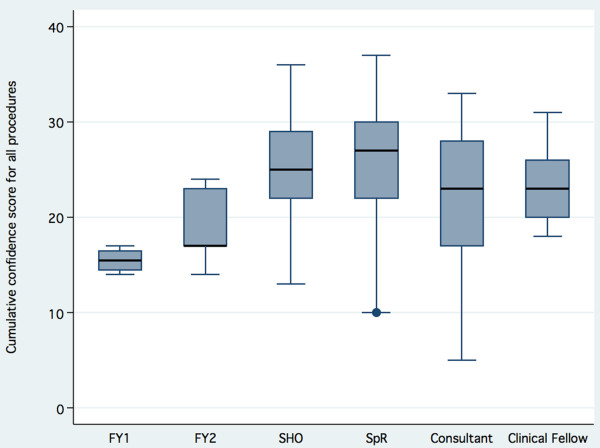
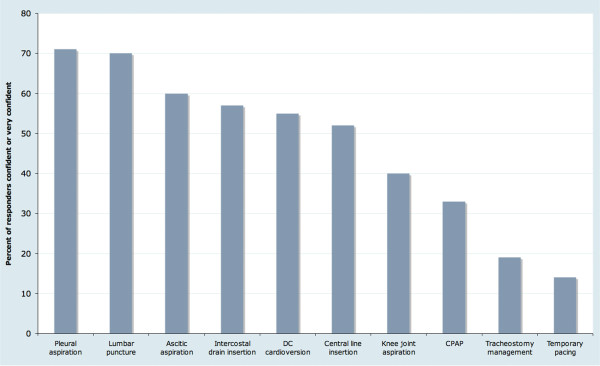
Results: Both trainees and consultants provide significant service provision. SpR level doctors perform the widest range and the highest median number of procedures per year. Most consultants perform few if any procedures, however some perform a narrow range at high volume. Cumulative confidence for the procedures tested peaks in the SpR grade. Five key procedures (central line insertion, lumbar puncture, pleural aspiration, ascitic aspiration, and intercostal drain insertion) are the most commonly performed, are seen as important generic skills, and correspond to the total number of procedures for which confidence can be maintained. Key determinants of confidence are gender, number of procedures performed in the previous year and total number of procedures performed.
Conclusion: The highest volume of service requirement is for six procedures. The procedural confidence is dependent upon gender, number of procedures performed in the previous year and total number of procedures performed. This has implications for those designing the training curriculum and with regards the move to shorten the duration of training.
Figures
References
-
- The Physician Of Tomorrow, Curriculum for General Internal Medicine and Acute Medicine. Federation of the Royal Colleges Of Physicians, London; 2007.
-
- Wigton RS, Alguire P. The declining number and variety of procedures done by the general internists: a resurvey of members of the American College of Physicians. Ann Intern Med. 2007;146:355–60. - PubMed
MeSH terms
Grants and funding
LinkOut - more resources
Full Text Sources
Molecular Biology Databases
