


Meta-analysis of the effects of repetitive transcranial magnetic stimulation (rTMS) on negative and positive symptoms in schizophrenia
- PMID: 19138833
- PMCID: PMC2748189
- DOI: 10.1016/j.schres.2008.11.027
Meta-analysis of the effects of repetitive transcranial magnetic stimulation (rTMS) on negative and positive symptoms in schizophrenia
Abstract
Background: A growing body of evidence suggests that repetitive transcranial magnetic stimulation (rTMS) can alleviate negative and positive symptoms of refractory schizophrenia. However, trials to date have been small and results are mixed.
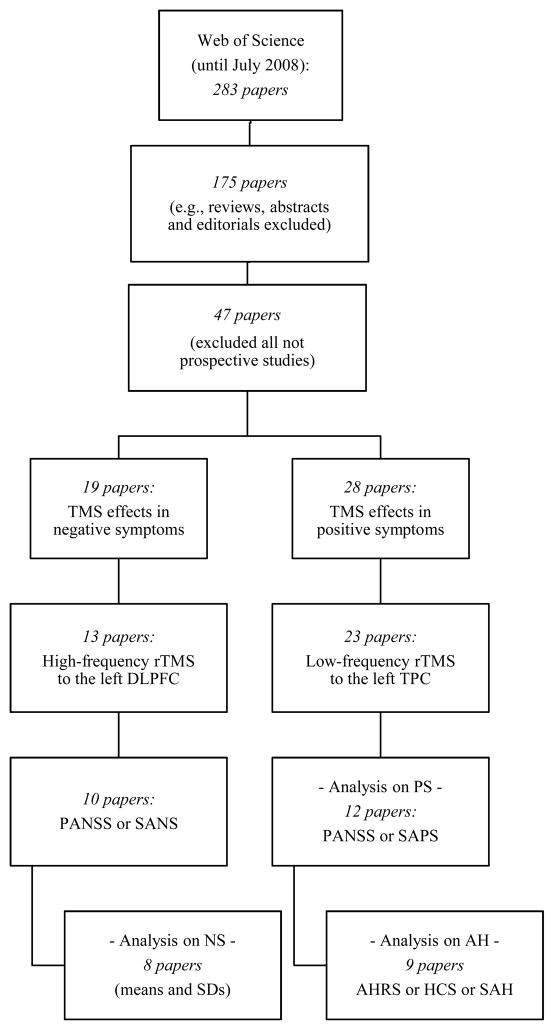
Methods: We performed meta-analyses of all prospective studies of the therapeutic application of rTMS in refractory schizophrenia assessing the effects of high-frequency rTMS to the left dorsolateral prefrontal cortex (DLPFC) to treat negative symptoms, and low-frequency rTMS to the left temporo-parietal cortex (TPC) to treat auditory hallucinations (AH) and overall positive symptoms.
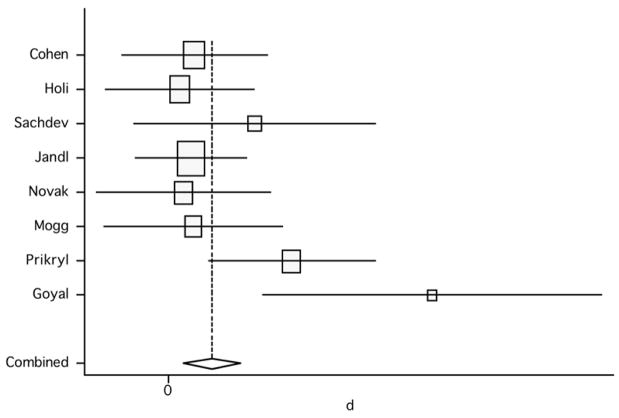
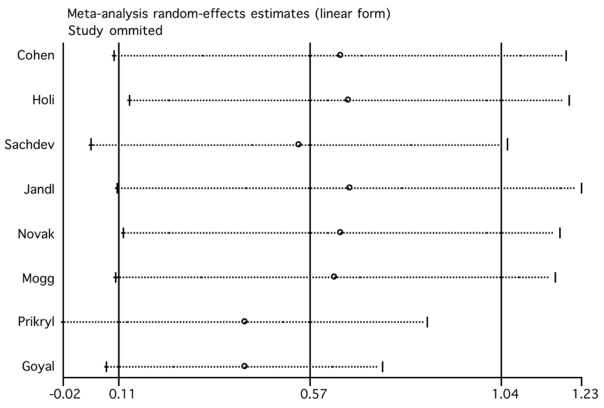
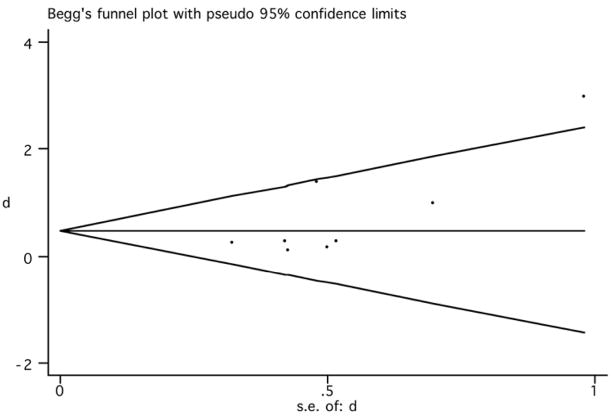
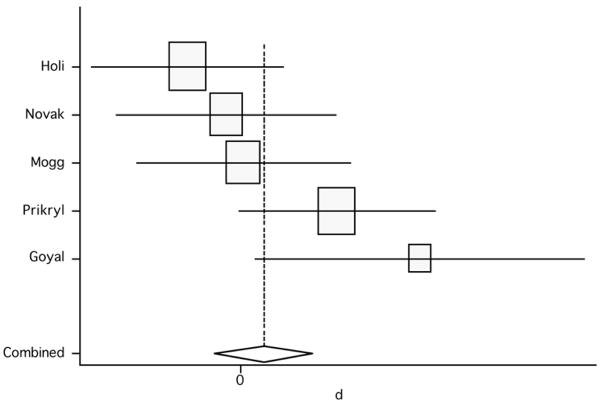
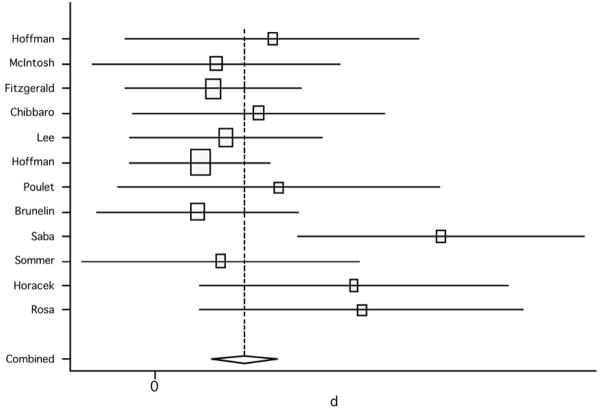
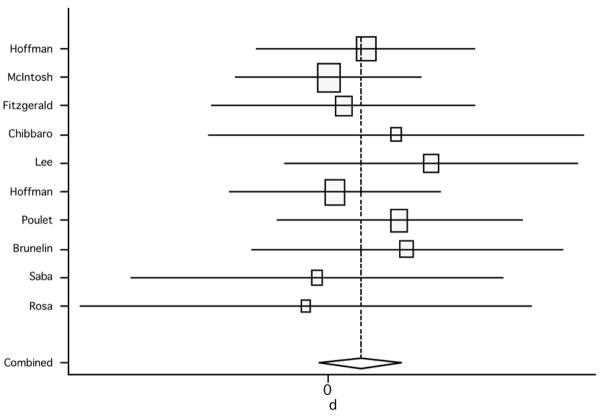
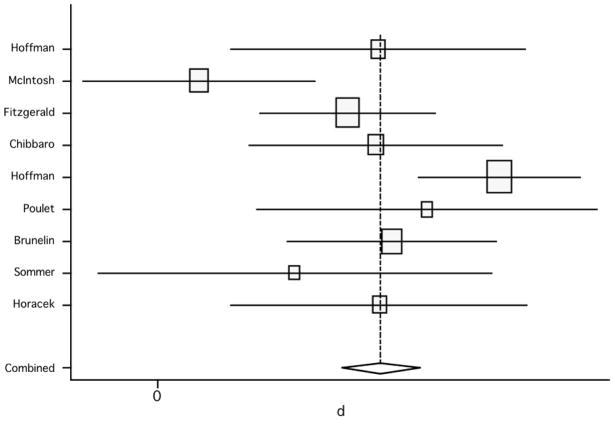
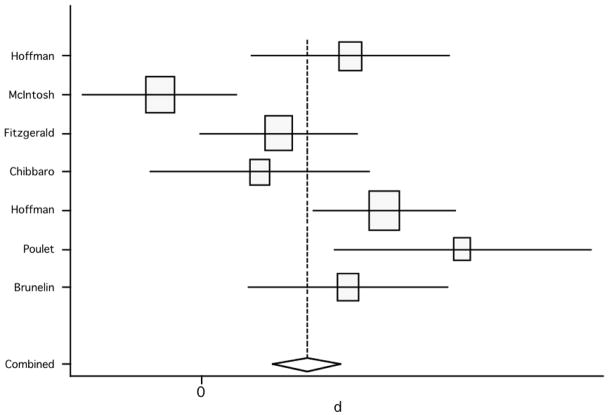
Results: When analyzing controlled (active arms) and uncontrolled studies together, the effect sizes showed significant and moderate effects of rTMS on negative and positive symptoms (based on PANSS-N or SANS, and PANSS-P or SAPS, respectively). However, the analysis for the sham-controlled studies revealed a small non-significant effect size for negative (0.27, p=0.417) and for positive symptoms (0.17, p=0.129). When specifically analyzing AH (based on AHRS, HCS or SAH), the effect size for the sham-controlled studies was large and significant (1.04; p=0.002).
Conclusions: These meta-analyses support the need for further controlled, larger trials to assess the clinical efficacy of rTMS on negative and positive symptoms of schizophrenia, while suggesting the need for exploration for alternative stimulation protocols.
Conflict of interest statement
Conflicts of interest
We disclose no conflicts of interest.
Figures
References
-
- Aleman A, Sommer IE, Kahn RS. Efficacy of slow repetitive transcranial magnetic stimulation in the treatment of resistant auditory hallucinations in schizophrenia: a meta-analysis. J Clin Psychiatry. 2007;68 (3):416–21. - PubMed
-
- Baas D, van’t Wout M, Aleman A, Kahn RS. Social judgement in clinically stable patients with schizophrenia and healthy relatives: behavioural evidence of social brain dysfunction. Psychol Med. 2008;38 (5):747–54. - PubMed
-
- Brunelin J, Poulet E, Bediou B, Kallel L, Dalery J, D’amato T, Saoud M. Low frequency repetitive transcranial magnetic stimulation improves source monitoring deficit in hallucinating patients with schizophrenia. Schizophr Res. 2006;81 (1):41–5. - PubMed
-
- Chibbaro G, Daniele M, Alagona G, Di Pasquale C, Cannavò M, Rapisarda V, Bella R, Pennisi G. Repetitive transcranial magnetic stimulation in schizophrenic patients reporting auditory hallucinations. Neurosci Lett. 2005;383 (1–2):54–7. - PubMed
Publication types
MeSH terms
Grants and funding
LinkOut - more resources
Full Text Sources
Medical
