Low-fat dietary pattern and risk of benign proliferative breast disease: a randomized, controlled dietary modification trial
- PMID: 19138971
- PMCID: PMC3893100
- DOI: 10.1158/1940-6207.CAPR-08-0003
Low-fat dietary pattern and risk of benign proliferative breast disease: a randomized, controlled dietary modification trial
Abstract
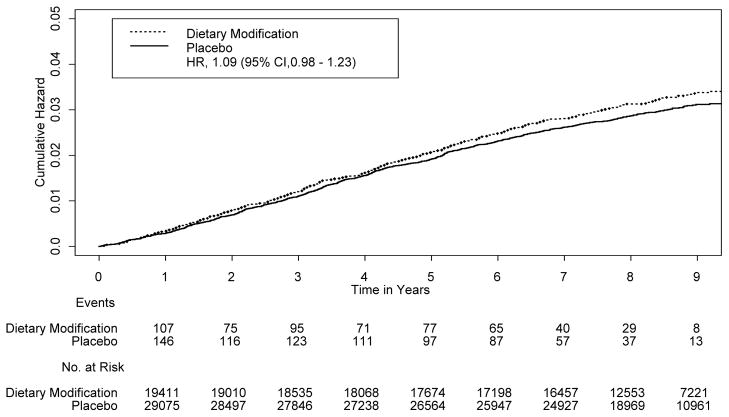
Modifiable factors, including diet, might alter breast cancer risk. We used the Women's Health Initiative Dietary Modification trial to test the effect of the intervention on risk of benign proliferative breast disease, a condition associated with increased risk of, and considered to be on the pathway to, invasive breast cancer. The Women's Health Initiative Dietary Modification trial was a randomized, controlled, primary prevention trial conducted in 40 U.S. clinical centers from 1993 to 2005. A total of 48,835 postmenopausal women, ages 50 to 79 years, without prior breast cancer, were enrolled. Participants were randomly assigned to the dietary modification intervention group or to the comparison group. The intervention was designed to reduce total dietary fat intake to 20% of total energy intake, and to increase fruit and vegetable intake to > or =5 servings/d and intake of grain products to > or =6 servings/d, but resulted in smaller, albeit significant, changes in practice. Participants had biennial mammograms and regular clinical breast exams. We identified women who reported breast biopsies free of cancer, obtained the histologic sections, and subjected them to standardized central review. During follow-up (average, 7.7 years), 570 incident cases of benign proliferative breast disease were ascertained in the intervention group and 793 in the comparison group. The hazard ratio for the association between dietary modification and benign proliferative breast disease was 1.09 (95% confidence interval, 0.98-1.23). Risk varied by levels of baseline total vitamin D intake but it varied little by levels of other baseline variables. These results suggest that a modest reduction in fat intake and increase in fruit, vegetable, and grain intake do not alter the risk of benign proliferative breast disease.
Figures
References
-
- Hankinson SE, Hunter DJ. Breast Cancer. In: Adami H-O, Hunter DJ, Trichopoulos D, editors. Textbook of cancer epidemiology. New York: Oxford University Press; 2002. pp. 301–39.
-
- Duncan AM. The role of nutrition in the prevention of breast cancer. AACN Clin Issues. 2004;15:119–35. - PubMed
-
- Hunter DJ, Spiegelman D, Adami HO, et al. Cohort studies of fat intake and the risk of breast cancer--a pooled analysis. N Engl J Med. 1996;334:356–61. - PubMed
-
- Lee MM, Lin SS. Dietary fat and breast cancer. Annu Rev Nutr. 2000;20:221–48. - PubMed
-
- Glade MJ. Food, nutrition, and the prevention of cancer: a global perspective. American Institute for Cancer Research/World Cancer Research Fund, American Institute for Cancer Research. Nutrition. 1999;15:523–6. 1997. - PubMed
Publication types
MeSH terms
Grants and funding
LinkOut - more resources
Full Text Sources