Amyotrophic lateral sclerosis-plus syndrome with TAR DNA-binding protein-43 pathology
- PMID: 19139310
- PMCID: PMC2702763
- DOI: 10.1001/archneur.66.1.121
Amyotrophic lateral sclerosis-plus syndrome with TAR DNA-binding protein-43 pathology
Abstract
Background: Amyotrophic lateral sclerosis (ALS)-Plus syndromes meet clinical criteria for ALS but also include 1 or more additional features such as dementia, geographic clustering, extrapyramidal signs, objective sensory loss, autonomic dysfunction, cerebellar degeneration, or ocular motility disturbance.
Methods: We performed a whole-brain and spinal cord pathologic analysis in a patient with an ALS-Plus syndrome that included repetitive behaviors along with extrapyramidal and supranuclear ocular motility disturbances resembling the clinical phenotype of progressive supranuclear palsy.
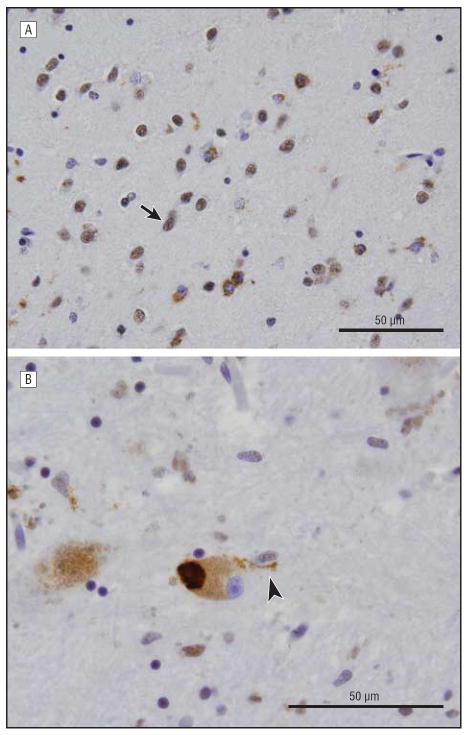
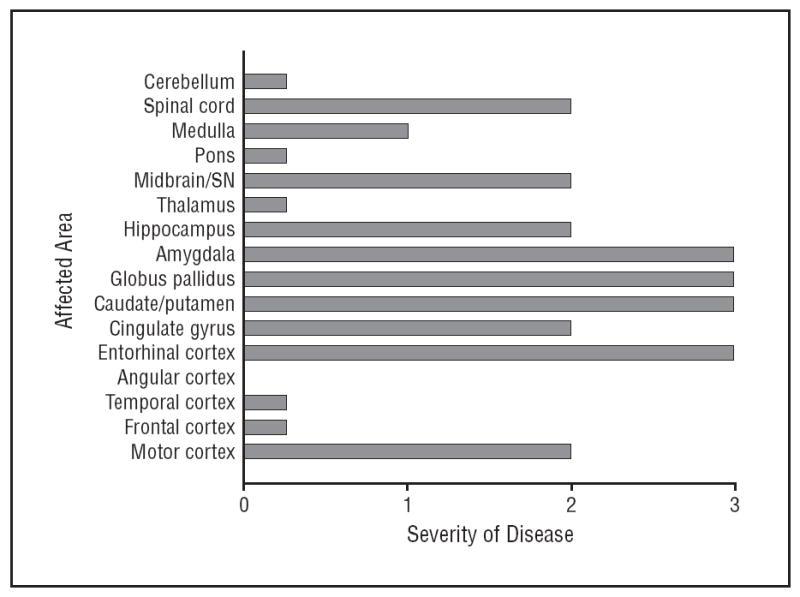
Results: There was motoneuron cell loss and degeneration of the corticospinal tracts. Bunina bodies were present. TAR DNA-binding protein-43 pathology was diffuse. Significant tau pathology was absent.
Conclusions: TAR DNA-binding protein-43 disorders can produce a clinical spectrum of neurodegeneration that includes ALS, frontotemporal lobar degeneration, and ALS with frontotemporal lobar degeneration. The present case illustrates that isolated TAR DNA-binding protein-43 disorders can produce an ALS-Plus syndrome with extrapyramidal features and supranuclear gaze palsy resembling progressive supranuclear palsy.
Figures
References
-
- Baker M, Mackenzie IR, Pickering-Brown SM, et al. Mutations in progranulin cause tau-negative frontotemporal dementia linked to chromosome 17. Nature. 2006;442(7105):916–919. - PubMed
-
- Van Deerlin VM, Wood EM, Moore P, et al. Clinical, genetic, and pathologic characteristics of patients with frontotemporal dementia and progranulin mutations. Arch Neurol. 2007;64(8):1148–1153. - PubMed
-
- Brooks BR, Miller RG, Swash M, Munsat TL. World Federation of Neurology Research Group on Motoneuron Diseases. El Escorial revisited: revised criteria for the diagnosis of amyotrophic lateral sclerosis. Amyotroph Lateral Scler Other Motoneuron Disord. 2000;1(5):293–299. - PubMed
-
- Ward C. Characteristics and symptom management of progressive supra-nuclear palsy: a multidisciplinary approach. J Neurosci Nurs. 2006;38(4):242–247. - PubMed
Publication types
MeSH terms
Substances
Grants and funding
LinkOut - more resources
Full Text Sources
Medical
Miscellaneous