


A computational study of the effect of false vocal folds on glottal flow and vocal fold vibration during phonation
- PMID: 19142730
- PMCID: PMC2852537
- DOI: 10.1007/s10439-008-9630-9
A computational study of the effect of false vocal folds on glottal flow and vocal fold vibration during phonation
Abstract
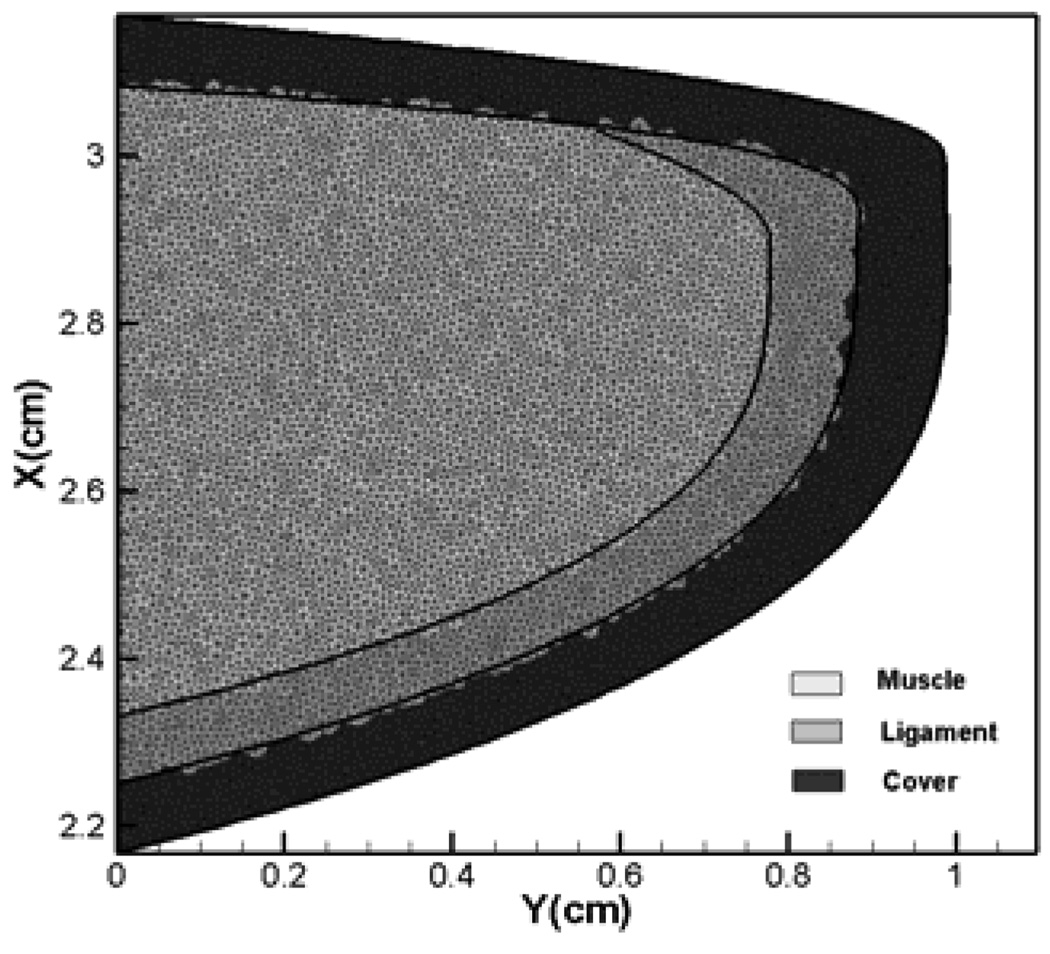
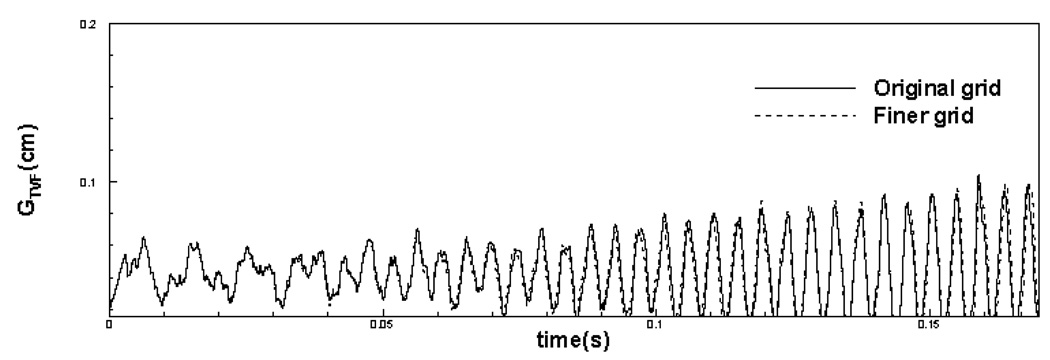
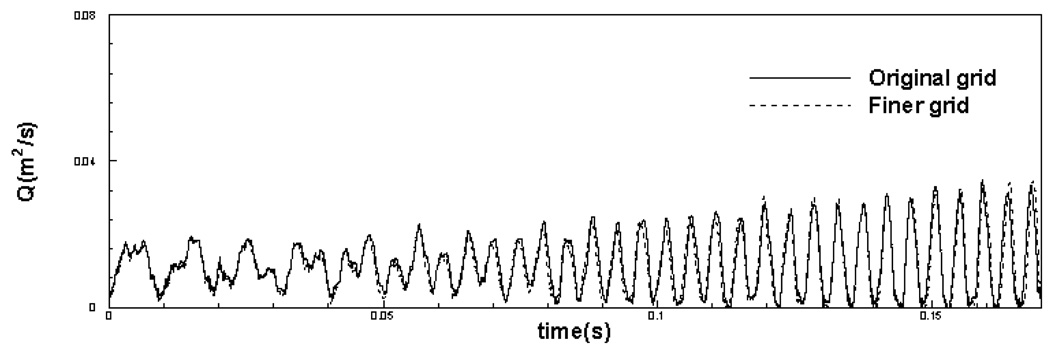
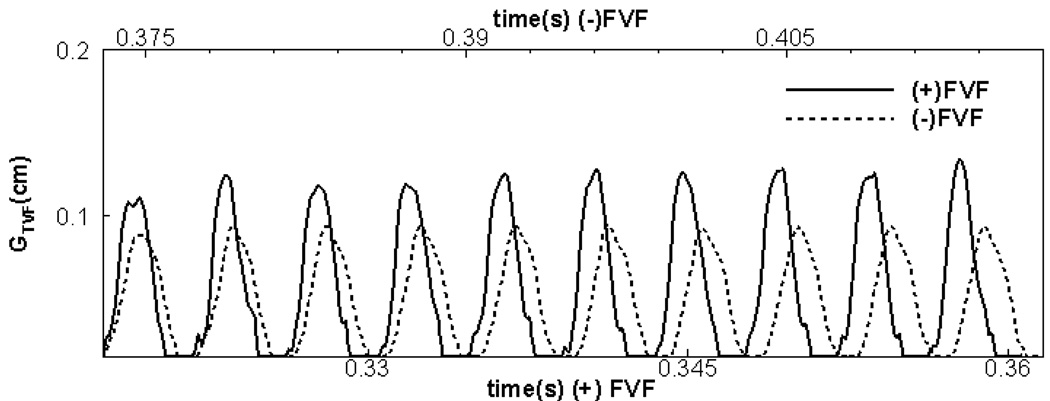
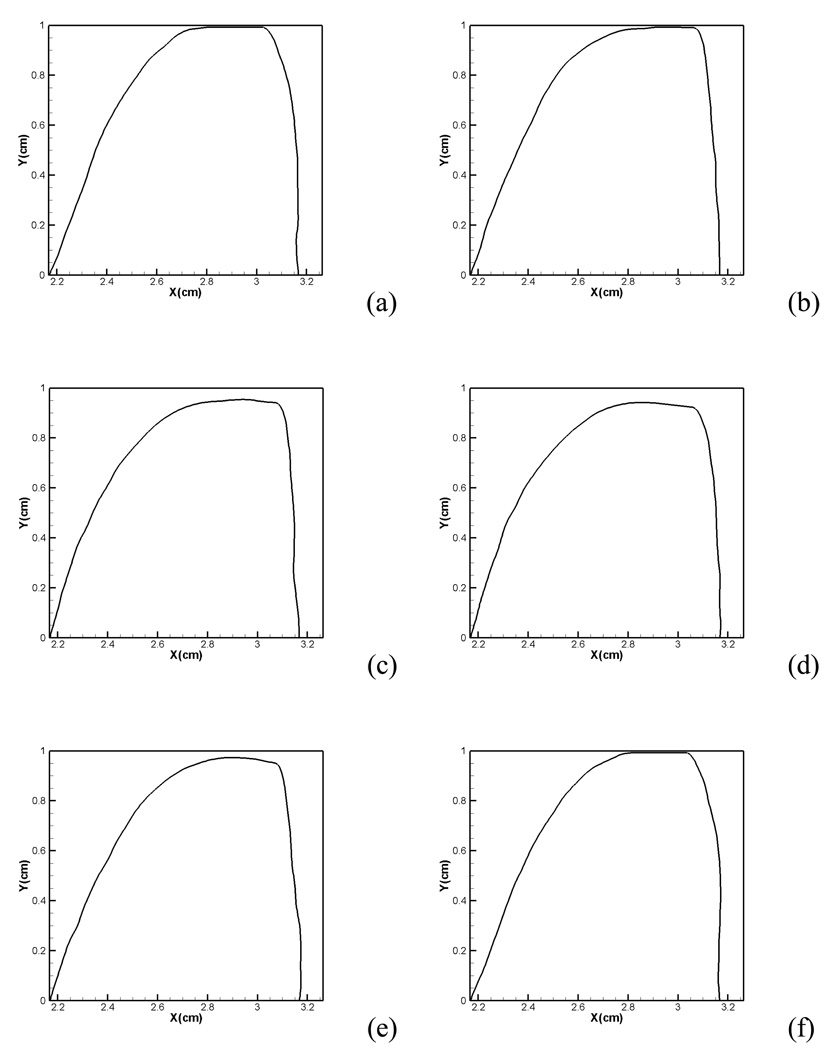
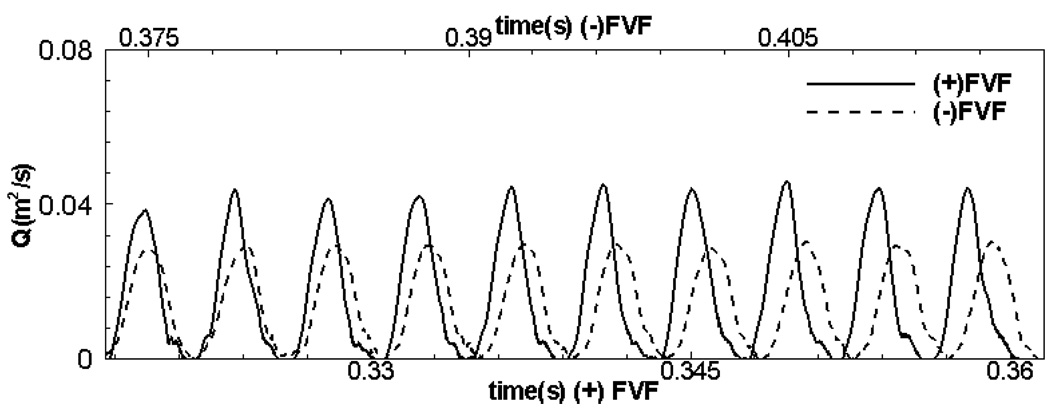
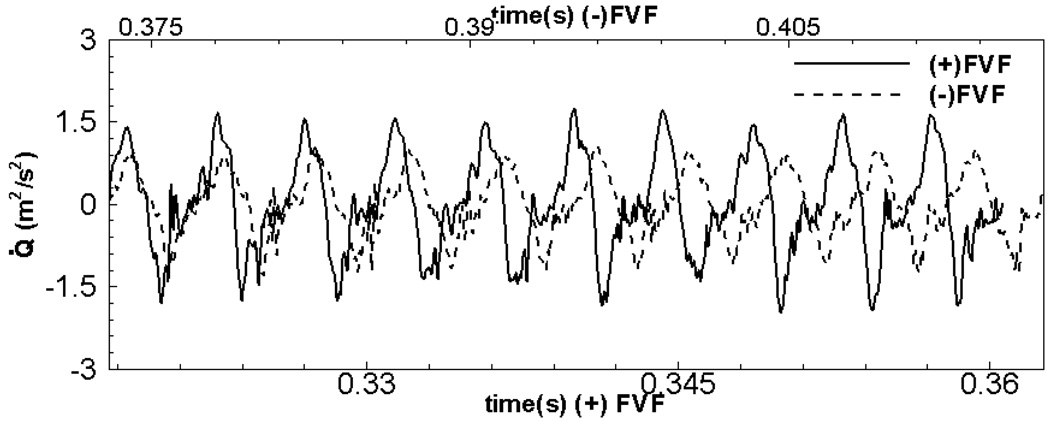
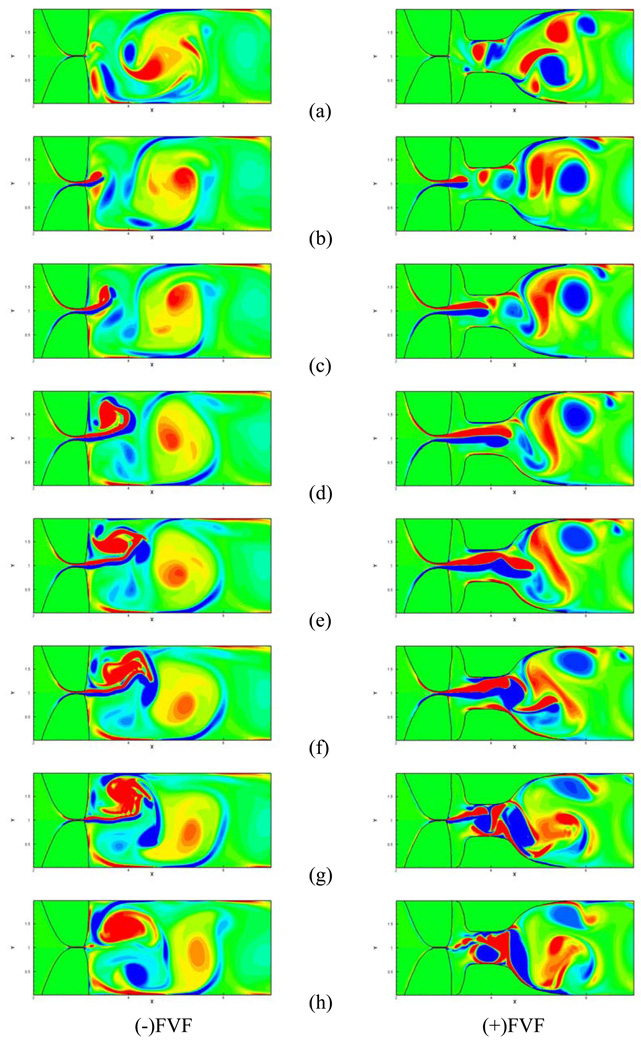
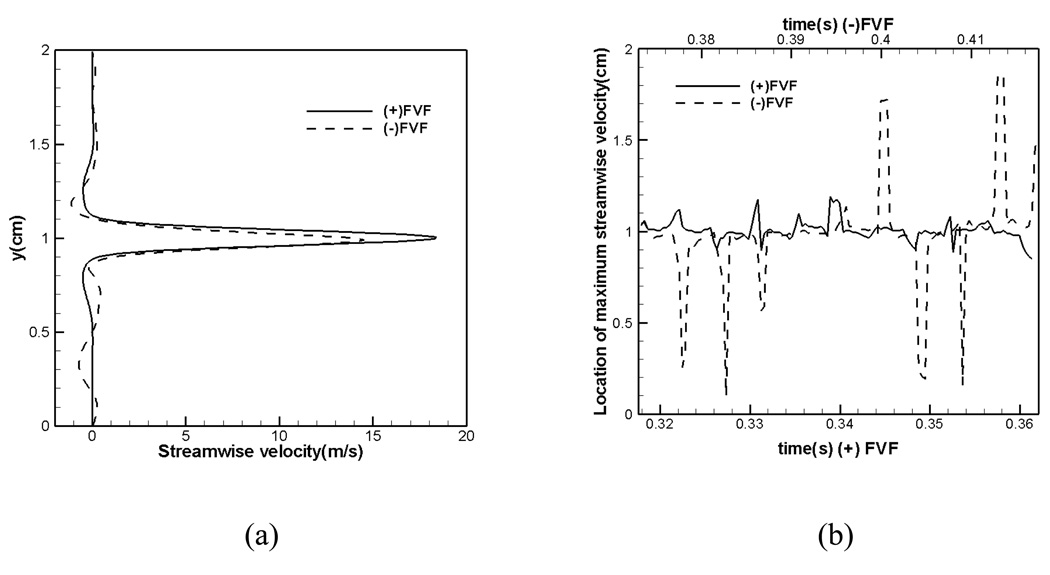
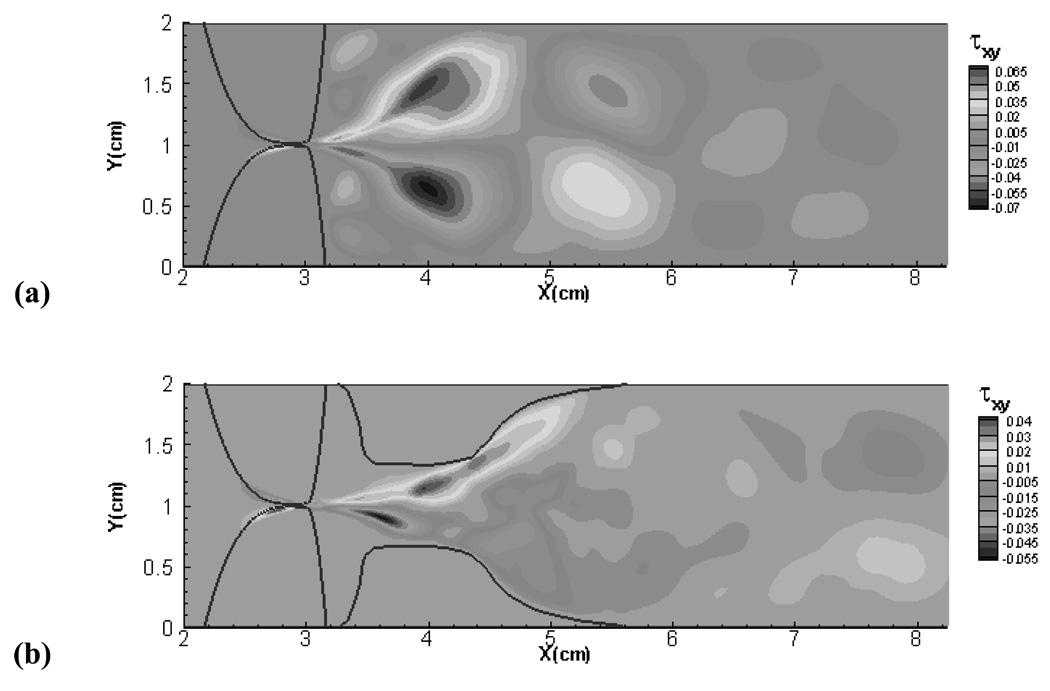
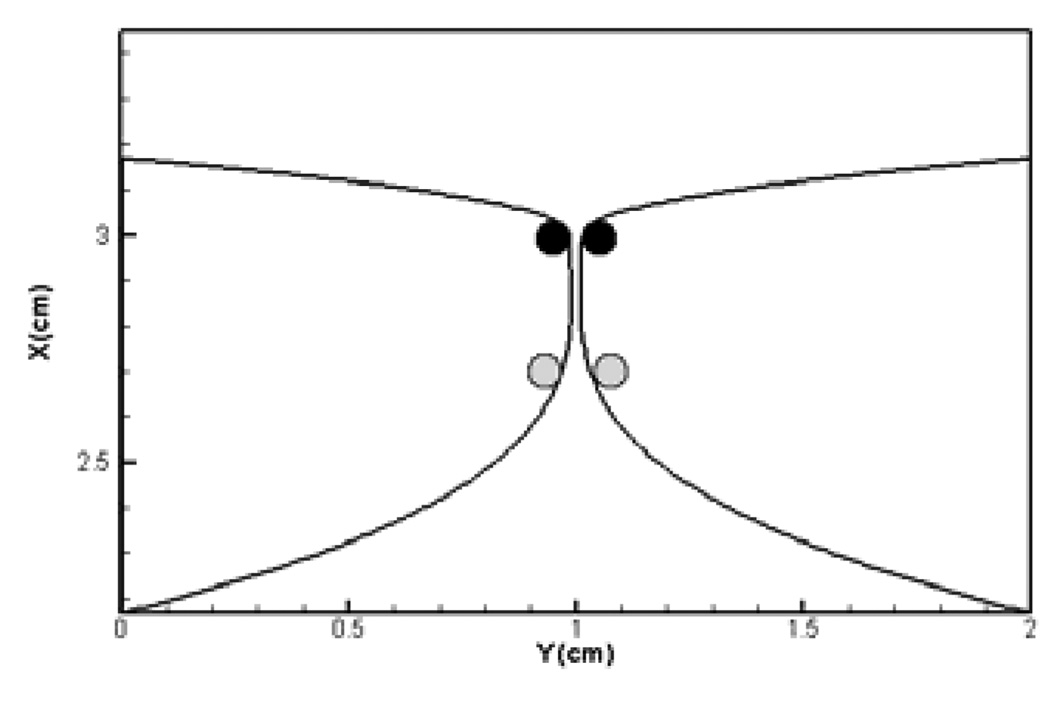
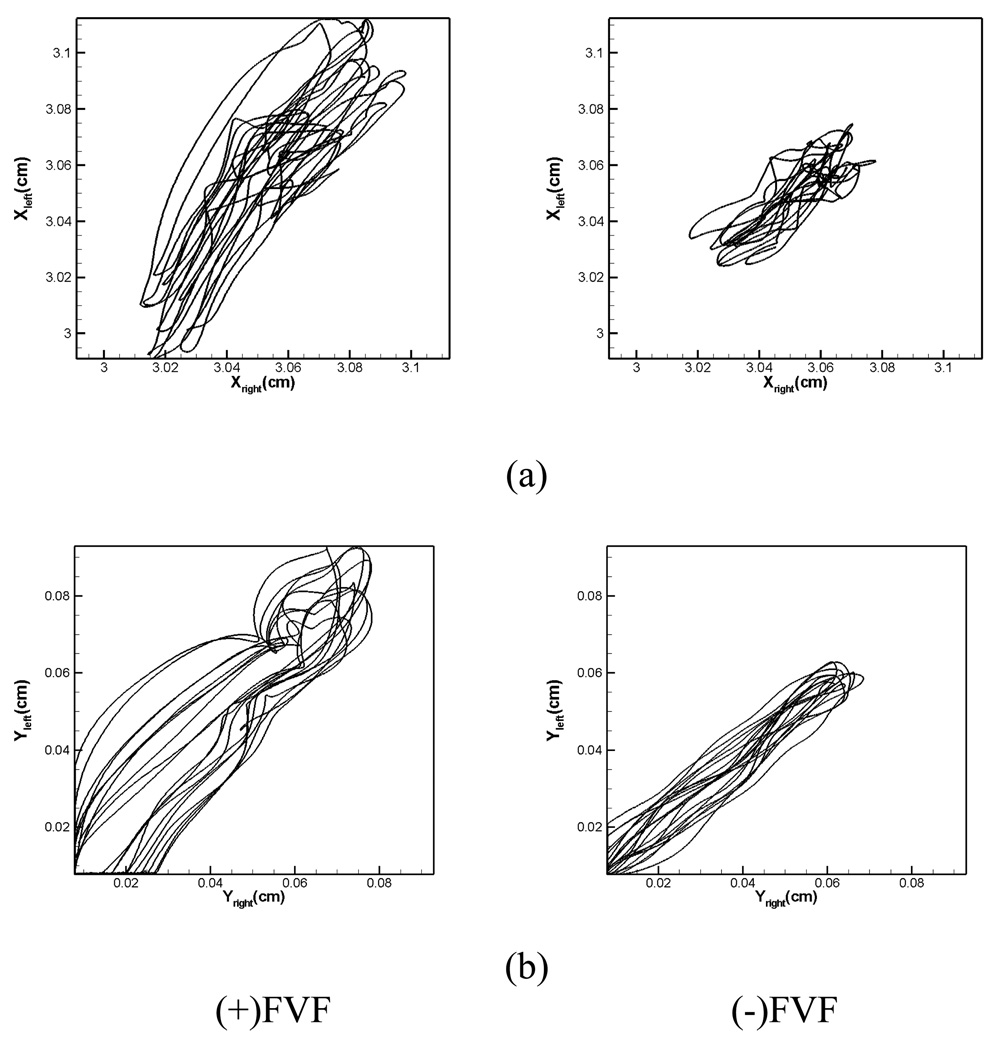
The false vocal folds are believed to be components of the acoustic filter that is responsible for shaping the voice. However, the effects of false vocal folds on the vocal fold vibration and the glottal aerodynamic during phonation remain unclear. This effect has implications for computational modeling of phonation as well as for understanding laryngeal pathologies such as glottal incompetence resulting from unilateral vocal fold paralysis. In this study, a high fidelity, two-dimensional computational model, which combines an immersed boundary method for the airflow and a continuum, finite-element method for the vocal folds, is used to examine the effect of the false vocal folds on flow-induced vibration (FIV) of the true vocal folds and the dynamics of the glottal jet. The model is notionally based on a laryngeal CT scan and employs realistic flow conditions and tissue properties. Results show that the false vocal folds potentially have a significant impact on phonation. The false vocal folds reduce the glottal flow impedance and increase the amplitude as well as the mean glottal jet velocity. The false vocal folds also enhance the intensity of the monopole acoustic sources in the glottis. A mechanism for reduction in flow impedance due to the false vocal folds is proposed.
Figures
References
-
- Agarwal M, Scherer R, Witt KD. Effects of false vocal fold width on translaryngeal flow resistance. Proceedings of the International Conference on voice physiology and biomechanics: modeling complexity; August 2004; Marseille, France.
-
- Alipour F, Berry DA, Titze IR. A finite-element model of vocal-fold vibratin. J. Acoust. Soc. Am. 2000;108:3003–3012. - PubMed
-
- Alipour F, Fan C, Scherer RC. A numerical simulation of laryngeal flow in a forced-oscillation glottal model. Comput. Speech and Language. 1996;10:75–93.
-
- Alipour F, Jaiswal S, Finnegan E. Aerodynamic and acoustic effects of false vocal folds and epiglottis in excised larynx models. Annuals of Otology, Rhinology & Laryngology. 2007;116(2):135–144. - PubMed
-
- Arnold GE, Pinto S. Ventricular dysphonia: new interpretation of an old observation. Laryngoscope. 1960;70:1608–1627. - PubMed
Publication types
MeSH terms
Grants and funding
LinkOut - more resources
Full Text Sources
