


Dynamic evolution of bitter taste receptor genes in vertebrates
- PMID: 19144204
- PMCID: PMC2646699
- DOI: 10.1186/1471-2148-9-12
Dynamic evolution of bitter taste receptor genes in vertebrates
Abstract
Background: Sensing bitter tastes is crucial for many animals because it can prevent them from ingesting harmful foods. This process is mainly mediated by the bitter taste receptors (T2R), which are largely expressed in the taste buds. Previous studies have identified some T2R gene repertoires, and marked variation in repertoire size has been noted among species. However, the mechanisms underlying the evolution of vertebrate T2R genes remain poorly understood.
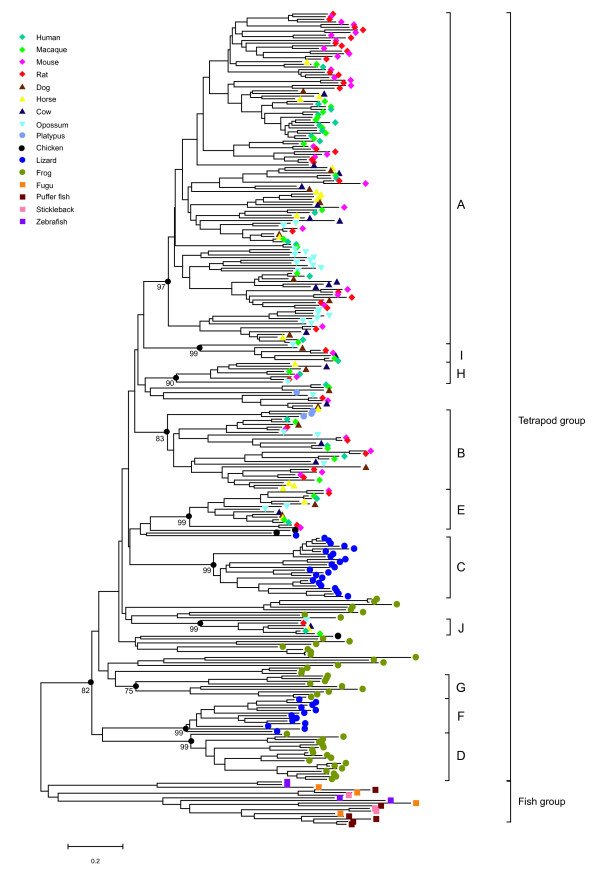
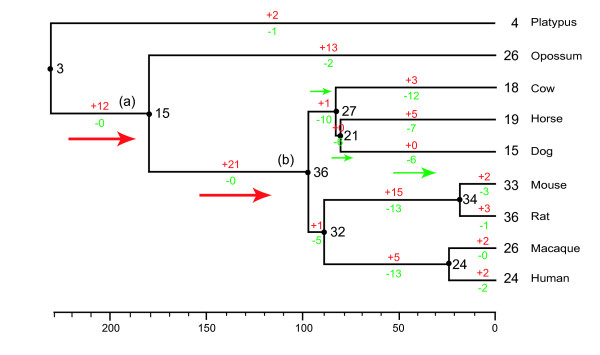
Results: To better understand the evolutionary pattern of these genes, we identified 16 T2R gene repertoires based on the high coverage genome sequences of vertebrates and studied the evolutionary changes in the number of T2R genes during birth-and-death evolution using the reconciled-tree method. We found that the number of T2R genes and the fraction of pseudogenes vary extensively among species. Based on the results of phylogenetic analysis, we showed that T2R gene families in teleost fishes are more diverse than those in tetrapods. In addition to the independent gene expansions in teleost fishes, frogs and mammals, lineage-specific gene duplications were also detected in lizards. Furthermore, extensive gains and losses of T2R genes were detected in each lineage during their evolution, resulting in widely differing T2R gene repertoires.
Conclusion: These results further support the hypotheses that T2R gene repertoires are closely related to the dietary habits of different species and that birth-and-death evolution is associated with adaptations to dietary changes.
Figures
References
-
- Teeter JH, Kumazawa T, Brand JG, Kalinoski DL, Honda E, Smutzer G. Amino acid receptor channels in taste cells. Soc Gen Physiol Ser. 1992;47:291–306. - PubMed
Publication types
MeSH terms
Substances
LinkOut - more resources
Full Text Sources
Other Literature Sources
