


Excess cardiovascular mortality associated with cold spells in the Czech Republic
- PMID: 19144206
- PMCID: PMC2632656
- DOI: 10.1186/1471-2458-9-19
Excess cardiovascular mortality associated with cold spells in the Czech Republic
Abstract
Background: The association between cardiovascular mortality and winter cold spells was evaluated in the population of the Czech Republic over 21-yr period 1986-2006. No comprehensive study on cold-related mortality in central Europe has been carried out despite the fact that cold air invasions are more frequent and severe in this region than in western and southern Europe.
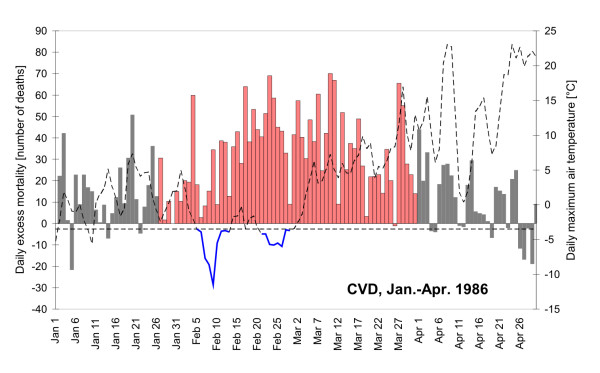
Methods: Cold spells were defined as periods of days on which air temperature does not exceed -3.5 degrees C. Days on which mortality was affected by epidemics of influenza/acute respiratory infections were identified and omitted from the analysis. Excess cardiovascular mortality was determined after the long-term changes and the seasonal cycle in mortality had been removed. Excess mortality during and after cold spells was examined in individual age groups and genders.
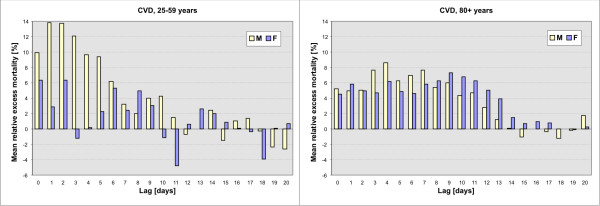
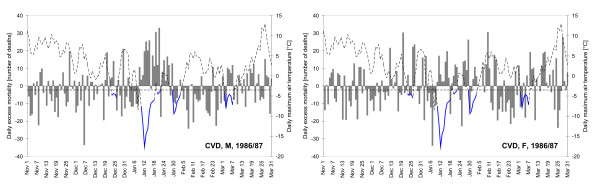
Results: Cold spells were associated with positive mean excess cardiovascular mortality in all age groups (25-59, 60-69, 70-79 and 80+ years) and in both men and women. The relative mortality effects were most pronounced and most direct in middle-aged men (25-59 years), which contrasts with majority of studies on cold-related mortality in other regions. The estimated excess mortality during the severe cold spells in January 1987 (+274 cardiovascular deaths) is comparable to that attributed to the most severe heat wave in this region in 1994.
Conclusion: The results show that cold stress has a considerable impact on mortality in central Europe, representing a public health threat of an importance similar to heat waves. The elevated mortality risks in men aged 25-59 years may be related to occupational exposure of large numbers of men working outdoors in winter. Early warnings and preventive measures based on weather forecast and targeted on the susceptible parts of the population may help mitigate the effects of cold spells and save lives.
Figures
References
Publication types
MeSH terms
LinkOut - more resources
Full Text Sources
