


Foxp3-dependent microRNA155 confers competitive fitness to regulatory T cells by targeting SOCS1 protein
- PMID: 19144316
- PMCID: PMC2654249
- DOI: 10.1016/j.immuni.2008.11.010
Foxp3-dependent microRNA155 confers competitive fitness to regulatory T cells by targeting SOCS1 protein
Abstract
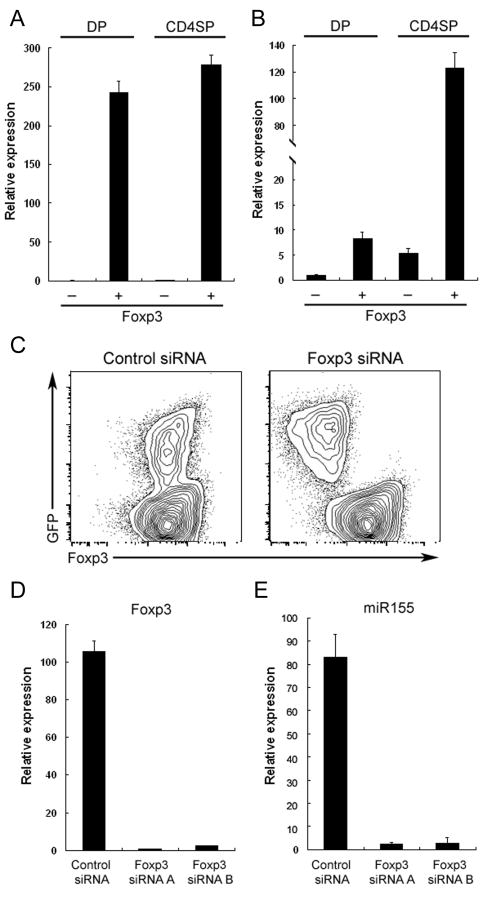
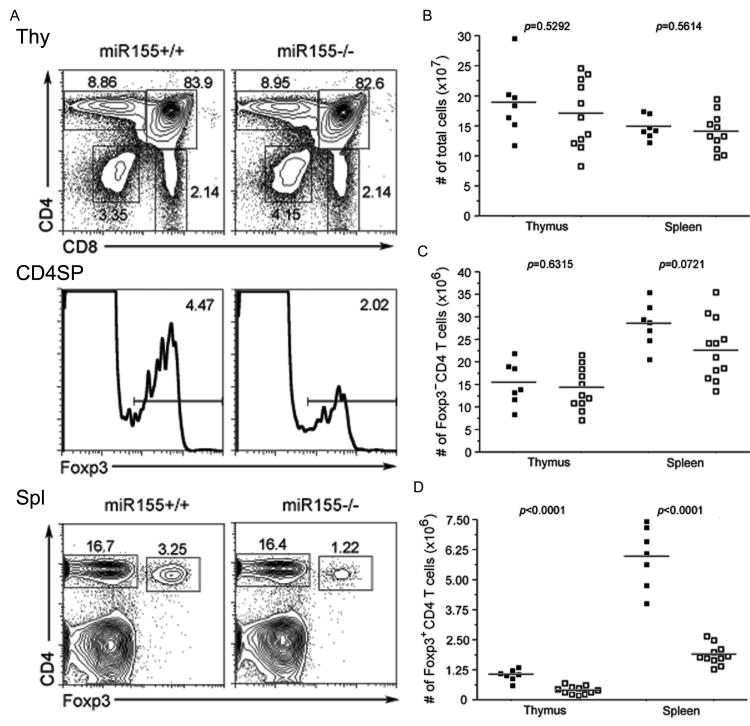
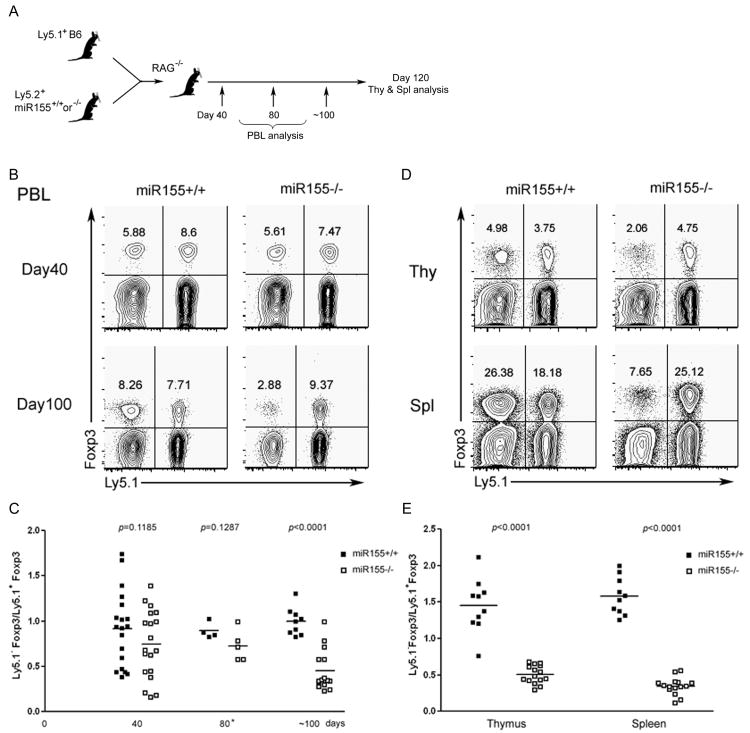
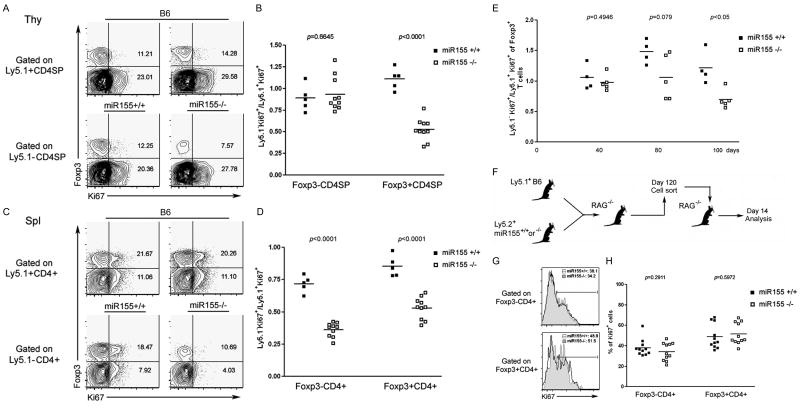
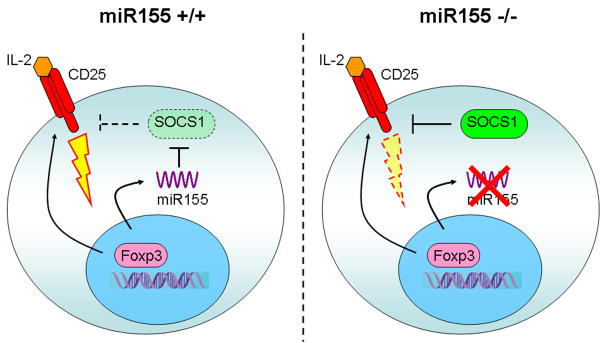
Foxp3(+) regulatory T (Treg) cells limit pathogenic immune responses to self-antigens and foreign antigens. An essential role for microRNA (miRNA) in the maintenance and function of Treg cells, revealed by the Treg cell-specific Dicer ablation, raised a question as to a specific miRNA contribution. We found that Foxp3 controlled the elevated miR155 expression required for maintaining Treg cell proliferative activity and numbers under nonlymphopenic conditions. Moreover, miR155 deficiency in Treg cells resulted in increased suppressor of cytokine signaling 1 (SOCS1) expression accompanied by impaired activation of signal transducer and activator of transcription 5 (STAT5) transcription factor in response to limiting amounts of interleukin-2. Our studies suggest that Foxp3-dependent regulation of miR155 maintains competitive fitness of Treg cell subsets by targeting SOCS1, and they provide experimental support for a proposed role for miRNAs in ensuring the robustness of cellular phenotypes.
Figures


References
-
- Bartel DP. MicroRNAs: genomics, biogenesis, mechanism, and function. Cell. 2004;116:281–297. - PubMed
-
- Bayer AL, Yu A, Malek TR. Function of the IL-2R for thymic and peripheral CD4+CD25+ Foxp3+ T regulatory cells. J Immunol. 2007;178:4062–4071. - PubMed
-
- Cornish AL, Chong MM, Davey GM, Darwiche R, Nicola NA, Hilton DJ, Kay TW, Starr R, Alexander WS. Suppressor of cytokine signaling-1 regulates signaling in response to interleukin-2 and other gamma c-dependent cytokines in peripheral T cells. J Biol Chem. 2003;278:22755–22761. - PubMed
Publication types
MeSH terms
Substances
Grants and funding
LinkOut - more resources
Full Text Sources
Other Literature Sources
Molecular Biology Databases
Miscellaneous
