


Lipopolysaccharide-induced osteoclastogenesis from mononuclear precursors: a mechanism for osteolysis in chronic otitis
- PMID: 19145462
- PMCID: PMC2674198
- DOI: 10.1007/s10162-008-0153-8
Lipopolysaccharide-induced osteoclastogenesis from mononuclear precursors: a mechanism for osteolysis in chronic otitis
Abstract
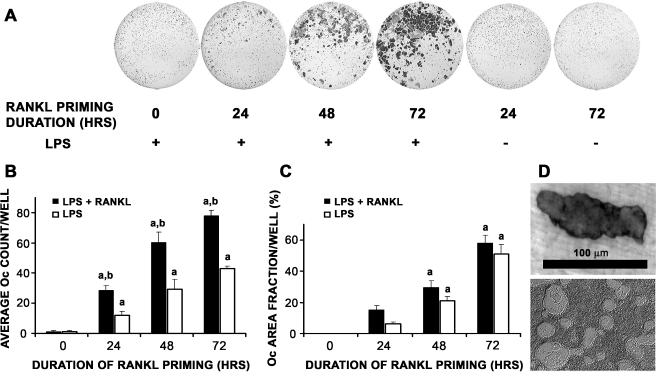
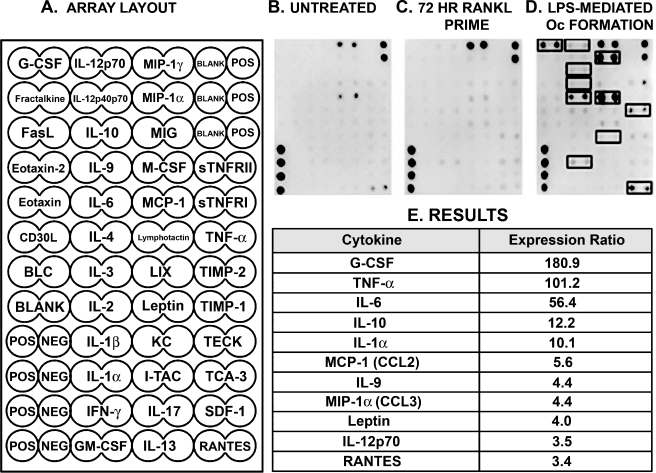
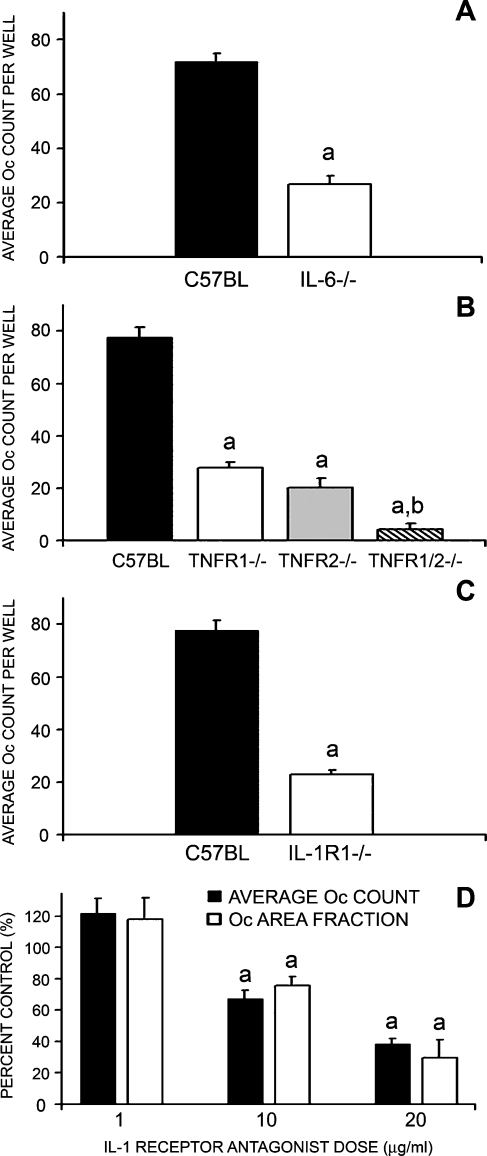
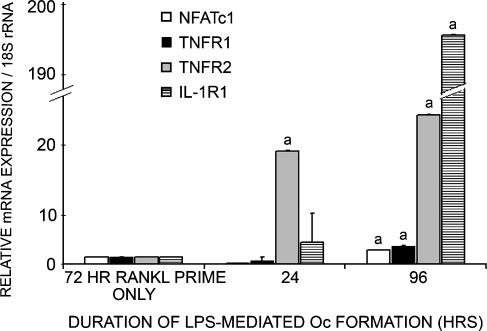
Osteoclasts are the only cells capable of carrying out bone resorption and therefore are responsible for the osteolysis seen in infectious diseases such as chronic otitis media and infected cholesteatoma. Pseudomonas aeruginosa is the most common organism isolated from these infectious middle ear diseases. In this study, we examined the mechanisms by which P. aeruginosa lipopolysaccharide (LPS) stimulates osteoclastogenesis directly from mononuclear osteoclast precursor cells. Osteoclast precursors demonstrated robust, bone-resorbing osteoclast formation when stimulated by P. aeruginosa LPS only if previously primed with permissive, sub-osteoclastogenic doses of receptor activator of NF-kappaB ligand (RANKL), suggesting that LPS is osteoclastogenic only during a specific developmental window. Numerous LPS-elicited cytokines were found to be released by osteoclast precursors undergoing P. aeruginosa LPS-mediated osteoclast formation. Two lines of evidence suggest that several cytokines promote Oc formation in an autocrine/paracrine manner. First, inhibition of several cytokine pathways including TNF-alpha, IL-1, and IL-6 block the osteoclastogenesis induced by LPS. Secondly, increased expression of the receptors for TNF-alpha and IL-1 was demonstrated by real-time quantitative polymerase chain reaction. Such a mechanism has not previously been established and demonstrates the ability of osteoclast precursors to autonomously facilitate bone destruction.
Figures
References
-
- {'text': '', 'ref_index': 1, 'ids': [{'type': 'DOI', 'value': '10.1172/JCI119679', 'is_inner': False, 'url': 'https://doi.org/10.1172/jci119679'}, {'type': 'PMC', 'value': 'PMC508337', 'is_inner': False, 'url': 'https://pmc.ncbi.nlm.nih.gov/articles/PMC508337/'}, {'type': 'PubMed', 'value': '9294124', 'is_inner': True, 'url': 'https://pubmed.ncbi.nlm.nih.gov/9294124/'}]}
- Abu-Amer Y, Ross FP, et al. Lipopolysaccharide-stimulated osteoclastogenesis is mediated by tumor necrosis factor via its P55 receptor. J. Clin. Invest. 100(6):1557–1565, 1997. - PMC - PubMed
-
- {'text': '', 'ref_index': 1, 'ids': [{'type': 'DOI', 'value': '10.1038/416686a', 'is_inner': False, 'url': 'https://doi.org/10.1038/416686a'}, {'type': 'PubMed', 'value': '11961535', 'is_inner': True, 'url': 'https://pubmed.ncbi.nlm.nih.gov/11961535/'}]}
- Alliston T, Derynck R. Medicine: interfering with bone remodelling. Nature 416(6882):686–687, 2002. - PubMed
-
- {'text': '', 'ref_index': 1, 'ids': [{'type': 'DOI', 'value': '10.1074/jbc.275.7.4858', 'is_inner': False, 'url': 'https://doi.org/10.1074/jbc.275.7.4858'}, {'type': 'PubMed', 'value': '10671521', 'is_inner': True, 'url': 'https://pubmed.ncbi.nlm.nih.gov/10671521/'}]}
- Azuma Y, Kaji K, et al. Tumor necrosis factor-alpha induces differentiation of and bone resorption by osteoclasts. J. Biol. Chem. 275(7):4858–4864, 2000. - PubMed
-
- {'text': '', 'ref_index': 1, 'ids': [{'type': 'DOI', 'value': '10.1677/joe.0.1750405', 'is_inner': False, 'url': 'https://doi.org/10.1677/joe.0.1750405'}, {'type': 'PubMed', 'value': '12429038', 'is_inner': True, 'url': 'https://pubmed.ncbi.nlm.nih.gov/12429038/'}]}
- Cornish J, Callon KE, et al. Leptin directly regulates bone cell function in vitro and reduces bone fragility in vivo. J. Endocrinol. 175(2):405–415, 2002. - PubMed
-
- {'text': '', 'ref_index': 1, 'ids': [{'type': 'DOI', 'value': '10.1038/372560a0', 'is_inner': False, 'url': 'https://doi.org/10.1038/372560a0'}, {'type': 'PubMed', 'value': '7990930', 'is_inner': True, 'url': 'https://pubmed.ncbi.nlm.nih.gov/7990930/'}]}
- Erickson SL, de Sauvage FJ, et al. Decreased sensitivity to tumour-necrosis factor but normal T-cell development in TNF receptor-2-deficient mice. Nature 372(6506):560–563, 1994. - PubMed
Publication types
MeSH terms
Substances
Grants and funding
LinkOut - more resources
Full Text Sources
