


Social conceptual impairments in frontotemporal lobar degeneration with right anterior temporal hypometabolism
- PMID: 19153155
- PMCID: PMC2724922
- DOI: 10.1093/brain/awn343
Social conceptual impairments in frontotemporal lobar degeneration with right anterior temporal hypometabolism
Abstract
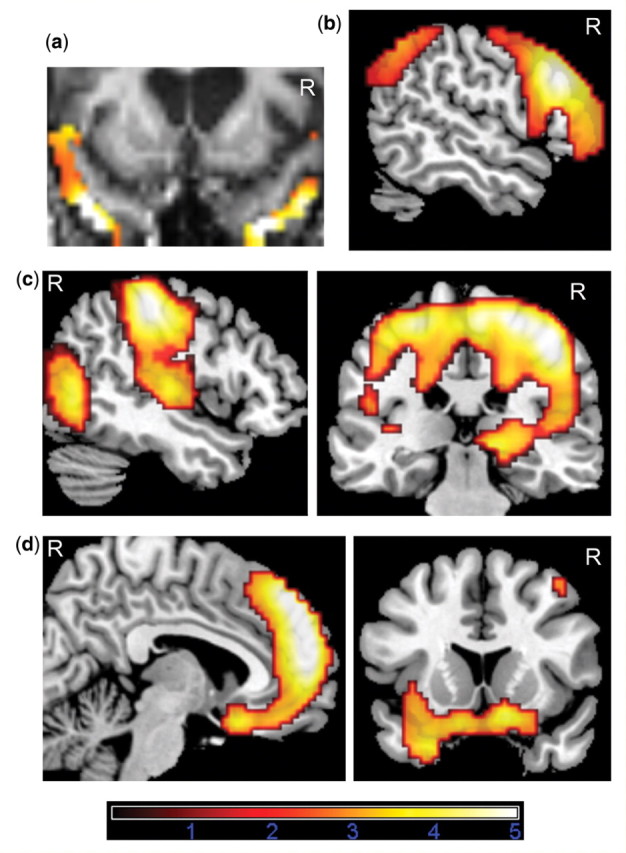
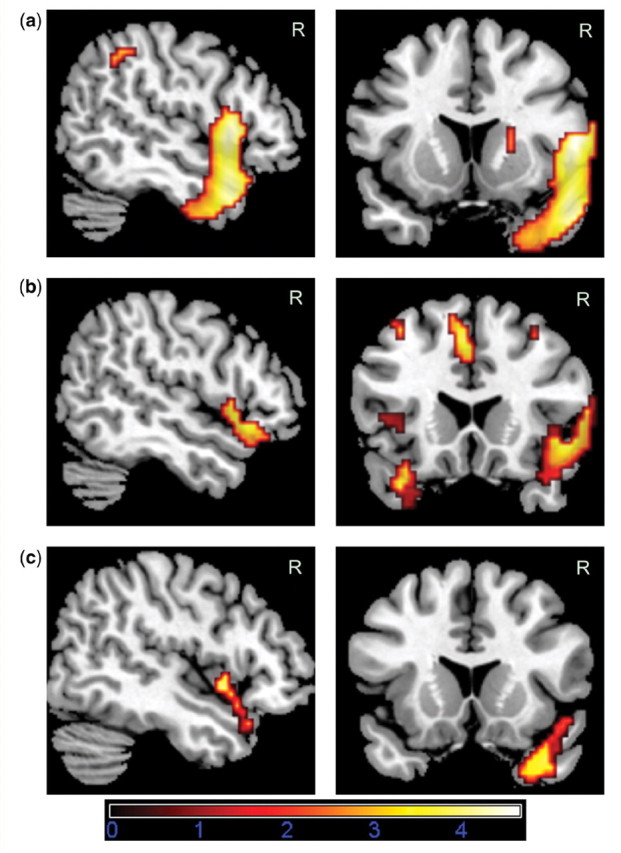
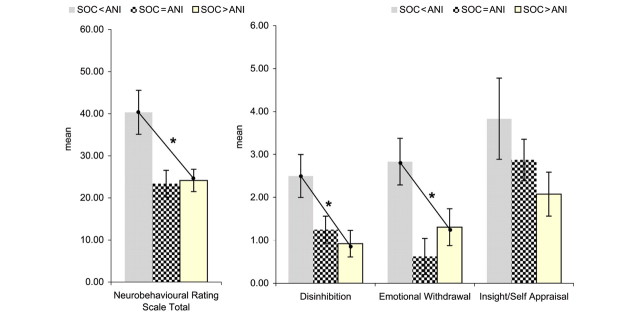
Inappropriate social behaviours are early and distinctive symptoms of the temporal and frontal variants of frontotemporal lobar degeneration (FTLD). Knowledge of social behaviour is essential for appropriate social conduct. It is unknown, however, in what way this knowledge is degraded in FTLD. In a recent functional MRI study, we have identified a right-lateralized superior anterior temporal lobe (aTL) region showing selective activation for 'social concepts' (i.e. concepts describing social behaviour: e.g. 'polite', 'stingy') as compared with concepts describing less socially relevant animal behaviour ('animal function concepts': e.g. 'trainable', 'nutritious'). In a further fMRI study, superior aTL activation was independent of the context of actions and feelings associated with these social concepts. Here, we investigated whether the right superior sector of the aTL is necessary for context-independent knowledge of social concepts. We assessed neuronal glucose uptake using 18-fluoro-deoxy-glucose-positron emission tomography (FDG-PET) and a novel semantic discrimination task which probed knowledge of social and animal function concepts in patients with FTLD (n = 29) and corticobasal syndrome (n = 18). FTLD and corticobasal syndrome groups performed equally poorly on animal function concepts but FTLD patients showed more pronounced impairments on social concepts than corticobasal syndrome patients. FTLD patients with right superior aTL hypometabolism, as determined on individual ROI analyses, were significantly more impaired on social concepts than on animal function concepts. FTLD patients with selective impairments for social concepts, as determined on individual neuropsychological profiles, showed higher levels of inappropriate social behaviours ('disinhibition') and demonstrated more pronounced hypometabolism in the right superior aTL, the left temporal pole and the right lateral orbitofrontal and dorsomedial prefrontal cortex as compared with FTLD patients showing selective impairments of animal function concepts. Combining both FTLD subgroup analyses, based on anatomical and neuropsychological criteria, by using inclusive masks, revealed the right superior aTL as associated with selective impairments of social concepts in both analyses. These results corroborate the hypothesis that the right aTL is necessary for representing conceptual social knowledge. Further, we provide first evidence for the potential importance of conceptual social knowledge impairments as contributing to behavioural symptoms of FTLD.
Figures
References
-
- Bak TH, O’Donovan DG, Xuereb JH, Boniface S, Hodges JR. Selective impairment of verb processing associated with pathological changes in Brodmann areas 44 and 45 in the motor neurone disease-dementia-aphasia syndrome. Brain. 2001;124:103–20. - PubMed
-
- Bird H, Ralph MAL, Patterson K, Hodges JR. The rise and fall of frequency and imageability: noun and verb production in semantic dementia. Brain Lang. 2000;73:17–49. - PubMed
-
- Boeve BF. Corticobasal degeneration: the syndrome and the disease. In: Litvan I, editor. Atypical parkinsonian disorders: clinical and research aspects. Totowa, NJ: Humana Press Inc.; 2005. pp. 309–34.
-
- Boxer AL, Rankin KP, Miller BL, Schuff N, Weiner M, Gorno-Tempini ML, et al. Cinguloparietal atrophy distinguishes Alzheimer disease from semantic dementia. Arch Neurol. 2003;60:949–56. - PubMed
-
- Bozeat S, Lambon Ralph MA, Patterson K, Garrard P, Hodges JR. Non-verbal semantic impairment in semantic dementia. Neuropsychologia. 2000;38:1207–15. - PubMed
Publication types
MeSH terms
Grants and funding
LinkOut - more resources
Full Text Sources
Medical
