


Combination chemotherapy of oxaliplatin and 5-fluorouracil may be an effective regimen for mucinous adenocarcinoma of the ovary: a potential treatment strategy
- PMID: 19154404
- PMCID: PMC11159961
- DOI: 10.1111/j.1349-7006.2008.01065.x
Combination chemotherapy of oxaliplatin and 5-fluorouracil may be an effective regimen for mucinous adenocarcinoma of the ovary: a potential treatment strategy
Abstract
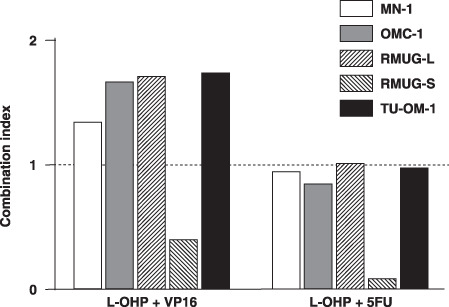
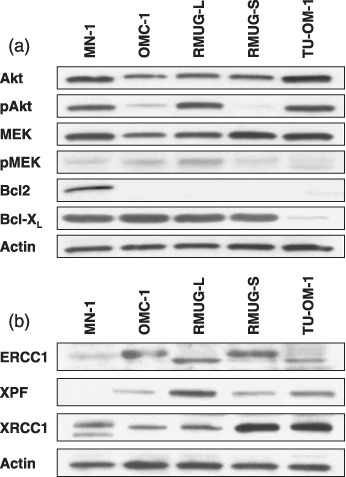
Resistance of ovarian mucinous adenocarcinoma to standard chemotherapy with paclitaxel and carboplatin is associated with poor prognosis, and an effective treatment is needed. The present study aimed to identify an effective chemotherapy for ovarian mucinous adenocarcinoma. Five human ovarian mucinous adenocarcinoma cell lines (MN-1, OMC-1, RMUG-L, RMUG-S, TU-OM-1) were used in this study. Sensitivity of the cells to the anticancer agents was determined by 3-(4,5-dimethylthiazol-2-yl)-2,5-diphenyltetrazolium bromide assay, and we assessed drug sensitivity by calculating the assay area under the curve for each agent. Protein expression was confirmed by Western blot analysis. We also examined the efficacy of combination chemotherapy on survival in a xenograft model of nude mice. The IC(50) to anticancer agents ranged widely. The assay area under the curve indicated that two of five cell lines (MN-1, TU-OM-1) were sensitive to oxaliplatin, 5-fluorouracil and etoposide, and only one (TU-OM-1) was sensitive to 7-ethyl-10-hydroxycamptothecin, which is an active metabolite of camptothecin. All cell lines were resistant to cisplatin and paclitaxel. The combination of oxaliplatin and 5-fluorouracil resulted in additive or synergistic effects on all cell lines. The combination of oxaliplatin and 5-fluorouracil significantly prolonged survival in a ovarian mucinous adenocarcinoma xenograft model of nude mice. Protein expression levels of the excision repair cross-complementation group 1 were lower in oxaliplatin sensitive cell lines. Exposure to 5-fluorouracil down-regulated cross-complementation group 1 expression in ovarian mucinous adenocarcinoma cells. We conclude that combination chemotherapy consisting of oxaliplatin and 5-fluorouracil was an effective treatment for ovarian mucinous adenocarcinoma and may be a pivotal candidate for a novel treatment strategy.
Figures



References
-
- McGuire V, Jesser CA, Whittemore AS. Survival among U.S. women with invasive epithelial ovarian cancer. Gynecol Oncol 2002; 84: 399–403. - PubMed
-
- Seidman JD, Kurman RJ, Ronnett BM. Primary and metastatic mucinous adenocarcinomas in the ovaries: incidence in routine practice with a new approach to improve intraoperative diagnosis. Am J Surg Pathol 2003; 27: 985–93. - PubMed
-
- Chan JK, Teoh D, Hu JM, Shin JY, Osann K, Kapp DS. Do clear cell ovarian carcinomas have poorer prognosis compared to other epithelial cell types? A study of 1411 clear cell ovarian cancers. Gynecol Oncol 2008; 109: 370–6. - PubMed
-
- Hess V, A’Hern R, Nasiri N et al . Mucinous epithelial ovarian cancer: a separate entity requiring specific treatment. J Clin Oncol 2004; 22: 1040–4. - PubMed
-
- Cannistra SA. Cancer of the ovary. N Engl J Med 2004; 351: 2519–29. - PubMed
Publication types
MeSH terms
Substances
LinkOut - more resources
Full Text Sources
Other Literature Sources
Medical
Research Materials
