


Transcriptomic and metabolomic profiling of Zymomonas mobilis during aerobic and anaerobic fermentations
- PMID: 19154596
- PMCID: PMC2651186
- DOI: 10.1186/1471-2164-10-34
Transcriptomic and metabolomic profiling of Zymomonas mobilis during aerobic and anaerobic fermentations
Abstract
Background: Zymomonas mobilis ZM4 (ZM4) produces near theoretical yields of ethanol with high specific productivity and recombinant strains are able to ferment both C-5 and C-6 sugars. Z. mobilis performs best under anaerobic conditions, but is an aerotolerant organism. However, the genetic and physiological basis of ZM4's response to various stresses is understood poorly.
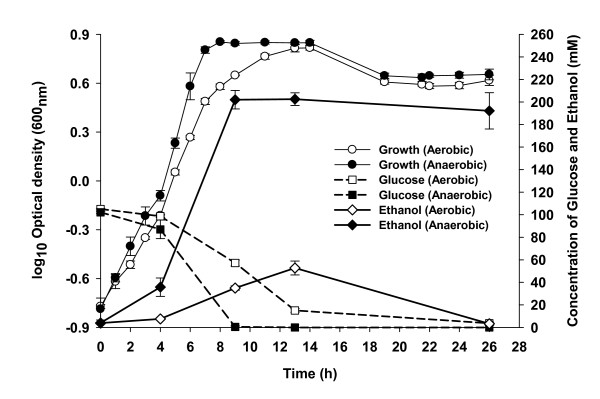
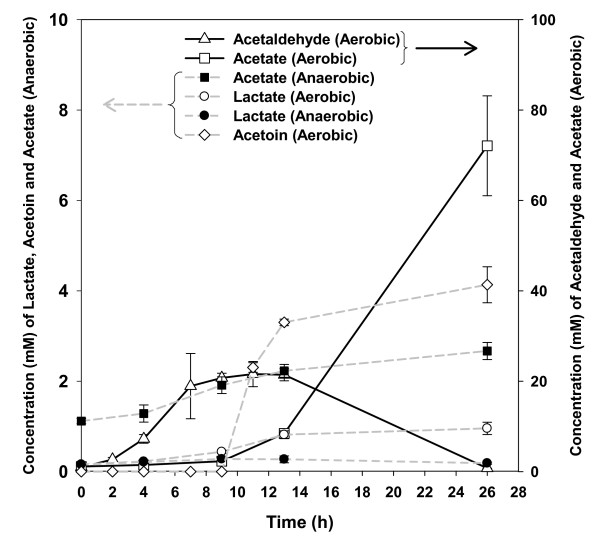
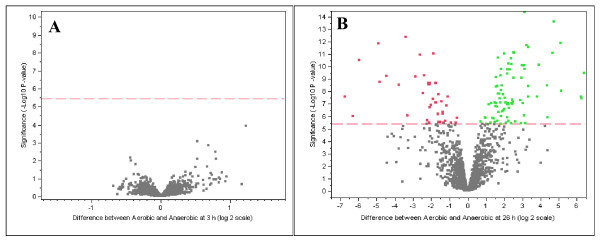
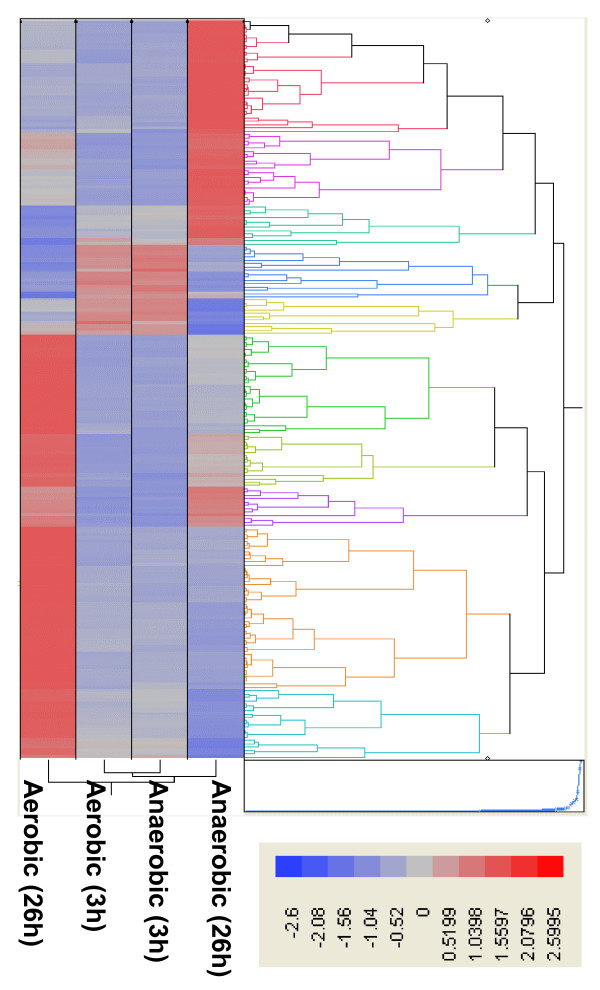
Results: In this study, transcriptomic and metabolomic profiles for ZM4 aerobic and anaerobic fermentations were elucidated by microarray analysis and by high-performance liquid chromatography (HPLC), gas chromatography (GC) and gas chromatography-mass spectrometry (GC-MS) analyses. In the absence of oxygen, ZM4 consumed glucose more rapidly, had a higher growth rate, and ethanol was the major end-product. Greater amounts of other end-products such as acetate, lactate, and acetoin were detected under aerobic conditions and at 26 h there was only 1.7% of the amount of ethanol present aerobically as there was anaerobically. In the early exponential growth phase, significant differences in gene expression were not observed between aerobic and anaerobic conditions via microarray analysis. HPLC and GC analyses revealed minor differences in extracellular metabolite profiles at the corresponding early exponential phase time point. Differences in extracellular metabolite profiles between conditions became greater as the fermentations progressed. GC-MS analysis of stationary phase intracellular metabolites indicated that ZM4 contained lower levels of amino acids such as alanine, valine and lysine, and other metabolites like lactate, ribitol, and 4-hydroxybutanoate under anaerobic conditions relative to aerobic conditions. Stationary phase microarray analysis revealed that 166 genes were significantly differentially expressed by more than two-fold. Transcripts for Entner-Doudoroff (ED) pathway genes (glk, zwf, pgl, pgk, and eno) and gene pdc, encoding a key enzyme leading to ethanol production, were at least 30-fold more abundant under anaerobic conditions in the stationary phase based on quantitative-PCR results. We also identified differentially expressed ZM4 genes predicted by The Institute for Genomic Research (TIGR) that were not predicted in the primary annotation.
Conclusion: High oxygen concentrations present during Z. mobilis fermentations negatively influence fermentation performance. The maximum specific growth rates were not dramatically different between aerobic and anaerobic conditions, yet oxygen did affect the physiology of the cells leading to the buildup of metabolic byproducts that ultimately led to greater differences in transcriptomic profiles in stationary phase.
Figures
References
Publication types
MeSH terms
Substances
LinkOut - more resources
Full Text Sources
Other Literature Sources
Molecular Biology Databases
Miscellaneous
