The scavenger receptor CD36 plays a role in cytokine-induced macrophage fusion
- PMID: 19155290
- PMCID: PMC2714432
- DOI: 10.1242/jcs.037200
The scavenger receptor CD36 plays a role in cytokine-induced macrophage fusion
Abstract
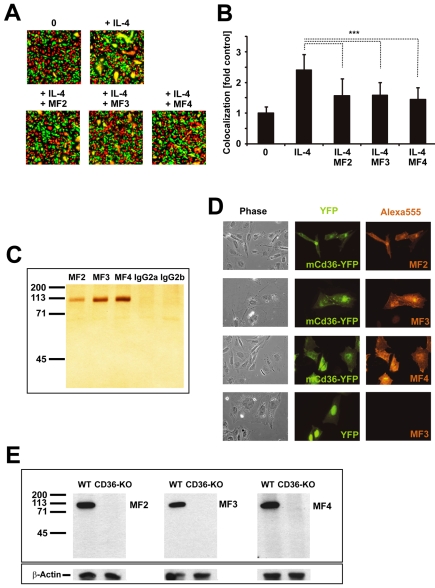
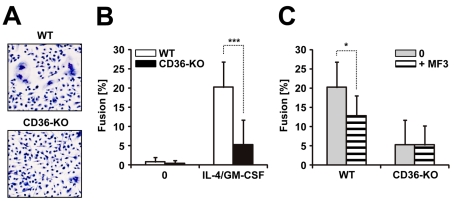
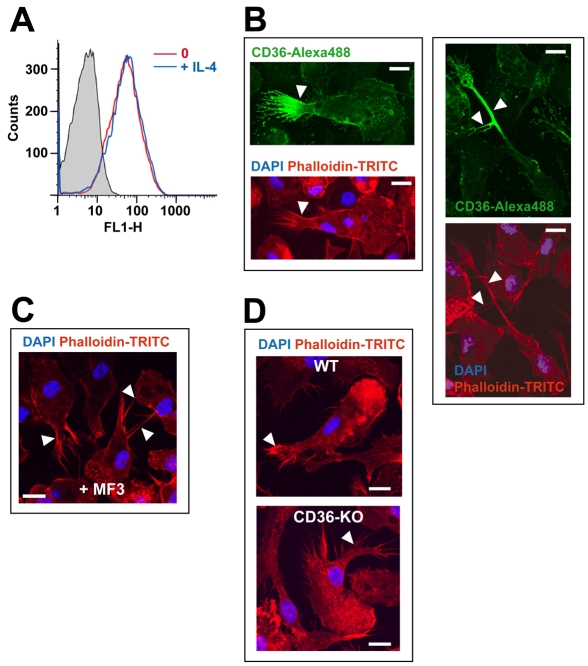
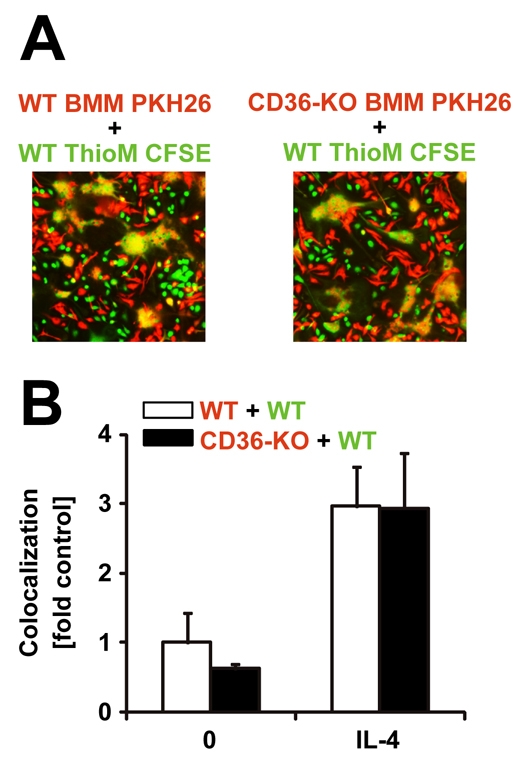
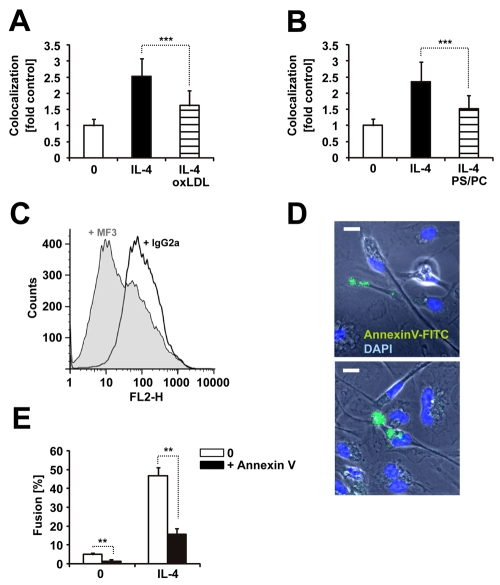
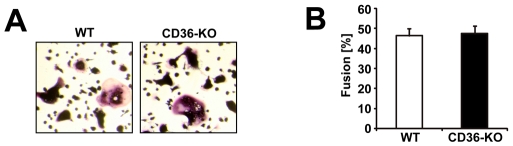
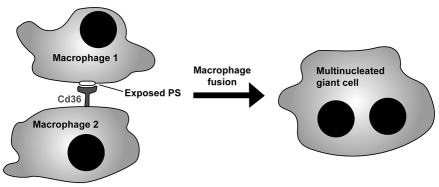
Multinucleated giant cells, characteristic of granulomatous infections, originate from the fusion of macrophages. Using an antibody screening strategy we found that the scavenger receptor CD36 participates in macrophage fusion induced by the cytokines IL-4 and GM-CSF. Our results demonstrate that exposure of phosphatidylserine on the cell surface and lipid recognition by CD36 are required for cytokine-induced fusion of macrophages. We also show that CD36 acts in a heterotypic manner during giant-cell formation and that the formation of osteoclasts is independent of CD36. The discovery of molecules involved in the formation of multinucleated giant cells will enable us to determine their functional significance. Furthermore, our results suggest that lipid capture by cell surface receptors may be a general feature of cell fusion.
Figures
References
-
- Adler, R. R., Ng, A. K. and Rote, N. S. (1995). Monoclonal antiphosphatidylserine antibody inhibits intercellular fusion of the choriocarcinoma line, JAR. Biol. Reprod. 53, 905-910. - PubMed
-
- Anderson, J. M. (2000). Multinucleated giant cells. Curr. Opin. Hematol. 7, 40-47. - PubMed
-
- Byrd, T. F. (1998). Multinucleated giant cell formation induced by IFN-gamma/IL-3 is associated with restriction of virulent Mycobacterium tuberculosis cell to cell invasion in human monocyte monolayers. Cell Immunol. 188, 89-96. - PubMed
-
- Callahan, M. K., Williamson, P. and Schlegel, R. A. (2000). Surface expression of phosphatidylserine on macrophages is required for phagocytosis of apoptotic thymocytes. Cell Death Differ. 7, 645-653. - PubMed
Publication types
MeSH terms
Substances
Grants and funding
LinkOut - more resources
Full Text Sources
Other Literature Sources
Molecular Biology Databases