Review
doi: 10.1158/0008-5472.CAN-08-3087.
Epub 2009 Jan 20.
In-depth proteomics to define the cell surface and secretome of ovarian cancer cells and processes of protein shedding
Affiliations
- PMID: 19155298
- PMCID: PMC4720963
- DOI: 10.1158/0008-5472.CAN-08-3087
Item in Clipboard
Review
In-depth proteomics to define the cell surface and secretome of ovarian cancer cells and processes of protein shedding
Cancer Res.
.
Abstract
Current proteomics technologies allow substantial depth of analysis of cellular and subcellular proteomes as shown in the proteomic profiling of ovarian cancer cells. This in-depth analysis has elucidated the repertoire of proteins expressed on the cell surface and proteins released into the extracellular milieu, uncovering extensive shedding of extracellular domains of cell adhesion proteins and a highly dynamic protein secretion process. The protein sets identified provide a rich resource of potential circulating markers and targets for imaging and therapeutics for ovarian cancer.
Figures
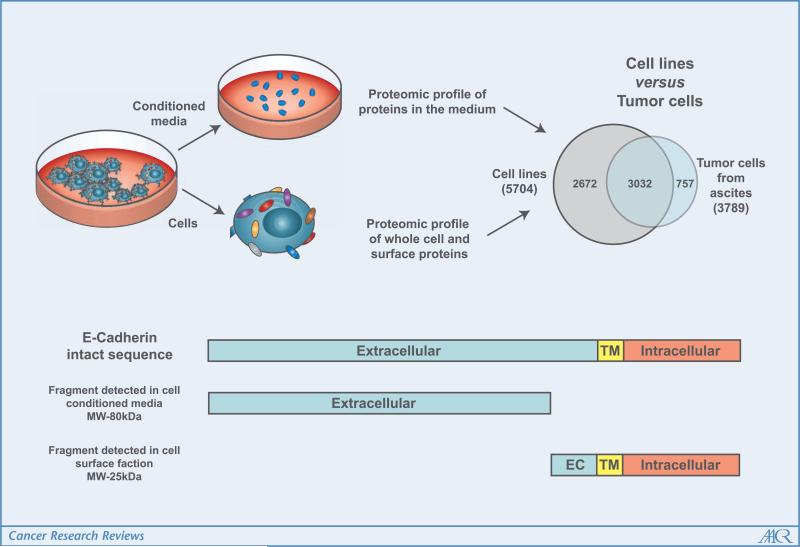
In-depth proteomic analysis of ovarian cancer cells. The overlap of protein identifications from cell lines and cancer cells obtained from patient ascites is significant, indicating good representation of ovarian cancer cells among cell lines. Analysis of proteins from the conditioned medium identified sequences spanning extracellular domains for transmembrane proteins. Sequences spanning intracellular domains were detected on the cell surface. These observations are consistent with a shedding process as indicated here for E-cadherin (CDH1).
References
-
- Hanash SM, Pitteri SJ, Faca VM. Mining the plasma proteome for cancer biomarkers. Nature. 2008;452:571–9. - PubMed
-
- Kulasingam V, Diamandis EP. Strategies for discovering novel cancer biomarkers through utilization of emerging technologies. Nat Clin Pract. 2008;5:588–99. - PubMed
-
- Gortzak-Uzan L, Ignatchenko A, Evangelou AI, et al. A proteome resource of ovarian cancer ascites: integrated proteomic and bioinformatic analyses to identify putative biomarkers. J Proteome Res. 2008;7:339–51. - PubMed
-
- Kislinger T, Cox B, Kannan A, et al. Global survey of organ and organelle protein expression in mouse: combined proteomic and transcriptomic profiling. Cell. 2006;125:173–86. - PubMed
-
- Sodek KL, Evangelou AI, Ignatchenko A, et al. Identification of pathways associated with invasive behavior by ovarian cancer cells using multidimensional protein identification technology (MudPIT). Mol Biosyst. 2008;4:762–73. - PubMed
Publication types
MeSH terms
Substances
Grants and funding
LinkOut - more resources
Full Text Sources
Other Literature Sources
Medical