


Interventions for haemolytic uraemic syndrome and thrombotic thrombocytopenic purpura
- PMID: 19160220
- PMCID: PMC7154575
- DOI: 10.1002/14651858.CD003595.pub2
Interventions for haemolytic uraemic syndrome and thrombotic thrombocytopenic purpura
Abstract
Background: Haemolytic uraemic syndrome (HUS) and thrombotic thrombocytopenic purpura (TTP) are related conditions with similar clinical features of variable severity. Survival of patients with HUS and TTP has improved greatly over the past two decades with improved supportive care for patients with HUS and by the use of plasma exchange (PE) with fresh frozen plasma (FFP) for patients with TTP. Separate pathogenesis of these two disorders has become more evident, but management overlaps.
Objectives: To evaluate the benefits and harms of different interventions for HUS and TTP separately, in patients of all ages.
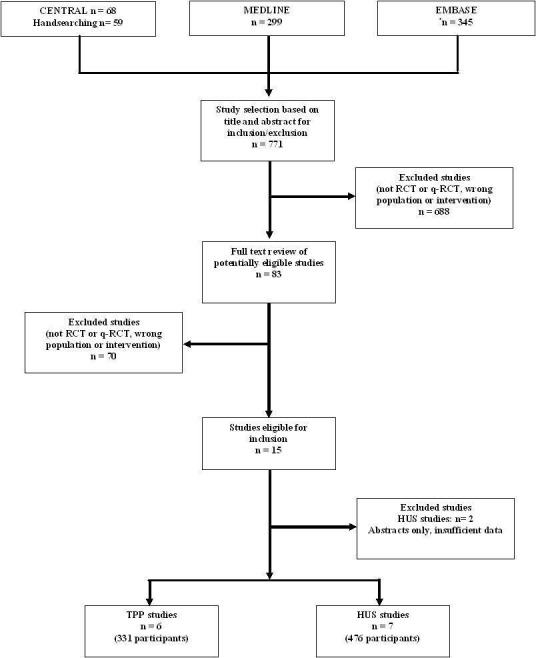
Search strategy: We searched MEDLINE, EMBASE, the Cochrane Central Register of Controlled Trials (CENTRAL), conference proceedings, reference lists of articles and text books and contact with investigators were used to identify relevant studies.
Selection criteria: Randomised controlled trials (RCTs) evaluating any interventions for HUS or TTP in patients of all ages.
Data collection and analysis: Three authors independently extracted data and evaluated study reporting quality using standard Cochrane criteria. Analysis was undertaken using a random effects model and results expressed as risk ratio (RR) and 95% confidence intervals (CI).
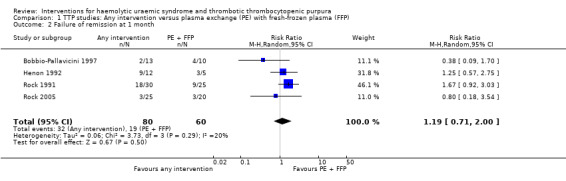
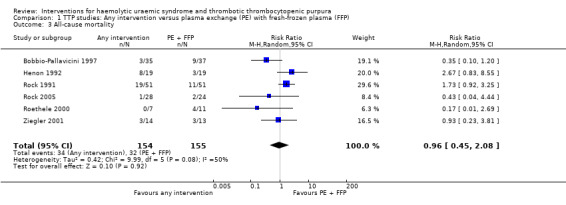
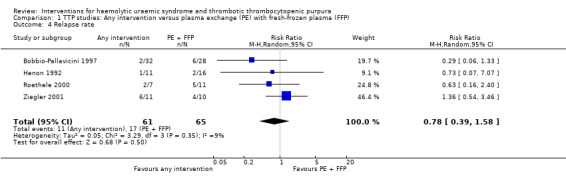
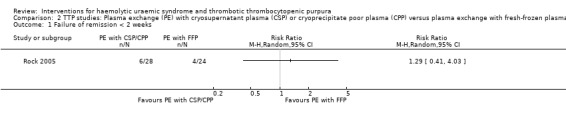
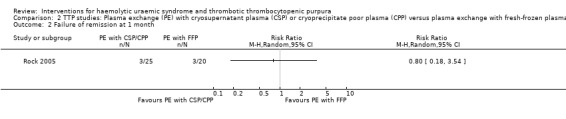
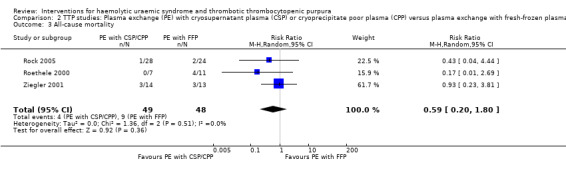
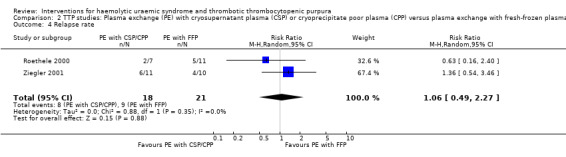
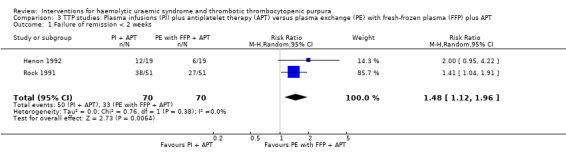
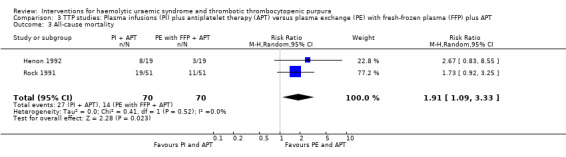
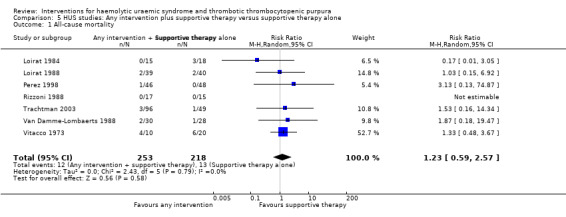
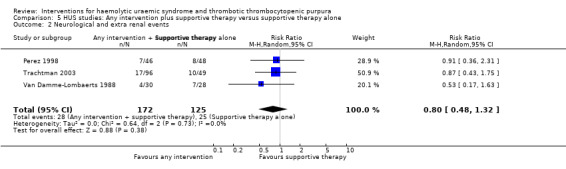
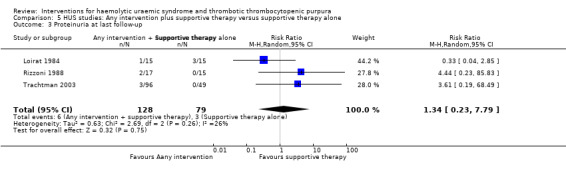
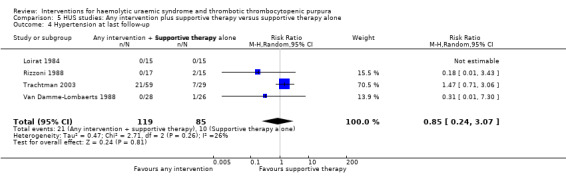
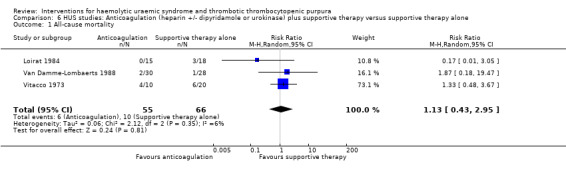
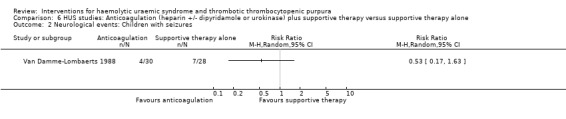
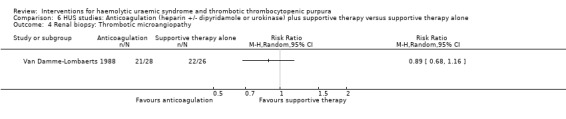
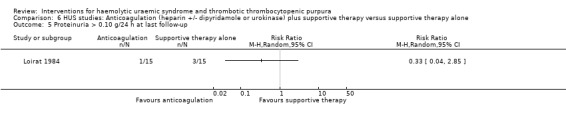
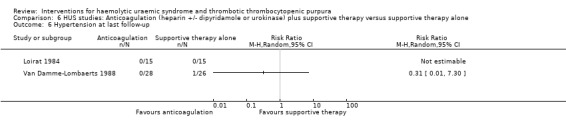
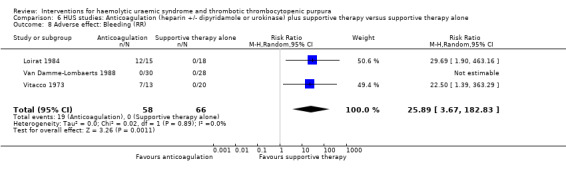
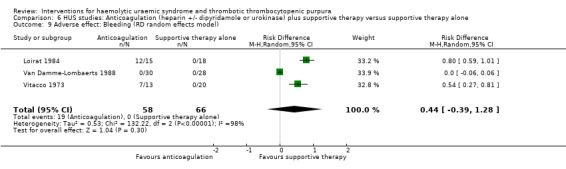
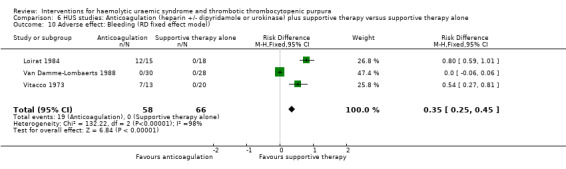
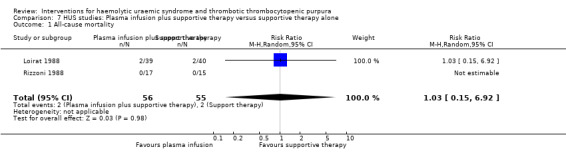
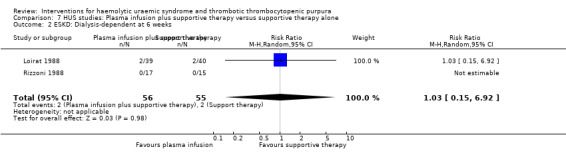
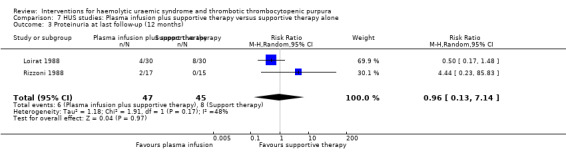
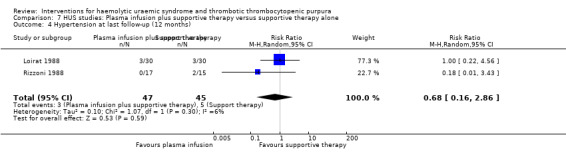
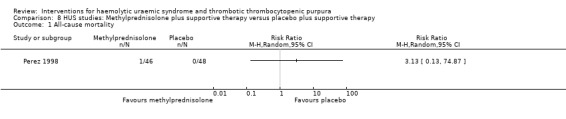
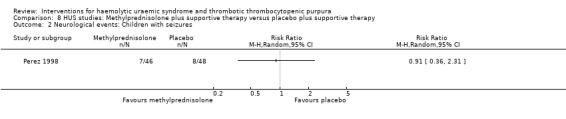
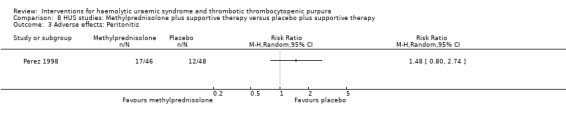
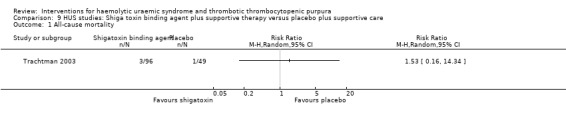
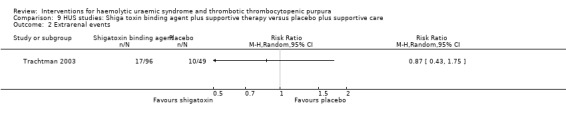
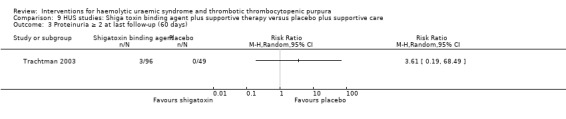
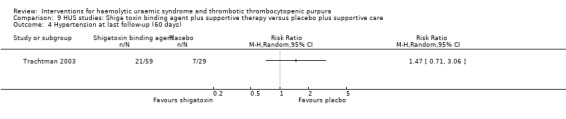
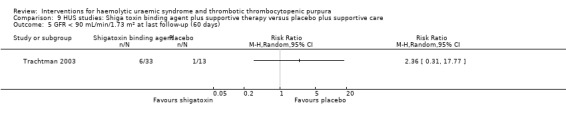
Main results: For TTP, we found six RCTs (331 participants) evaluating PE with FFP as the control. Interventions tested included antiplatelet therapy (APT) plus PE with FFP, FFP transfusion and PE with cryosupernatant plasma (CSP). Two studies compared plasma infusion (PI) to PE with FFP and showed a significant increase in failure of remission at two weeks (RR 1.48, 95% 1.12 to 1.96) and all-cause mortality (RR 1.91, 95% 1.09 to 3.33) in the PI group. Seven RCTs were undertaken in children with HUS. None of the assessed interventions used (FFP transfusion, heparin with or without urokinase or dipyridamole, shiga toxin binding protein and steroids) were superior to supportive therapy alone, for all-cause mortality, neurological/extrarenal events, renal biopsy changes, proteinuria or hypertension at the last follow-up visit. Bleeding was significantly higher in those receiving anticoagulation therapy compared to supportive therapy alone (RR 25.89, 95% CI 3.67 to 182.83).
Authors' conclusions: PE with FFP is still the most effective treatment available for TTP. For patients with HUS, supportive therapy including dialysis is still the most effective treatment. All studies in HUS have been conducted in the diarrhoeal form of the disease. There were no RCTs evaluating the effectiveness of any interventions on patients with atypical HUS who have a more chronic and relapsing course.
Conflict of interest statement
None declared
Figures

Update of
References
References to studies included in this review
Bobbio‐Pallavicini 1997 {published data only}
-
- Bobbio‐Pallavicini E, Gugliotta L, Centurioni R, Porta C, Vianelli N, Billio A, et al. Antiplatelet agents in thrombotic thrombocytopenic purpura (TTP). Results of a randomized multicenter trial by the Italian Cooperative Group for TTP. Haematologica 1997;82(4):429‐35. [MEDLINE: ] - PubMed
Henon 1992 {published data only}
-
- Henon P. Thrombotic thrombocytopenic purpura: Clinical results of a French controlled trial. Transfusion Science 1992;13(1):63‐72. [EMBASE: 1992108633]
Loirat 1984 {published data only}
-
- Loirat C, Beaufils E, Sonsino N, Schlegel M, Guesnu G, Pillon JL, et al. Treatment of childhood hemolytic‐uremic syndrome with urokinase. Cooperative controlled trial. Archives Francaises de Pediatrie 1984;41(1):15‐9. [MEDLINE: ] - PubMed
Loirat 1988 {published data only}
-
- Loriat C, Sonsino E, Hinglais N, Jais JP, Landais P, Fermanian J. Treatment of the childhood haemolytic uraemic syndrome with plasma. A multicentre randomized controlled trial. The French Society of Paediatric Nephrology. Pediatric Nephrology 1988;2(3):279‐85. [MEDLINE: ] - PubMed
Perez 1998 {published data only}
-
- Perez N, Spizzirri F, Rahman R, Suarez A, Larrubia C, Lasarte P. Steroids in the hemolytic uremic syndrome. Pediatric Nephrology 1998;12(2):101‐4. [MEDLINE: ] - PubMed
Rizzoni 1988 {published data only}
-
- Rizzoni G, Claris‐Appiani A, Edefonti A, Facchin P, Franchini F, Gusmano R, et al. Plasma infusion for hemolytic‐uremic syndrome in children: results of a multicenter controlled trial. Journal of Pediatrics 1988;112(2):284‐90. [MEDLINE: ] - PubMed
Rock 1991 {published data only}
-
- Rock GA, Shumak KH, Buskard NA, Blanchette VS, Kelton JG, Nair RC, et al. Comparison of plasma exchange with plasma infusion in the treatment of thrombotic thrombocytopenic purpura. Canadian Apheresis Study Group. New England Journal of Medicine 1991;325(6):393‐7. [MEDLINE: ] - PubMed
Rock 2005 {published data only}
-
- Rock G, Anderson D, Clark W, Leblond P, Palmer D, Sternbach M, et al. Does cryosupernatant plasma improve outcome in thrombotic thrombocytopenic purpura? No answer yet. British Journal of Haematology 2005;129(1):79‐86. [MEDLINE: ] - PubMed
Roethele 2000 {published data only}
-
- Rothele E, Krumme B, Rump LC. Design of the prospective randomized study for the treatment of patients with thrombotic microangiopathy. PRODROMI Study Group. Therapeutic Apheresis 2000;4(5):327‐31. [MEDLINE: ] - PubMed
Trachtman 2003 {published data only}
-
- Trachtman H, Cnaan A, Christen E, Gibbs K, Zhao S, Acheson DW, et al. Effect of an oral Shiga toxin‐binding agent on diarrhea‐associated hemolytic uremic syndrome in children: a randomized controlled trial. JAMA 2003;290(10):1337‐44. [MEDLINE: ] - PubMed
Van Damme‐Lombaerts 1988 {published data only}
-
- Damme‐Lombaerts R, Proesmans W, Damme B, Eeckels R, Binda ki Muaka P, Mercieca V, et al. Heparin plus dipyridamole in childhood hemolytic‐uremic syndrome: a prospective, randomized study. Journal of Pediatrics 1988;113(5):913‐8. [MEDLINE: ] - PubMed
Vitacco 1973 {published data only}
-
- Vitacco M, Sanchez Avalos J, Gianantonio CA. Heparin therapy in the hemolytic uremic syndrome. Journal of Pediatrics 1973;83(2):271‐5. [MEDLINE: ] - PubMed
Ziegler 2001 {published data only}
-
- Zeigler ZR, Shadduck RK, Gryn JF, Rintels PB, George JN, Besa EC, et al. Cryoprecipitate poor plasma does not improve early response in primary adult thrombotic thrombocytopenic purpura (TTP). Journal of Clinical Apheresis 2001;16(1):19‐22. [MEDLINE: ] - PubMed
References to studies excluded from this review
Muller‐Wiefel 1989 {published data only}
-
- Muller‐Wiefel DE, Bulla M, Klare B, Balzar R, Bambauer R, Tonshoff B. Efficacy of therapeutic plasma exchange in haemolytic uraemic syndrome in childhood [abstract]. Nephrology Dialysis Transplantation 1989;4(5):446. [CENTRAL: CN‐00260427]
Thomson 1987 {published data only}
-
- Thomson PD, Milnor LS. A randomly selected trial of vitamin E in the haemolytic uraemic syndrome (HUS) [abstract]. Xth International Congress of Nephrology; 1987 Jul 26‐31; London (UK). 1987:98.
Additional references
Allford 2003
-
- Allford SL, Hunt BJ, Rose P, Machin SJ, Haemostasis and Thrombosis Task Force, British Committee for Standards in Haematology. Guidelines on the diagnosis and management of the thrombotic microangiopathic haemolytic anaemias. British Journal of Haematology 2003;120(4):556‐73. [MEDLINE: ] - PubMed
Banatvala 2001
-
- Banatvala N, Griffin PM, Greene KD, Barrett TJ, Bibb WF, Green JH, et al. The United States National Prospective Hemolytic Uremic Syndrome Study: microbiologic, serologic, clinical, and epidemiologic findings. Journal of Infectious Diseases 2001;183(7):1063‐70. [MEDLINE: ] - PubMed
Bender 1997
-
- Bender JB, Hedberg CW, Besser JM, Boxrud DJ, MacDonald KL, Osterholm MT. Surveillance for Escherichia coli O157:H7 infections in Minnesota by molecular subtyping. New England Journal of Medicine 1997;337(6):388‐94. [EMBASE: 1997234878] - PubMed
Bianchi 2002
-
- Bianchi V, Robles R, Alberio L, Furlan M, Lammle B. Von Willebrand factor‐cleaving protease (ADAMTS13) in thrombocytopenic disorders: a severely deficient activity is specific for thrombotic thrombocytopenic purpura. Blood 2002;100(2):710‐3. [MEDLINE: ] - PubMed
Bukowski 1976
-
- Bukowski RM, Hewlett JS, Harris JW, Hoffman GC, Battle JD Jr, Silverblatt E, et al. Exchange transfusions in the treatment of thrombotic thrombocytopenic purpura. Seminars in Hematology 1976;13(3):219‐32. [MEDLINE: ] - PubMed
Byrnes 1977
-
- Byrnes JJ, Khurana M. Treatment of thrombotic thrombocytopenic purpura with plasma. New England Journal of Medicine 1977;297(25):1386‐9. [MEDLINE: ] - PubMed
Crowther 1996
-
- Crowther MA, Heddle N, Hayward CP, Warkentin T, Kelton JG. Splenectomy done during hematologic remission to prevent relapse in patients with thrombotic thrombocytopenic purpura. Annals of Internal Medicine 1996;125(4):294‐6. [MEDLINE: ] - PubMed
Decludt 2000
Dickersin 1994
Durand 1992
-
- Durand JM, Lefevre P, Kaplanski G, Telle H, Soubeyrand J. Vincristine for thrombotic thrombocytopenic purpura. Lancet 1992;340(8825):977‐8. [MEDLINE: ] - PubMed
Elliott 2001
Fakhouri 2005
-
- Fakhouri F, Vernant JP, Veyradier A, Wolf M, Kaplanski G, Binaut R, et al. Efficiency of curative and prophylactic treatment with rituximab in ADAMTS13‐deficient thrombotic thrombocytopenic purpura: a study of 11 cases. Blood 2005;106(6):1932‐7. [MEDLINE: ] - PubMed
Furlan 1998
-
- Furlan M, Robles R, Galbusera M, Remuzzi G, Kyrle PA, Brenner B, et al. von Willebrand factor‐cleaving protease in thrombotic thrombocytopenic purpura and the hemolytic‐uremic syndrome. New England Journal of Medicine 1998;339(22):1578‐84. [MEDLINE: ] - PubMed
George 2006
-
- George JN, Woodson RD, Kiss JE, Kojouri K, Vesely SK. Rituximab therapy for thrombotic thrombocytopenic purpura: a proposed study of the Transfusion Medicine/Hemostasis Clinical Trials Network with a systematic review of rituximab therapy for immune‐mediated disorders. Journal of Clinical Apheresis 2006;21(1):49‐56. [MEDLINE: ] - PubMed
Higgins 2003
Hollis 1999
Hosler 2003
-
- Hosler GA, Cusumano AM, Hutchins GM. Thrombotic thrombocytopenic purpura and hemolytic uremic syndrome are distinct pathologic entities. A review of 56 autopsy cases. Archives of Pathology & Laboratory Medicine 2003;127(7):834‐7. [MEDLINE: ] - PubMed
Kaplan 1992
-
- Kaplan BS, Kaplan P. Hemolytic uremic syndrome in families. In: Kaplan BS, Trompeter R, Moake J editor(s). Hemolytic uremic syndrome and thrombotic thrombocytopenic purpura. New York: Marcel‐Netter, 1995.
Kaplan 1995
-
- Kaplin BS. Thrombotic microangiopathy: A proposal for a new terminology for hemolytic uremic syndrome and thrombotic thrombocytopenic purpura. Journal of Nephrology 1995;8:3‐4.
Lefebvre 1996
-
- Lefebvre C, McDonald S. Development of a sensitive search strategy for reports of randomized controlled trials in EMBASE. Fourth International Cochrane Colloquium; 1996 Oct 20‐24; Adelaide (Australia). 1996.
Martin 1990
-
- Martin DL, MacDonald KL, White KE, Soler JT, Osterholm MT. The epidemiology and clinical aspects of the hemolytic uremic syndrome in Minnesota. New England Journal of Medicine 1990;323(17):1161‐7. [MEDLINE: ] - PubMed
Maxvold 2003
-
- Maxvold NJ, Bunchman TE. Renal failure and renal replacement therapy. Critical Care Clinics 2003;19(3):563‐75. [MEDLINE: ] - PubMed
Milford 1990
-
- Milford DV, Taylor CM, Gutteridge B, Hall SM, Rowe B, Kleanthous H. Haemolytic uraemic syndromes in the British Isles 1985‐8: association with verocytotoxin producing Escherichia coli. Part 1: Clinical and epidemiological aspects. Archives of Disease in Childhood 1990;65(7):716‐21. [MEDLINE: ] - PMC - PubMed
Moher 1998
-
- Moher D, Pham B, Jones A, Cook DJ, Jadad AR, Moher M, et al. Does quality of reports of randomised trials affect estimates of intervention efficacy reported in meta‐analyses. Lancet 1998;352(9128):609‐13. [MEDLINE: ] - PubMed
Neuhaus 1997
Remuzzi 1995
-
- Remuzzi G, Ruggenenti P. The hemolytic uremic syndrome. Kidney International 1995;48(1):2‐19. [MEDLINE: ] - PubMed
Rock 1996
-
- Rock G, Shumak KH, Sutton DM, Buskard NA, Nair RC. Cryosupernatant as replacement fluid for plasma exchange in thrombotic thrombocytopenic purpura. Members of the Canadian Apheresis Group. British Journal of Haematology 1996;94(2):383‐6. [MEDLINE: ] - PubMed
Rowe 1991
-
- Rowe PC, Orrbine E, Wells GA, McLaine PN. Epidemiology of hemolytic‐uremic syndrome in Canadian children from 1986 to 1988. The Canadian Pediatric Kidney Disease Reference Centre. Journal of Pediatrics 1991;119(2):218‐24. [MEDLINE: ] - PubMed
Ruggenenti 2001
-
- Ruggenenti P, Noris M, Remuzzi G. Thrombotic microangiopathy, hemolytic uremic syndrome, and thrombotic thrombocytopenic purpura. Kidney International 2001;60(3):831‐46. [MEDLINE: ] - PubMed
Sacher 1996
-
- Sacher R, Moake J. Solvent detergent‐treated plasma versus fresh frozen plasma in patients with TTP. Transfusion 1996;36(Suppl 95):63S.
Schulz 1995
-
- Schulz KF, Chalmers I, Hayes RJ, Altman DG. Empirical evidence of bias. Dimensions of methodological quality associated with estimates of treatment effects in controlled trials. JAMA 1995;273(5):408‐12. [MEDLINE: ] - PubMed
Taylor 2001
-
- Taylor CM. Hemolytic‐uremic syndrome and complement factor H deficiency: clinical aspects. Seminars in Thrombosis & Hemostasis 2001;27(3):185‐90. [MEDLINE: ] - PubMed
Torok 1995
-
- Torok TJ, Holman RC, Chorba TL. Increasing mortality from thrombotic thrombocytopenic purpura in the United States ‐ analysis of national mortality data, 1968‐1991. American Journal of Hematology 1995;50(2):84‐90. [MEDLINE: ] - PubMed
Tsai 1998
Udvardy 1990
-
- Udvardy M, Rak K. Cyclophosphamide for chronic relapsing thrombotic thrombocytopenic purpura. Lancet 1990;336(8729):1508‐9. [MEDLINE: ] - PubMed
Vesely 2003
-
- Vesely SK, George JN, Lammle B, Studt JD, Alberio L, El‐Harake MA, et al. ADAMTS13 activity in thrombotic thrombocytopenic purpura‐hemolytic uremic syndrome: relation to presenting features and clinical outcomes in a prospective cohort of 142 patients. Blood 2003;102(1):60‐8. [MEDLINE: ] - PubMed
References to other published versions of this review
Elliott 2002
Michael 2008
-
- Michael M, Elliott EJ, Craig JC, Ridley G, Hodson EM. Interventions for hemolytic uremic syndrome and thrombotic thrombocytopenic purpura: A systematic review of randomized controlled trials. American Journal of Kidney Diseases 2008:in press. - PubMed
Publication types
MeSH terms
Substances
LinkOut - more resources
Full Text Sources
Other Literature Sources
Research Materials
Miscellaneous
