


Hormone replacement therapy to maintain cognitive function in women with dementia
- PMID: 19160224
- PMCID: PMC7156885
- DOI: 10.1002/14651858.CD003799.pub2
Hormone replacement therapy to maintain cognitive function in women with dementia
Abstract
Background: As estrogens have been shown to have several potentially beneficial effects on the central nervous system, it is biologically plausible that maintaining high levels of estrogens in postmenopausal women by means of estrogen replacement therapy (ERT) could be protective against cognitive decline in women with Alzheimer's disease (AD) or other dementia syndromes.
Objectives: To investigate the effects of ERT (estrogens only) or HRT (estrogens combined with a progestagen) compared with placebo in randomized controlled trials (RCTs) on cognitive function of postmenopausal women with dementia.
Search strategy: The Cochrane Dementia and Cognitive Improvement Group Specialized Register, which contains records from many medical databases, The Cochrane Library, EMBASE, MEDLINE, CINAHL, PsycINFO and LILACS were searched on 7 November 2007 using the terms ORT, PORT, ERT, HRT, estrogen*, oestrogen* and progesterone*.
Selection criteria: All double-blind randomized controlled trials (RCTs) into the effect of ERT or HRT for cognitive function with a treatment period of at least two weeks in postmenopausal women with AD or other types of dementia.
Data collection and analysis: Abstracts of the references retrieved by the searches were read by two reviewers (EH and KY) independently in order to discard those that were clearly not eligible for inclusion. The two reviewers studied the full text of the remaining references and independently selected studies for inclusion. Any disparity in the ensuing lists was resolved by discussion with all reviewers in order to arrive at the final list of included studies. The selection criteria ensured that the blinding and randomization of the included studies was adequate. The two reviewers also assessed the quality of other aspects of the included trials. One reviewer (EH) extracted the data from the studies, but was aided and checked by JB from Cochrane.
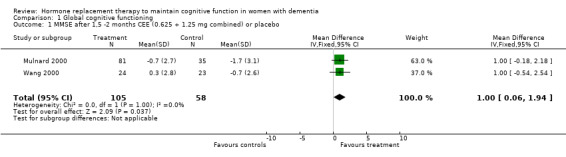
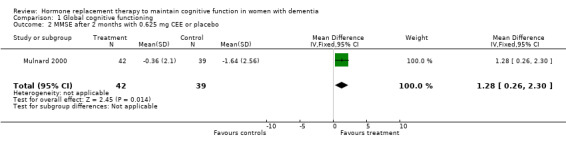
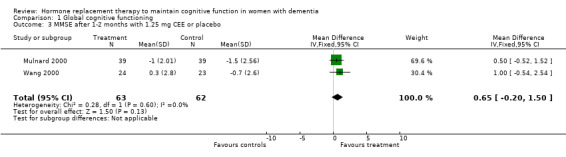
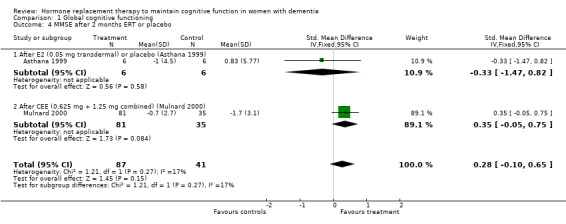
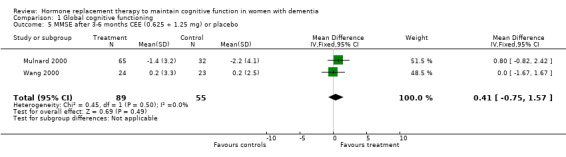
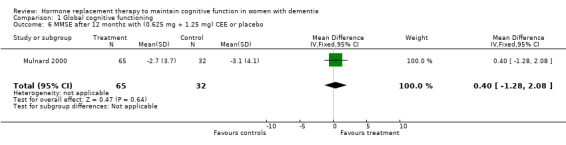
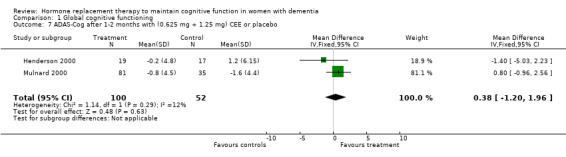
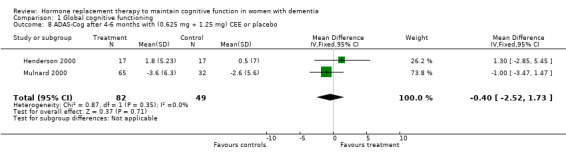
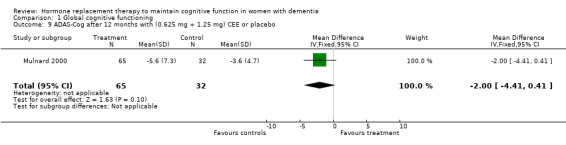
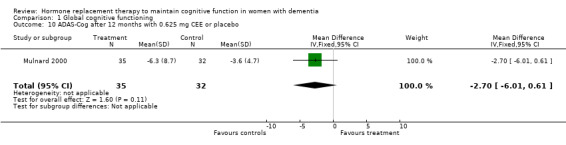
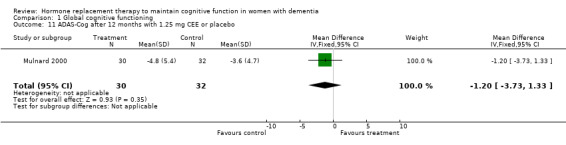
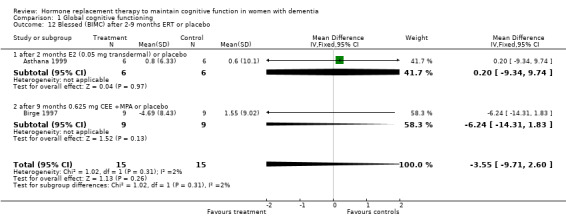
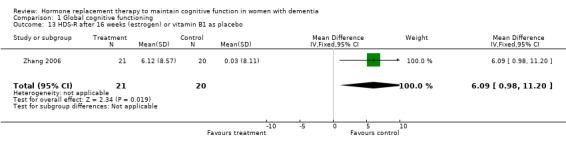
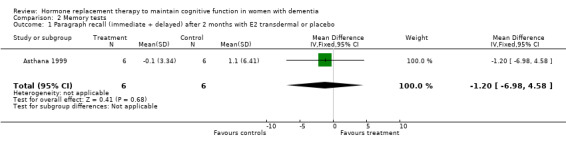
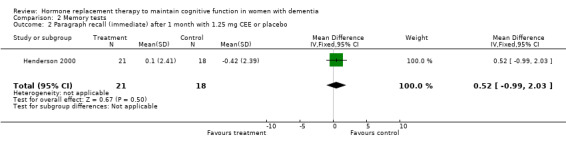
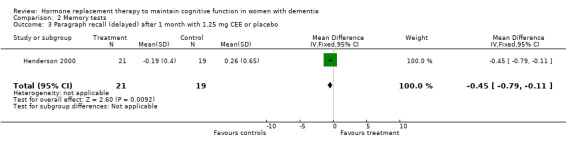
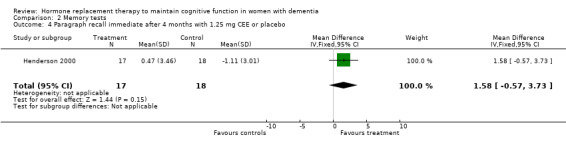
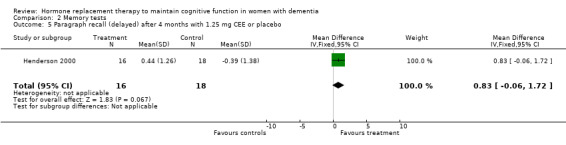
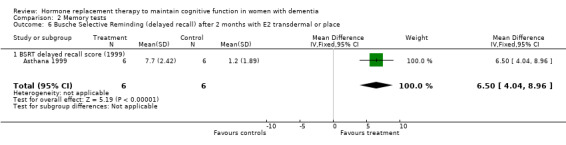
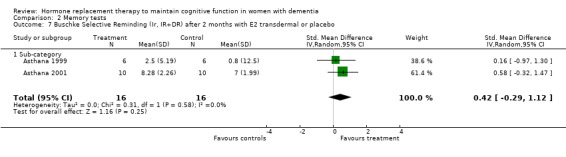
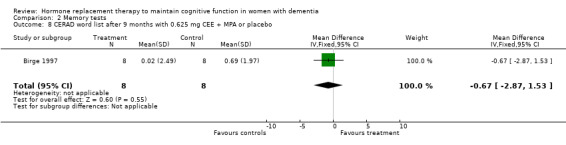
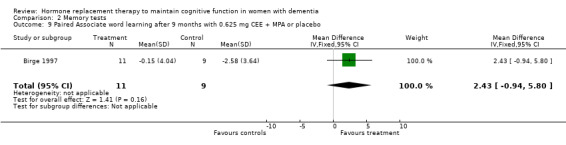
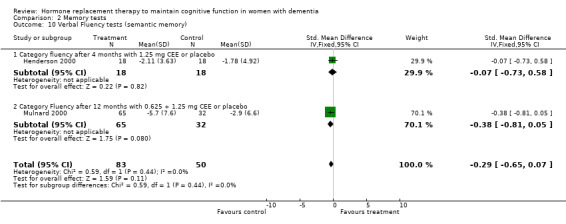
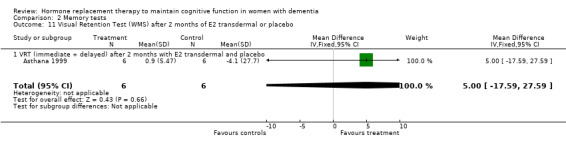
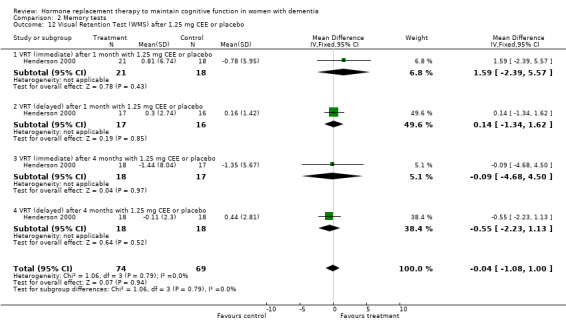
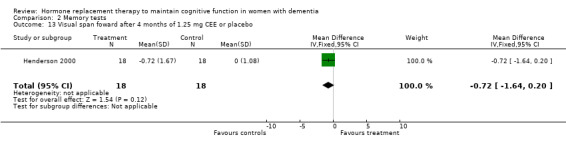
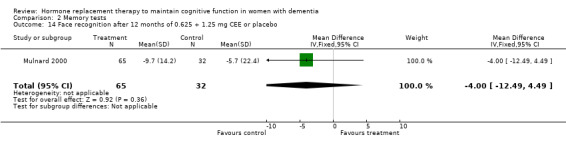
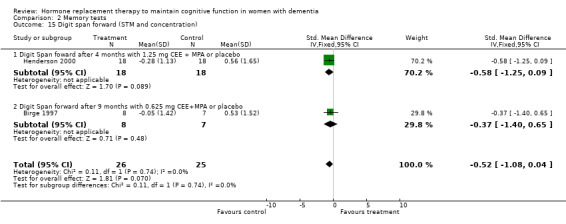
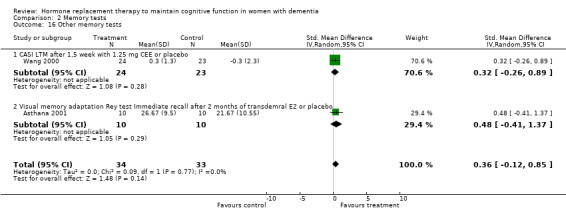
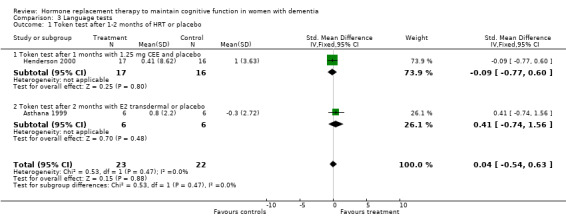
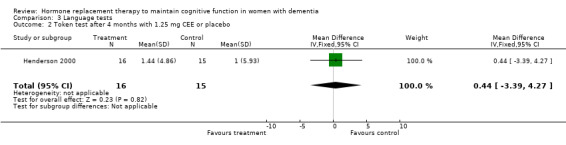
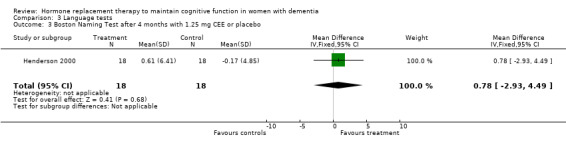
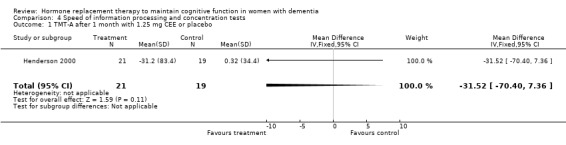
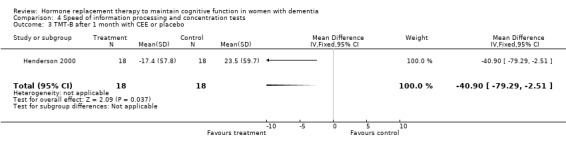
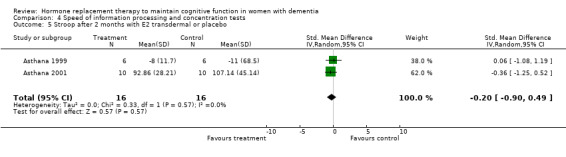
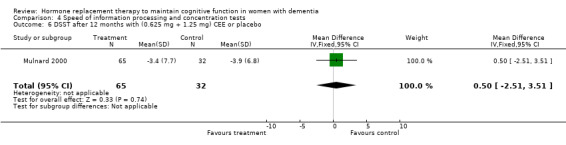
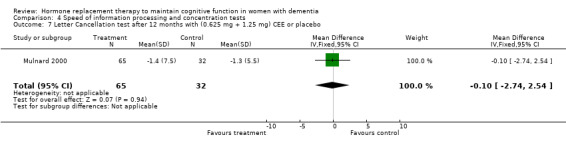
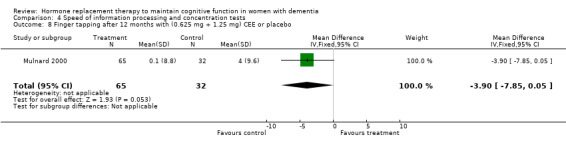
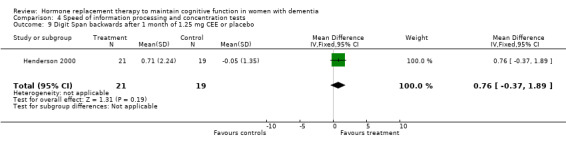
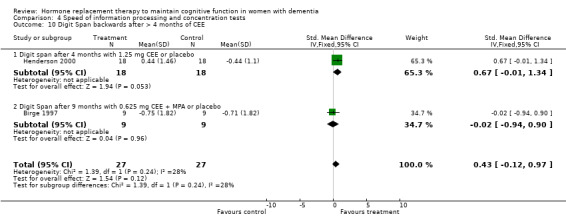
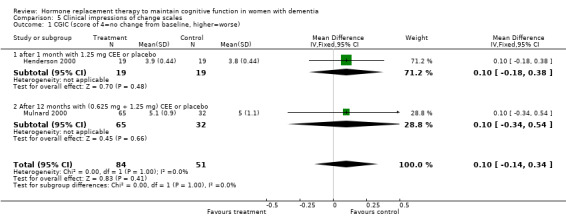
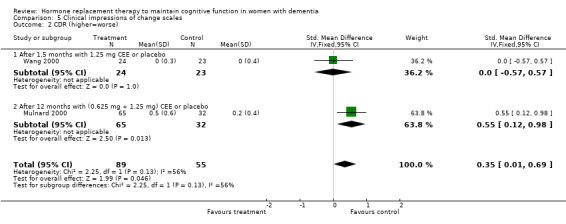
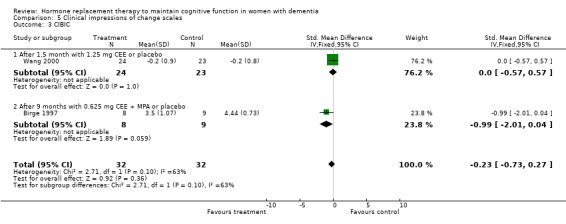
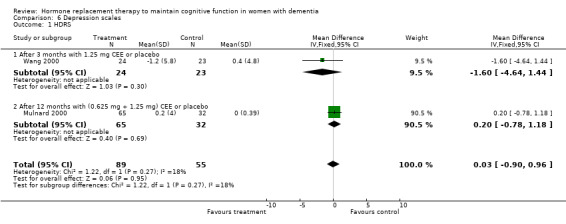
Main results: A total of seven trials including 351 women with AD were analysed. Because different drugs were used at different studies it was not possible to combine more than two studies in any analysis.On a clinical global rating, clinicians scored patients taking CEE as significantly worse compared with the placebo group on the Clinical Dementia Rating scale after 12 months (overall WMD = 0.35, 95% CI = 0.01 to 0.69, z = 1.99, P < 0.05).Patients taking CEE had a worse performance on the delayed recall of the Paragraph Test (overall WMD = -0.45, 95% CI = -0.79 to -0.11, z = 2.60, P < 0.01) after one month than those taking placebo. They had a worse performance on Finger Tapping after 12 months (WMD = -3.90, 95% CI = -7.85 to 0.05, z = 1.93, P < 0.05).Limited positive effects were found for the lower dosage of CEE (0.625 mg/day) which showed a significant improvement in MMSE score only when assessed at two months, and disappeared after correction for multiple testing. No significant effects for MMSE were found at longer end points (3, 6 and 12 months of treatment). With a dosage of 1.25 mg/d CEE, short-term significant effects were found for Trial-Making test B at one month and Digit Span backward at four months. After two months of transdermal diestradiol (E2) treatment, a highly significant effect was observed for the word recall test (WMD = 6.50, 95% CI = 4.04 to 8.96, z = 5.19, P < 0.0001). No other significant effects were found for other outcomes measured.
Authors' conclusions: Currently, HRT or ERT for cognitive improvement or maintenance is not indicated for women with AD.
Conflict of interest statement
None known.
Figures
Update of
-
Hormone replacement therapy to maintain cognitive function in women with dementia.Cochrane Database Syst Rev. 2002;(3):CD003799. doi: 10.1002/14651858.CD003799. Cochrane Database Syst Rev. 2002. Update in: Cochrane Database Syst Rev. 2009 Jan 21;(1):CD003799. doi: 10.1002/14651858.CD003799.pub2. PMID: 12137718 Updated.
References
References to studies included in this review
Asthana 1999 {published data only}
-
- Asthana S, Craft S, Baker LD, Raskind MA, Birnbaum RS, Lofgreen C, Veith RC, Plymate SR. Cognitive and neuroendocrine response to transdermal estrogen in postmenopausal women with AD: results of a placebo‐controlled, double‐blind pilot study. Psychoneuroendocrinology 1999;24:657‐677. - PubMed
Asthana 2001 {published data only}
-
- Asthana S, Baker LD, Craft S, Stanczyk FZ, Veith RC, Raskind MA, Plymate SR. High‐dose estradiol improves cognition for women with AD: results of a randomized study. Neurology 2001; Vol. 57, issue 4:605‐12. - PubMed
Birge 1997 {published data only}
-
- Birge SJ. The role of estrogen in the treatment of Alzheimer's disease. Neurology 1997;48:S36‐S41. - PubMed
Henderson 2000 {published data only}
-
- Henderson VW, Paganini‐Hill A, Miller BL, et al. Estrogen for Alzheimer's disease in women. Neurology 2000;54(2):295‐301. - PubMed
Honjo 1995 {published data only}
-
- Honjo H, Tanaka T, Urabe M, Okada H, Hayashi M, Hayashi K. Senile dementia‐Alzheimer's type and estrogen. Horm. Metab. Res. 1995;27:204‐207. - PubMed
McDonald Caldwell 1952 {published data only}
-
- Caldwell BM, Watson RI. Evaluation of psychologic effects of sex hormone administration in aged women: results of therapy after 6 months. Journal of Gerontology 1952;7:228‐44. - PubMed
Mulnard 2000 {published data only}
-
- Mulnard RA, Cotman CW, Kawas C, et al. Estrogen replacement therapy for treatment of mild to moderate Alzheimer's disease. JAMA 2000;283:1007‐15. - PubMed
Wang 2000 {published data only}
-
- Wang PN, Liao SQ, Liu CY, et al. Effects of estrogen on cognition, mood, and cerebral blood flow in AD. Neurology 2000;54:2061‐2066. - PubMed
Zhang 2006 {published data only}
-
- Zhang, YX, Luo, G, Guo ZJ, Cui, RY, Wang, LQ, Zhou CL. Quantitative evaluation of the intervention al effect of estrogen on Alzheimer's disease. Chinese Journal of Clinical Rehabilitation 2006;10(30):37‐91.
References to studies excluded from this review
Fillit 1986 {published data only}
-
- Fillit H, Weinreb H, Cholst I, Luine V, McEwen B, Amador R, Zabriskie J. Observations in a preliminary open trial of estradiol therapy for senile dementia‐Alzheimer's type. Psychoneuroendocrinology 1986;11:337‐345. - PubMed
Fillit 1994 {published data only}
-
- Fillit H. Estrogens in the Pathogenesis and Treatment of Alzheimer's Disease in Postmenopausal Women. Annals of the New York Academy of Sciences 1994;743:233‐9. - PubMed
Honjo 1989 {published data only}
-
- Honjo H, Ogino Y, Naitoh K, et al. In vivo effects by estrone sulfate on the central nervous system‐senile dementia (Alzheimer's type). Journal of Steroid Biochemistry 1989;34:521‐5. - PubMed
Kantor 1973 {published data only}
-
- Kantor HI, Michael CM, Shore E. Estrogen for older women. American Journal of Obstetrics and Gynecology 1973;4:31‐47. - PubMed
Ohkura 1994a {published data only}
-
- Ohkura T, Isse K, Akazawa K, Hamamoto M, Yaoi Y, Hagino N. Evaluation of estrogen treatment in female patients with dementia of the Alzheimer type. Endocrine Journal 1994;41:361‐71. - PubMed
Ohkura 1994b {published data only}
-
- Ohkura T, Isse K, Akazawa K, Hamamoto M, Yaoi Y, Hagino N. Low‐dose estrogen replacement therapy for Alzheimer disease in women. Menopause 1994b;1:125‐30.
Ohkura 1995 {published data only}
-
- Ohkura T, Isse K, Akazawa K, Hamamoto M, Yaoi Y, Hagino N. Long‐term estrogen replacement therapy in female patients with dementia of the Alzheimer type 7 case reports. Dementia 1995;6:99‐107. - PubMed
Rigaud 2003 {published data only}
-
- Rigaud AS, Andre G, Vellas B, Touchon J, Pere MD. No additional benefit of HRT on response to rivastigmine in menopausal women with AD. Neurology 2003;60:148‐9. - PubMed
Yoon 2003 {published data only}
-
- Yoon B‐K, Kim DH, Kan Y, Kim J‐W, Shin M‐H, Na DL. Hormone replacement therapy in women with Alzheimer's disease: a randomised prospective study. Fertility and Sterility 2003;79(2):274‐80. - PubMed
Additional references
Al‐Azzawi 2008
-
- Al‐Azzawi F. Pulsatile nasal administration of estradiol for postmenopausal complaints. In: Hogervorst E, Henderson V, Gibbs B, Brinton‐Diaz R editor(s). Hormones, Cognition and Dementia. Cambridge: Cambridge University Press, 2008.
APA 1999
-
- American Psychiatric Association. Diagnostic and Statistical Manual of Mental Disorders. Washington, DC: American Psychiatric Association, 1999.
Barrett‐Connor 1991
-
- Barrett‐Connor E. Postmenopausal estrogen and prevention bias. Postmenopausal estrogen and prevention bias. Annals of Internal Medicine 1991;115:455‐6. - PubMed
Chalmers 1983
-
- Chalmers TC, Celano P, Sacks HS, Smith H, Junior. Bias in treatment assignment in controlled clinical trials. New England Journal of Medicine 1983;309:1358‐61. - PubMed
Christie 1990
-
- Christie, et al. Reduced plasma oestrogen stimulated neurophysin and delayed response to oestrogen challenge in AD. Psych Med 1990;20:773‐777. - PubMed
Col 2001
-
- Col NF, Hirota LK, Orr RK, Erban JK, Wong JB, Lau J. Hormone replacement therapy after breast cancer: a systematic review and quantitative assessment of risk. Journal of Clinical Oncology 2001;19(8):2357‐63. - PubMed
Fratiglioni 2000
-
- Fratiglioni L, Launer LJ, Andersen K, Breteler MM, Copeland JR, Dartigues JF, et al. Incidence of dementia and major subtypes in Europe: A collaborative study of population‐based cohorts. Neurologic Diseases in the Elderly Research Group. Neurology 2000;54(11):S10‐15. - PubMed
Gibbs 2008
-
- Gibbs RB. Animal studies that support estrogen effects on cognitive performance and the cholinergic basis of the critical period hypothesis. In: Hogervorst E, Henderson V, Gibbs B, Brinton‐Diaz R editor(s). Hormones, Cognition and Dementia. Cambridge: Cambridge University Press, 2008.
Henderson 2008
-
- Henderson VH. The critical window hypothesis: hormone exposure and cognitive outcomes after menopause. In: Hogervorst E, Henderson V, Gibbs B, Brinton‐Diaz R editor(s). Hormones, Cognition and Dementia. Cambridge: Cambridge University Press, 2008.
Hogervorst 2000
-
- Hogervorst E, Williams J, Budge M, Riedel W, Jolles J. The nature of the effect of female gonadal hormone replacement therapy on cognitive function in post‐menopausal women: a meta‐analysis. Neuroscience 2000;101(3):485‐512. - PubMed
Hogervorst 2007
-
- Hogervorst E, Bandelow S. Should surgically menopausal women be treated with estrogens to decrease the risk for dementia?. Neurology, Invited Editorial 2007;69(11):1070‐1. - PubMed
Huppert 1997
-
- Huppert F, Wilcock G. Ageing, cognition and dementia. Age and Ageing 1997;Dec 26(Suppl 4):20‐3. - PubMed
Launer 1999
-
- Launer LJ, Andersen K, Dewy ME, et al. Rates and risk factors for dementia and Alzheimer's disease. Neurology 1999;1:78‐84. - PubMed
LeBlanc 2001
-
- LeBlanc ES, Janowsky J, Chan BKS, Nelson HD. Hormone replacement therapy and cognition. JAMA 2001;285(11):1489‐99. - PubMed
Lethaby 2008
Matthews 1996
-
- Matthews KA, Kuller LH, Wing RR, Meilahn EN, Plantinga P. Prior to use of estrogen replacement therapy: are users healthier than nonusers ?. American Journal of Epidemiology 1996;143(10):971‐8. - PubMed
McEwen 1997
-
- McEwen BS, Alves SE, Bulloch K, Weiland NG. Ovarian steroids and the brain implications for cognition and aging. Neurology 1997;48:S14‐S18. - PubMed
McKhann 1984
-
- McKhann G, Drachman D, Folstein M, Katzman R, Price D, Stadlan EM. Clinical Diagnosis of Alzheimer’s Disease: Report of the NINCDS‐ADRDA Work Group under the auspices of Department of Health and Human Services Task Force on Alzheimer’s Disease. Neurology 1984;4:939‐44. - PubMed
Nappi 1999
-
- Nappi RE, Sinforiani E, Mauri M, Bono G, Polatti F, Nappi G. Memory functioning at menopause: impact of age in ovariectomized women. Gynecologic and Obstetric Investigation 1999;47:29‐36. - PubMed
Paganini‐Hill 2001
-
- Paganini‐Hill A. Hormone replacement therapy and stroke: risk, protection or no effect? Hormone replacement therapy and stroke: risk, protection or no effect?. Maturitas 2001;38(3):243‐61. - PubMed
Rodríguez‐Martín 2001
Schulz 1995
-
- Schulz KF, Chalmers I, Hayes RJ, Altman DG. Empirical evidence of bias: dimensions of methodological quality associated with estimates of treatment effects in controlled trials. JAMA 1995;273:408‐12. - PubMed
Schumaker 1998
-
- Schumaker, et al. The WHIMS: a trial of estrogen therapy in preventing and slowing the progression of dementia. Control Clin Trials 1998;19:604‐621. - PubMed
Shumaker 2003
-
- Shumaker SA, Legault C, Thal L, Wallace RB, Ockene JK, Hendrix SL, et al. and WHIMS Investigators. Estrogen plus progestin and the incidence of dementia and mild cognitive impairment in postmenopausal women: the Women's Health Initiative Memory Study: a randomized controlled trial. JAMA 2003;289(20):2651‐62. - PubMed
Shumaker 2004
-
- Shumaker SA, Legault C, Kuller L, Rapp SR, Thal L, Lane DS, et al. Women's Health Initiative Memory Study. Conjugated equine estrogens and incidence of probable dementia and mild cognitive impairment in postmenopausal women: Women's Health Initiative Memory Study. JAMA 2004;291(24):2947‐58. - PubMed
Silva 2001
-
- Silva I, Mor G, Naftolin F. Estrogen and the aging brain. Maturitas 2001;38(1):100‐1. - PubMed
Toran‐Allerand 2000
-
- Toran‐Allerand CD. Estrogen as a treatment for AD: commentary. JAMA 2000;284:307‐8. - PubMed
Wegienka 2006
-
- Wegienka G, Havstad S, Kelsey JL. Menopausal hormone therapy in a health maintenance organization before and after women's health initiative hormone trials termination. Journal of Women's Health 2006;15(4):369‐78. - PubMed
Yaffe 1998a
-
- Yaffe K, Sawaya G, Lieberburg I, Grady D. Estrogen therapy in postmenopausal women. Journal of the American Medical Association 1998;279:688‐695. - PubMed
Yaffe 1998b
-
- Yaffe K, Grady D, Pressman A, Cummings S. Serum estrogen levels, cognitive performance and risk of cognitive decline in older community women. Journal of the American Geriatrics Sociaty 1998;46:816‐21. - PubMed
Yaffe 2000
-
- Yaffe K, et al. Cognitive decline in women with relation to non‐protein bound estradiol concentrations. Lancet 2000;356:708‐12. - PubMed
Yesufu 2007
-
- Yesufu A, Bandelow S, Hogervorst E. Meta‐analyses of the effect of hormone treatment on cognitive function in postmenopausal women. Women’s Health invited review 2007;3(2):173‐95. - PubMed
References to other published versions of this review
Publication types
MeSH terms
Grants and funding
LinkOut - more resources
Full Text Sources
Other Literature Sources
Medical
Research Materials
