


Progress towards the understanding and control of sugar beet rhizomania disease
- PMID: 19161359
- PMCID: PMC6640442
- DOI: 10.1111/j.1364-3703.2008.00514.x
Progress towards the understanding and control of sugar beet rhizomania disease
Abstract
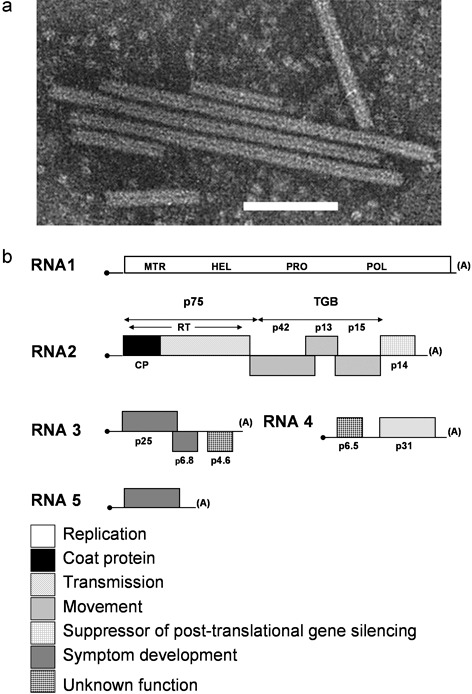
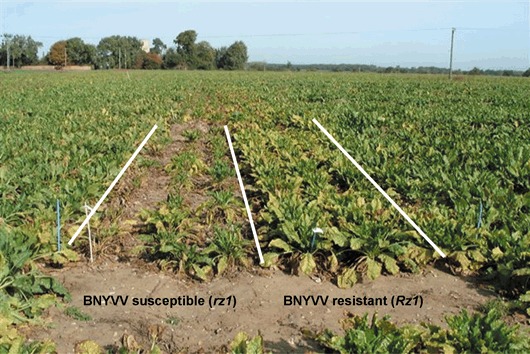
Rhizomania is a soil-borne disease that occurs throughout the major sugar beet growing regions of the world, causing severe yield losses in the absence of effective control measures. It is caused by Beet necrotic yellow vein virus (BNYVV), which is transmitted by the obligate root-infecting parasite Polymyxa betae. BNYVV has a multipartite RNA genome with all natural isolates containing four RNA species, although some isolates have a fifth RNA. The larger RNA1 and RNA2 contain the housekeeping genes of the virus and are always required for infection, whereas the smaller RNAs are involved in pathogenicity and vector transmission. RNA5-containing isolates are restricted to Asia and some parts of Europe, and these isolates tend to be more aggressive. With no acceptable pesticides available to restrict the vector, the control of rhizomania is now achieved almost exclusively through the use of resistant cultivars. A single dominant resistance gene, Rz1, has been used to manage the disease worldwide in recent years, although this gene confers only partial resistance. More recently, new variants of BNYVV have evolved (both with and without RNA5) that are able to cause significant yield penalties on resistant cultivars. These isolates are not yet widespread, but their appearance has resulted in accelerated searches for new sources of resistance to both the virus and the vector. Combined virus and vector resistance, achieved either by conventional or transgenic breeding, offers the sugar beet industry a new approach in its continuing struggle against rhizomania.
Figures
References
-
- Abe, H. and Tamada, T. (1986) Association of Beet necrotic yellow vein virus with isolates of Polymyxa betae . Ann. Phytopathol. Soc. Jpn. 52, 235–247.
-
- Acosta‐Leal, R. , Fawley, M.W. and Rush, C.M. (2008) Changes in the intraisolate genetic structure of Beet necrotic yellow vein virus populations associated with plant resistance breakdown. Virology, 376, 60–68. - PubMed
-
- Adams, M.J. , Antoniw, J.F. and Mullins, J.G.L. (2001) Plant virus transmission by plasmodiophorid fungi is associated with distinctive transmembrane regions of virus‐encoded proteins. Arch. Virol. 146, 1139–1153. - PubMed
-
- Al Musa, A.M. and Mink, G.I. (1981) Beet necrotic yellow vein virus in North‐America. Phytopathology, 71, 773–776.
-
- Amiri, R. , Moghaddam, M. , Mesbah, M. , Sadeghian, S.Y. , Ghannadha, M.R. and Izadpanah, K. (2003) The inheritance of resistance to Beet necrotic yellow vein virus (BNYVV) in B. vulgaris subsp maritima, accession WB42: statistical comparisons with Holly‐1–4. Euphytica, 132, 363–373.
Publication types
MeSH terms
Grants and funding
LinkOut - more resources
Full Text Sources
Other Literature Sources
