


Polymorphic mature microRNAs from passenger strand of pre-miR-146a contribute to thyroid cancer
- PMID: 19164563
- PMCID: PMC2635764
- DOI: 10.1073/pnas.0812591106
Polymorphic mature microRNAs from passenger strand of pre-miR-146a contribute to thyroid cancer
Abstract
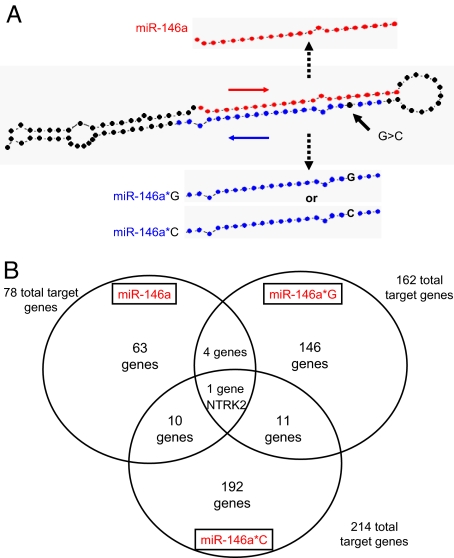
Prior work has shown that heterozygosity G/C of single nucleotide polymorphism (SNP rs2910164) within the precursor of microRNA-146a predisposes to PTC (odds ratio = 1.62, P = 0.000007) although the mechanism was unclear. Here, we show that GC heterozygotes differ from both GG and CC homozygotes by producing 3 mature microRNAs: 1 from the leading strand (miR-146a), and 2 from the passenger strand (miR-146a*G and miR-146a*C), each with its distinct set of target genes. TaqMan analysis of paired tumor/normal samples revealed 1.5- to 2.6-fold overexpression of polymorphic miR-146a* in 7 of 8 tumors compared with the unaffected part of the same gland. The microarray data showed that widely different transcriptomes occurred in the tumors and in unaffected parts of the thyroid from GC and GG patients. The modulated genes are mainly involved in regulation of apoptosis leading to exaggerated DNA-damage response in heterozygotes potentially explaining the predisposition to cancer. We propose that contrary to previously held views transcripts from the passenger strand of miRs can profoundly affect the downstream effects. Heterozygosity for polymorphisms within the premiR sequence can cause epistasis through the production of additional mature miRs. We propose that mature miRs from the passenger strand may regulate many genetic processes.
Conflict of interest statement
The authors declare no conflict of interest.
Figures
References
-
- Pallante P, et al. MicroRNA deregulation in human thyroid papillary carcinomas. Endocr Relat Cancer. 2006;13:497–508. - PubMed
-
- Carlborg O, Haley CS. Epistasis: Too often neglected in complex trait studies? Nat Rev Genet. 2004;5:618–625. - PubMed
-
- Boone C, et al. Exploring genetic interactions and networks with yeast. Nat Rev Genet. 2007;8:437–449. - PubMed
MeSH terms
Substances
Grants and funding
LinkOut - more resources
Full Text Sources
Other Literature Sources
Medical
Miscellaneous
