


Upper extremity improvements in chronic stroke: coupled bilateral load training
- PMID: 19164850
- PMCID: PMC2752408
- DOI: 10.3233/RNN-2009-0455
Upper extremity improvements in chronic stroke: coupled bilateral load training
Abstract
Background: The current treatment intervention study determined the effect of coupled bilateral training (i.e., bilateral movements and EMG-triggered neuromuscular stimulation) and resistive load (mass) on upper extremity motor recovery in chronic stroke.
Methods: Thirty chronic stroke subjects were randomly assigned to one of three behavioral treatment groups and completed 6 hours of rehabilitation in 4 days: (1) coupled bilateral training with a load on the unimpaired hand, (2) coupled bilateral training with no load on the unimpaired hand, and (3) control (no stimulation assistance or load).
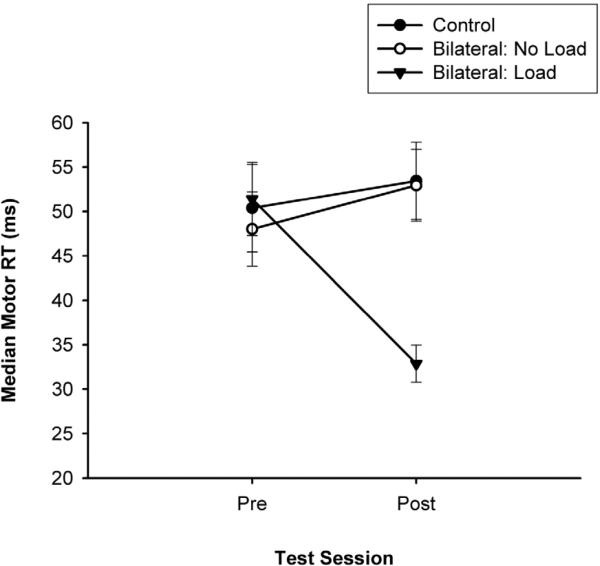
Results: Separate mixed design ANOVAs revealed improved motor capabilities by the coupled bilateral groups. From the pretest to the posttest, both the coupled bilateral no load and load groups moved a higher number of blocks and demonstrated more regularity in the sustained contraction task. Faster motor reaction times across test sessions for the coupled bilateral load group provided additional evidence for improved motor capabilities.
Conclusions: Together these behavioral findings lend support to the contribution of coupled bilateral training with a load on the unimpaired arm to improved motor capabilities on the impaired arm. This evidence supports a neural explanation in that simultaneously moving both limbs during stroke rehabilitation training appears to activate balanced interhemispheric interactions while an extra load on the unimpaired limb provides stability to the system.
Figures
References
-
- Botwinick J, Thompson LW. Components of reaction time in relation to age and sex. J Genet Psychol. 1966a;108(2d Half):175–183. - PubMed
-
- Botwinick J, Thompson LW. Premotor and motor components of reaction time. J Exp Psychol. 1966b;71(1):9–15. - PubMed
-
- Carson RG. Neural pathways mediating bilateral interactions between the upper limbs. Brain Research Reviews. 2005;49(3):641–662. - PubMed
-
- Cauraugh JH. Coupled rehabilitation protocols and neural plasticity: upper extremity improvements in chronic hemiparesis. Restor Neurol Neurosci. 2004;22(35):337–347. - PubMed
-
- Cauraugh JH, Kim S. Two coupled motor recovery protocols are better than one: electromyogram-triggered neuromuscular stimulation and bilateral movements. Stroke. 2002;33(6):1589–1594. - PubMed
Publication types
MeSH terms
Grants and funding
LinkOut - more resources
Full Text Sources
Medical
