


Depression in general intensive care unit survivors: a systematic review
- PMID: 19165464
- PMCID: PMC10885708
- DOI: 10.1007/s00134-009-1396-5
Depression in general intensive care unit survivors: a systematic review
Abstract
Purpose: To critically review data on the prevalence of depressive symptoms in general intensive care unit (ICU) survivors, risk factors for these symptoms, and their impact on health-related quality of life (HRQOL).
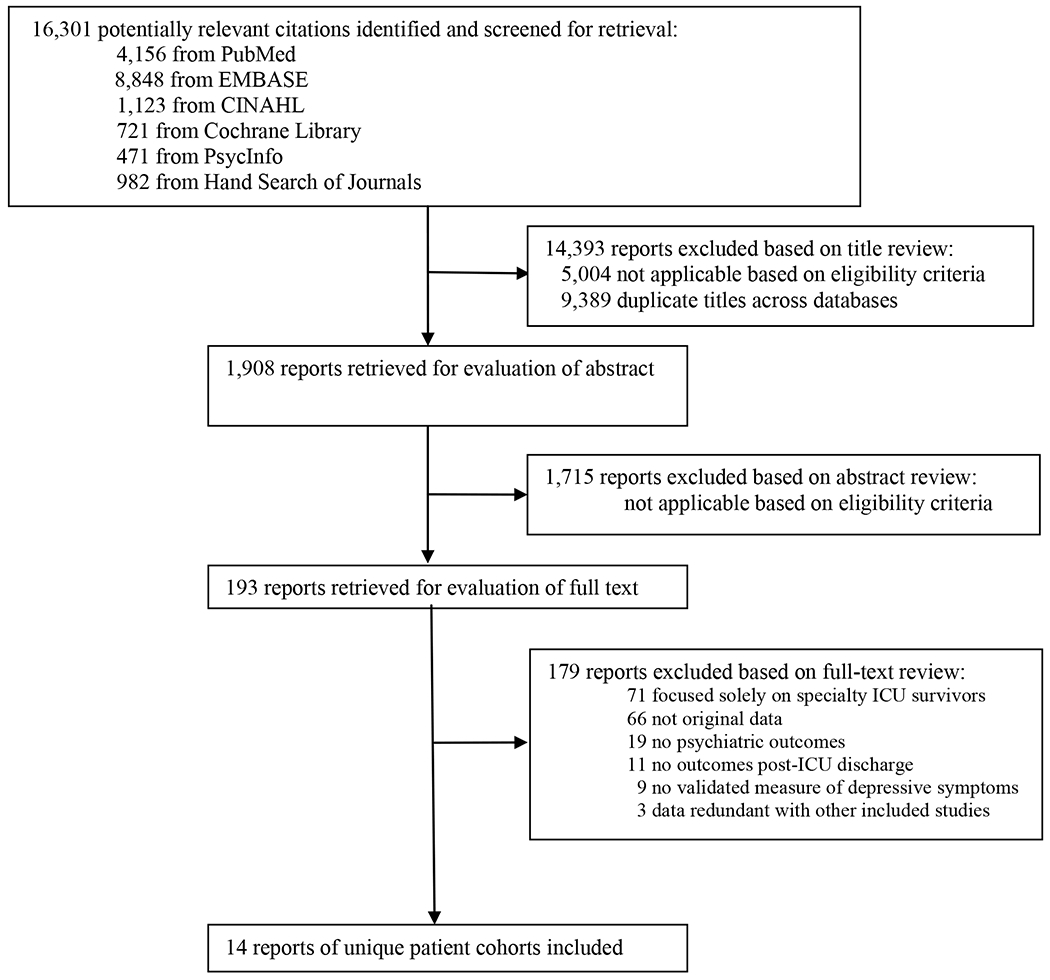
Methods: We conducted a systematic review using Medline, EMBASE, Cochrane Library, CINAHL, PsycINFO, and a hand-search of 13 journals.
Results: Fourteen studies were eligible. The median point prevalence of "clinically significant" depressive symptoms was 28% (total n = 1,213). Neither sex nor age were consistent risk factors for post-ICU depression, and severity of illness at ICU admission was consistently not a risk factor. Early post-ICU depressive symptoms were a strong risk factor for subsequent depressive symptoms. Post-ICU depressive symptoms were associated with substantially lower HRQOL.
Conclusions: Depressive symptoms are common in general ICU survivors and negatively impact HRQOL. Future studies should address how factors related to individual patients, critical illness and post-ICU recovery are associated with depression in ICU survivors.
Figures
References
-
- Angus DC and Carlet J (2003) Surviving intensive care: a report from the 2002 Brussels Roundtable. Intensive Care Med 29:368–77 - PubMed
-
- Dowdy DW, Eid MP, Sedrakyan A, Mendez-Tellez PA, Pronovost PJ, Herridge MS, Needham DM (2005) Quality of life in adult survivors of critical illness: a systematic review of the literature. Intensive Care Med 31:611–20 - PubMed
-
- Dowdy DW, Eid MP, Dennison CR, Mendez-Tellez PA, Herridge MS, Guallar E, Pronovost PJ, Needham DM (2006) Quality of life after acute respiratory distress syndrome: a meta-analysis. Intensive Care Med 32:1115–24 - PubMed
-
- Hopkins RO and Jackson JC (2006) Long-term neurocognitive function after critical illness. Chest 130:869–78 - PubMed
Publication types
MeSH terms
Grants and funding
LinkOut - more resources
Full Text Sources
Medical
