


Chronic nicotine alters cannabinoid-mediated locomotor activity and receptor density in periadolescent but not adult male rats
- PMID: 19167478
- PMCID: PMC2652510
- DOI: 10.1016/j.ijdevneu.2008.12.008
Chronic nicotine alters cannabinoid-mediated locomotor activity and receptor density in periadolescent but not adult male rats
Abstract
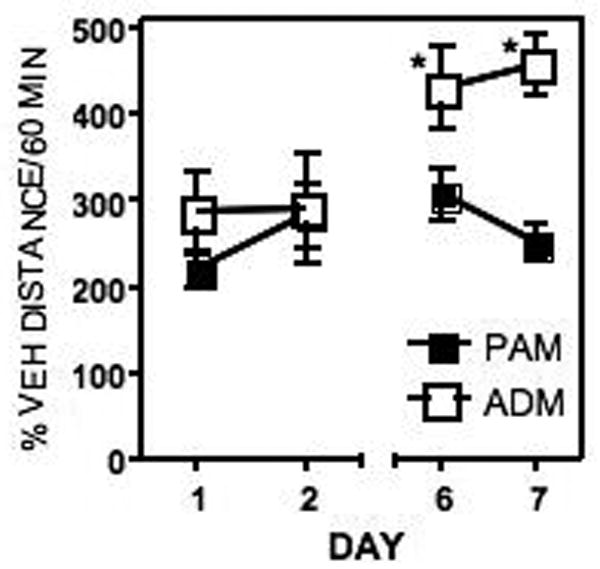
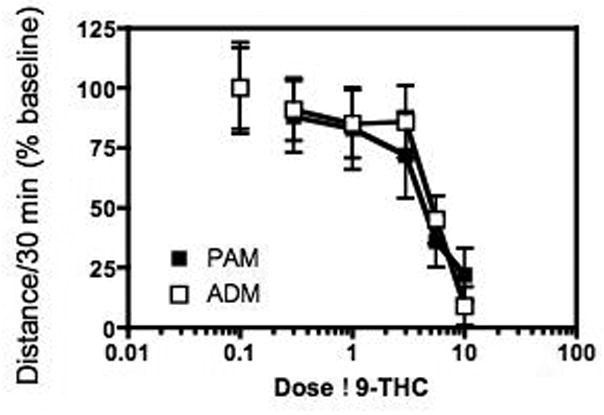
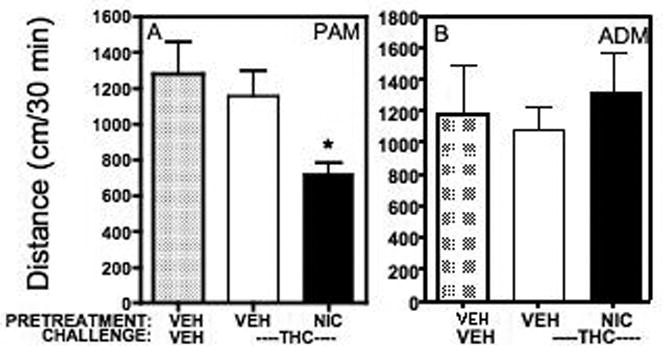
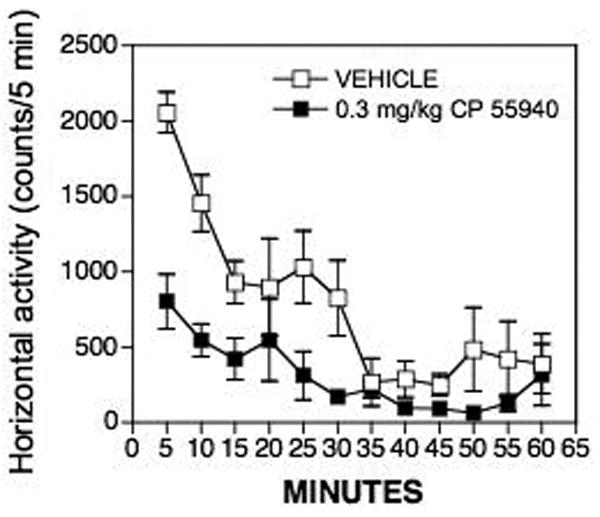
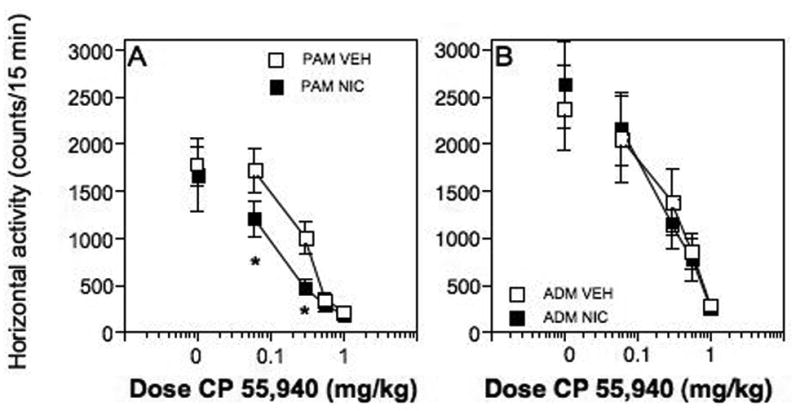
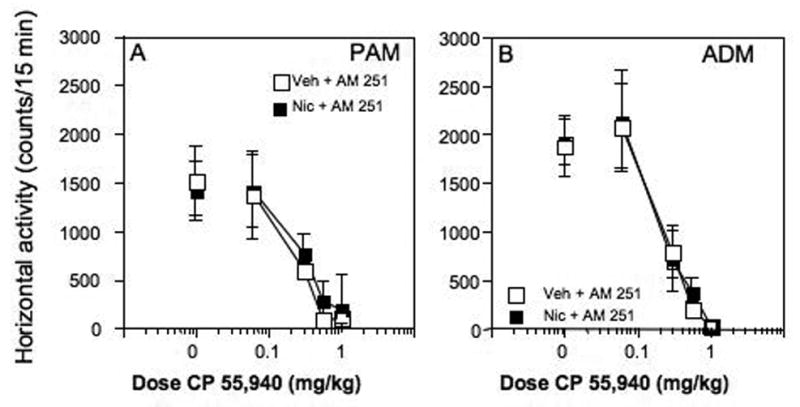
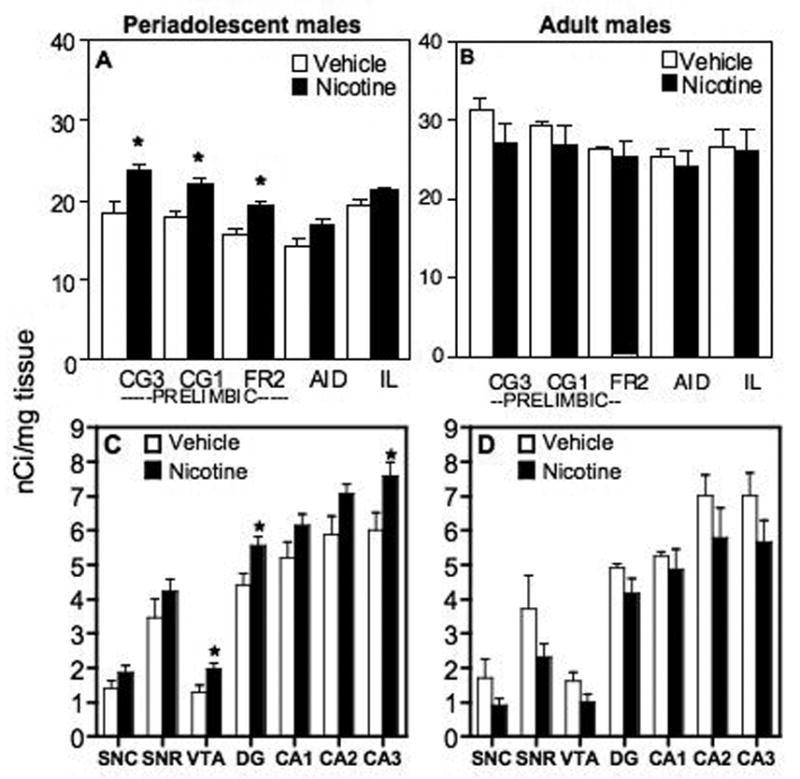
A significant number of youths use cigarettes, and more than half of the youths who smoke daily also use illicit drugs. The focus of these studies is on how exposure to nicotine affects subsequent responses to both nicotine and cannabinoids in adolescents compared with adults. We have shown previously that chronic treatment with nicotine produces sensitization to its locomotor-activating effects in female and adult rats but not male adolescent rats. To better understand the effects of nicotine on adolescent and adult rats, rats were injected with nicotine or saline for 7 days and, on day 8, either challenged with delta-9-tetrahydrocannabinol (Delta 9-THC) or the cannabinoid agonist CP 55,940 and tested for locomotor activity, or the brains were removed for quantitative autoradiography studies of the cannabinoid(1) receptor. A separate group of rats was treated with nicotine plus the cannabinoid antagonist AM 251 and then challenged with CP 55,940. In adolescent male rats, nicotine administration led to sensitization to the locomotor-decreasing effects of both Delta 9-THC and CP 55,940, but in adult male rats, the response to either drug was unchanged compared to controls. The effect of nicotine on CP 55,940-mediated locomotor activity was blocked by co-administration of AM 251 with the nicotine. Further, cannabinoid receptor density was increased in the prelimbic prefrontal cortex, ventral tegmental area, and select regions of the hippocampus in adolescent male rats pretreated with nicotine compared to vehicle-treated controls. There were no significant changes in cannabinoid receptor binding, however, in any of the brain regions examined in adult males pretreated with nicotine. The prelimbic prefrontal cortex and the hippocampus have been shown previously to be involved in stimulant reinforcement; thus it is possible that these changes contribute to the unique behavioral effects of chronic nicotine and subsequent drug administration in adolescents compared with adults.
Figures
References
-
- Abreu-Villaca Y, Seidler FJ, Qiao D, Tate CA, Cousins MM, Thillai I, Slotkin TA. Short-term adolescent nicotine exposure has immediate and persistent effects on cholinergic systems: critical periods, patterns of exposure, dose thresholds. Neuropsychopharmacology. 2003;28:1935–1949. - PubMed
-
- Ago Y, Arikawa S, Yata M, Yano K, Abe M, Takuma K, Matsuda T. Role of prefrontal dopaminergic neurotransmission in glucocorticoid receptor-mediated modulation of methamphetamine-induced hyperactivity. Synapse. 2009;63:7–14. - PubMed
-
- Ambrosio E, Martin S, Garcia-Lecumberri C, Crespo JA. The neurobiology of cannabinoid dependence: sex differences and potential interactions between cannabinoid and opioid systems. Life Sciences. 1999;65:687–694. - PubMed
-
- Bardo MT. Neuropharmacological mechanisms of drug reward: beyond dopamine in the nucleus accumbens. Critical Reviews in Neurobiolgy. 1998;12:37–67. - PubMed
-
- Beenstock M, Rahav G. Testing Gateway Theory: do cigarette prices affect illicit drug use? Journal of Health Economics. 2002;21:679–698. - PubMed
Publication types
MeSH terms
Substances
Grants and funding
LinkOut - more resources
Full Text Sources
Miscellaneous
