


Heme oxygenase-1 induction remodels adipose tissue and improves insulin sensitivity in obesity-induced diabetic rats
- PMID: 19171794
- PMCID: PMC2745551
- DOI: 10.1161/HYPERTENSIONAHA.108.124701
Heme oxygenase-1 induction remodels adipose tissue and improves insulin sensitivity in obesity-induced diabetic rats
Abstract
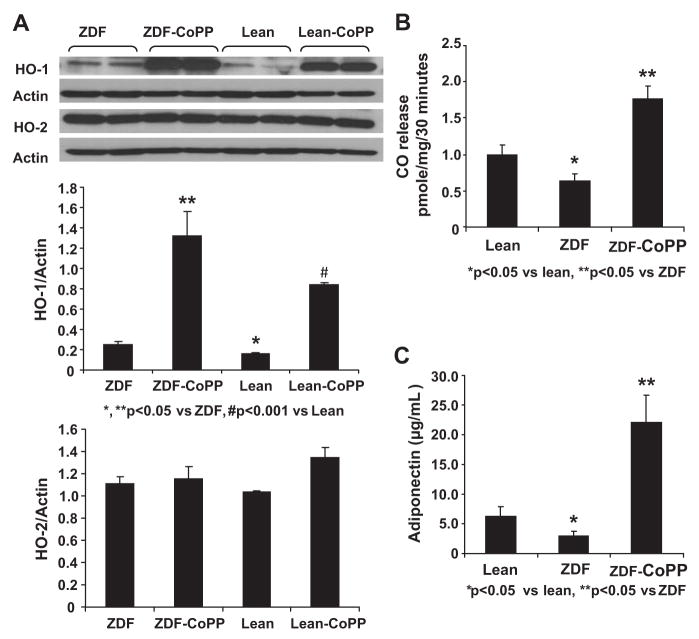
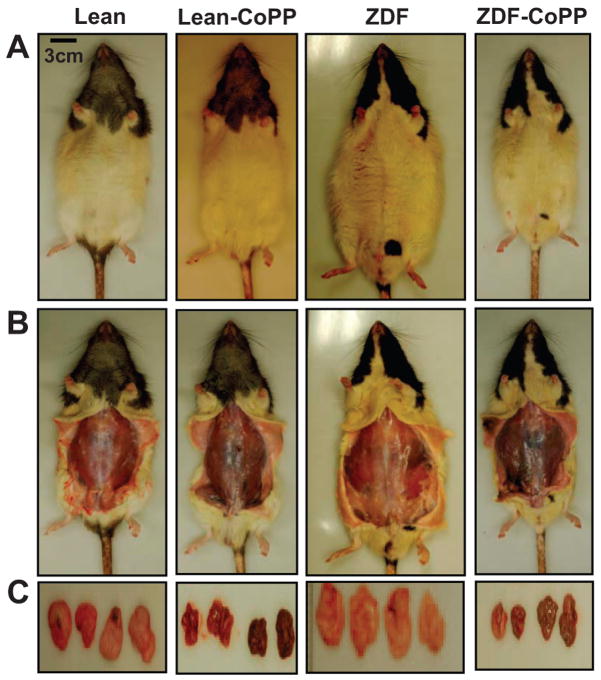
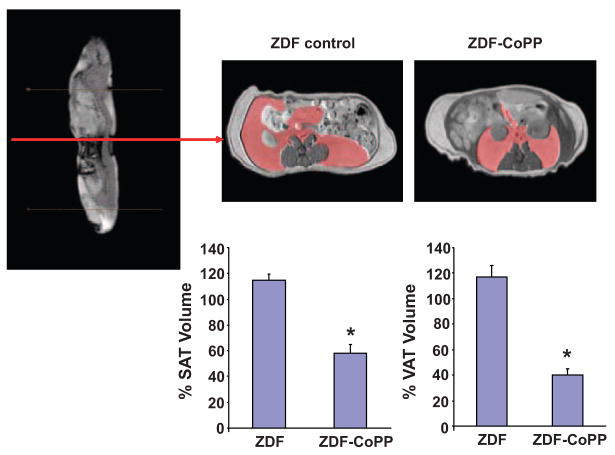
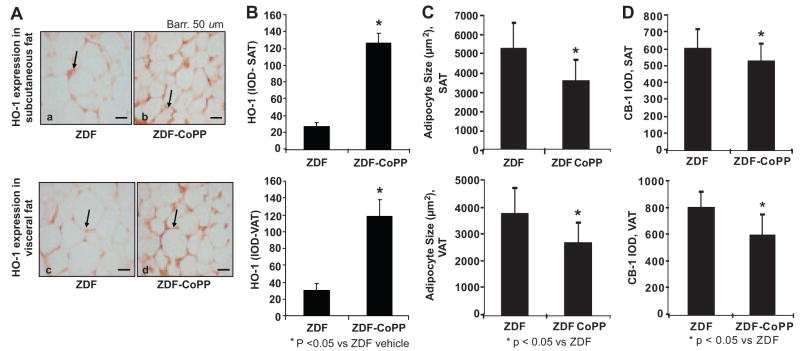
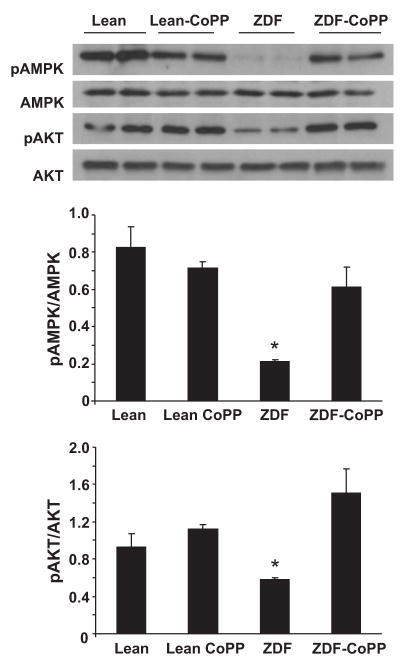
Obesity-associated inflammation causes insulin resistance. Obese adipose tissue displays hypertrophied adipocytes and increased expression of the cannabinoid-1 receptor. Cobalt protoporphyrin (CoPP) increases heme oxygenase-1 (HO-1) activity, increasing adiponectin and reducing inflammatory cytokines. We hypothesize that CoPP administration to Zucker diabetic fat (ZDF) rats would improve insulin sensitivity and remodel adipose tissue. Twelve-week-old Zucker lean and ZDF rats were divided into 4 groups: Zucker lean, Zucker lean-CoPP, ZDF, and ZDF-CoPP. Control groups received vehicle and treatment groups received CoPP (2 mg/kg body weight) once weekly for 6 weeks. Serum insulin levels and glucose response to insulin injection were measured. At 18 weeks of age, rats were euthanized, and aorta, kidney, and subcutaneous and visceral adipose tissues were harvested. HO-1 expression was measured by Western blot analysis and HO-1 activity by serum carbon monoxide content. Adipocyte size and cannabinoid-1 expression were measured. Adipose tissue volumes were determined using MRI. CoPP significantly increased HO-1 activity, phosphorylated AKT and phosphorylated AMP kinase, and serum adiponectin in ZDF rats. HO-1 induction improved hyperinsulinemia and insulin sensitivity in ZDF rats. Subcutaneous and visceral adipose tissue volumes were significantly decreased in ZDF rats. Adipocyte size and cannabinoid-1 expression were both significantly reduced in ZDF-CoPP rats in subcutaneous and visceral adipose tissues. This study demonstrates that HO-1 induction improves insulin sensitivity, downregulates the peripheral endocannabinoid system, reduces adipose tissue volume, and causes adipose tissue remodeling in a model of obesity-induced insulin resistance. These findings suggest HO-1 as a potential therapeutic target for obesity and its associated health risks.
Figures

References
-
- Lafontan M, Girard J. Impact of visceral adipose tissue on liver metabolism Part I: Heterogeneity of adipose tissue and functional properties of visceral adipose tissue. Diabetes Metab. 2008;34:317–327. - PubMed
-
- Lin Y, Berg AH, Iyengar P, Lam TK, Giacca A, Combs TP, Rajala MW, Du X, Rollman B, Li W, Hawkins M, Barzilai N, Rhodes CJ, Fantus IG, Brownlee M, Scherer PE. The hyperglycemia-induced inflammatory response in adipocytes: the role of reactive oxygen species. J Biol Chem. 2005;280:4617–4626. - PubMed
-
- Hotamisligil GS, Shargill NS, Spiegelman BM. Adipose expression of tumor necrosis factor-alpha: direct role in obesity-linked insulin resistance. Science. 1993;259:87–91. - PubMed
-
- Kim JY, van de WE, Laplante M, Azzara A, Trujillo ME, Hofmann SM, Schraw T, Durand JL, Li H, Li G, Jelicks LA, Mehler MF, Hui DY, Deshaies Y, Shulman GI, Schwartz GJ, Scherer PE. Obesity-associated improvements in metabolic profile through expansion of adipose tissue. J Clin Invest. 2007;117:2621–2637. - PMC - PubMed
Publication types
MeSH terms
Substances
Grants and funding
LinkOut - more resources
Full Text Sources
Other Literature Sources
Medical
