


Molecular drug targets in myeloproliferative neoplasms: mutant ABL1, JAK2, MPL, KIT, PDGFRA, PDGFRB and FGFR1
- PMID: 19175693
- PMCID: PMC3823350
- DOI: 10.1111/j.1582-4934.2008.00559.x
Molecular drug targets in myeloproliferative neoplasms: mutant ABL1, JAK2, MPL, KIT, PDGFRA, PDGFRB and FGFR1
Abstract
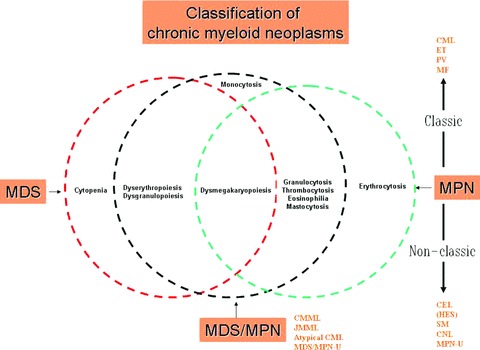
Therapeutically validated oncoproteins in myeloproliferative neoplasms (MPN) include BCR-ABL1 and rearranged PDGFR proteins. The latter are products of intra- (e.g. FIP1L1-PDGFRA) or inter-chromosomal (e.g. ETV6-PDGFRB) gene fusions. BCR-ABL1 is associated with chronic myelogenous leukaemia (CML) and mutant PDGFR with an MPN phenotype characterized by eosinophilia and in addition, in case of FIP1L1-PDGFRA, bone marrow mastocytosis. These genotype-phenotype associations have been effectively exploited in the development of highly accurate diagnostic assays and molecular targeted therapy. It is hoped that the same will happen in other MPN with specific genetic alterations: polycythemia vera (JAK2 V617F and other JAK2 mutations), essential thrombocythemia (JAK2V617F and MPL515 mutations), primary myelofibrosis (JAK2 V617F and MPL515 mutations), systemic mastocytosis (KITD816V and other KIT mutations) and stem cell leukaemia/lymphoma (ZNF198-FGFR1 and other FGFR1 fusion genes). The current review discusses the above listed mutant molecules in the context of their value as drug targets.
Figures
References
-
- Vardiman JW, Brunning RD, Harris NL. In: World Health Organization classification of tumors: tumours of the haematopoietic and lymphoid tissues. Jaffe ES, Harris NL, Stein H, Vardiman JW, editors. International Agency for Research on Cancer (IARC) Press; 2001. pp. 17–44.
-
- Dameshek W. Some speculations on the myeloproliferative syndromes. Blood. 1951;6:372–75. - PubMed
-
- Tefferi A. The history of myeloproliferative disorders: before and after Dameshek. Leukemia. 2008;22:3–13. - PubMed
-
- Tefferi A, Vardiman JW. Classification and diagnosis of myeloproliferative neoplasms: the 2008 World Health Organization criteria and point-of-care diagnostic algorithms. Leukemia. 2008;22:14–22. - PubMed
-
- Nowell PC, Hungerford DA. Chromosome studies on normal and leukemic human leukocytes. J Natl Cancer Inst. 1960;25:85–109. - PubMed
Publication types
MeSH terms
Substances
LinkOut - more resources
Full Text Sources
Other Literature Sources
Molecular Biology Databases
Miscellaneous
