


One-year weight losses in the Look AHEAD study: factors associated with success
- PMID: 19180071
- PMCID: PMC2690396
- DOI: 10.1038/oby.2008.637
One-year weight losses in the Look AHEAD study: factors associated with success
Abstract
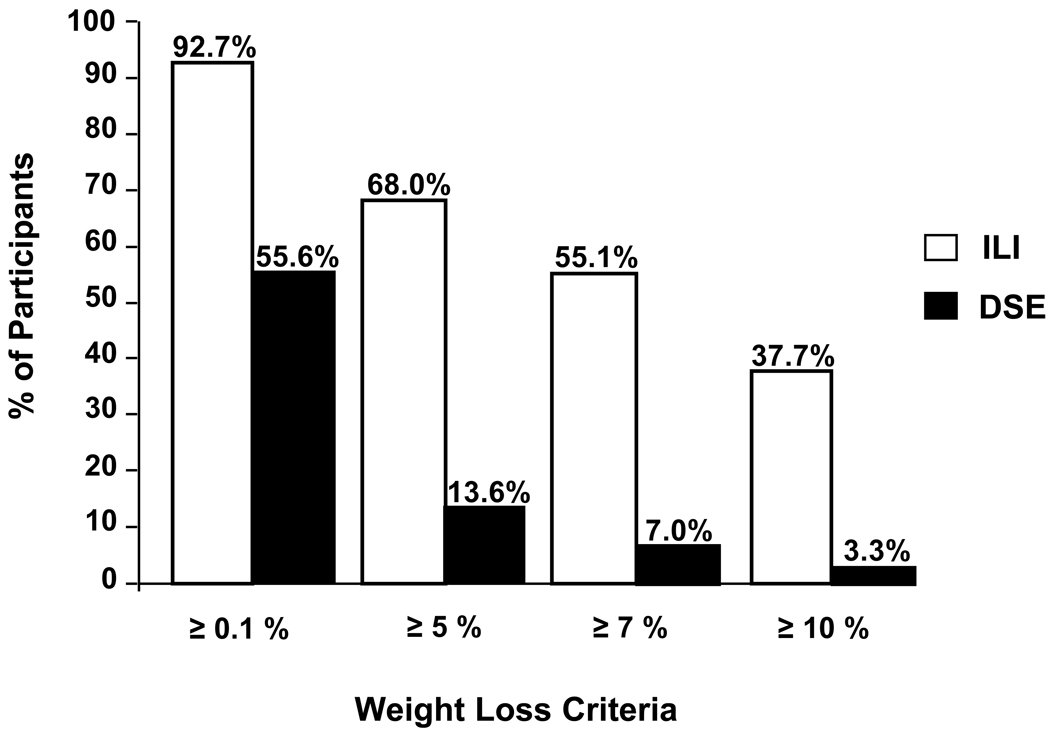
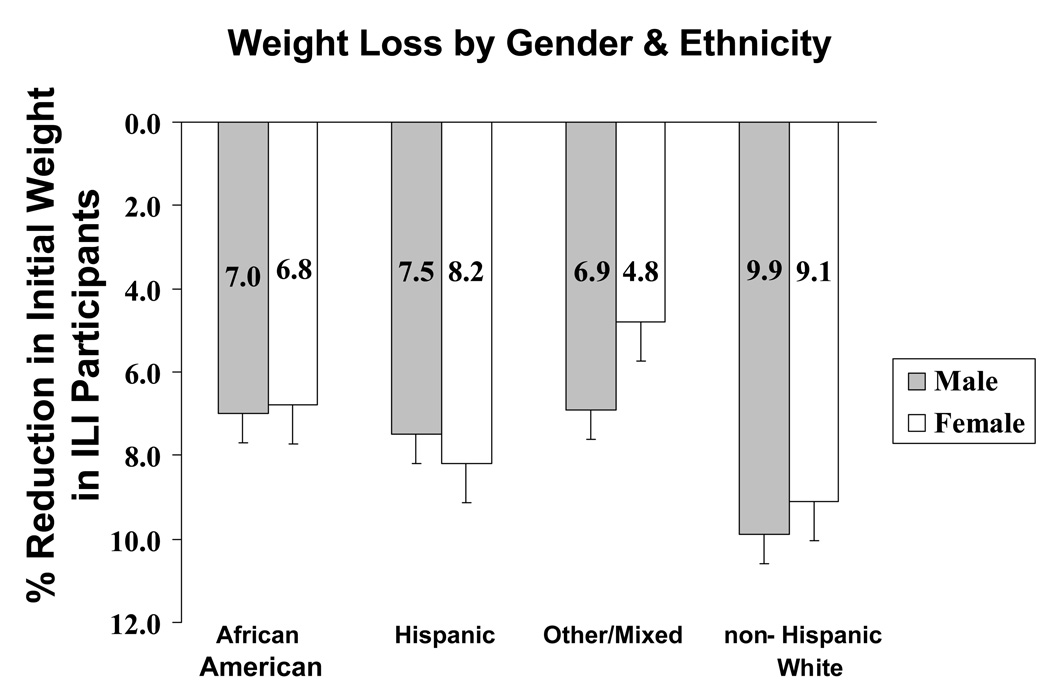
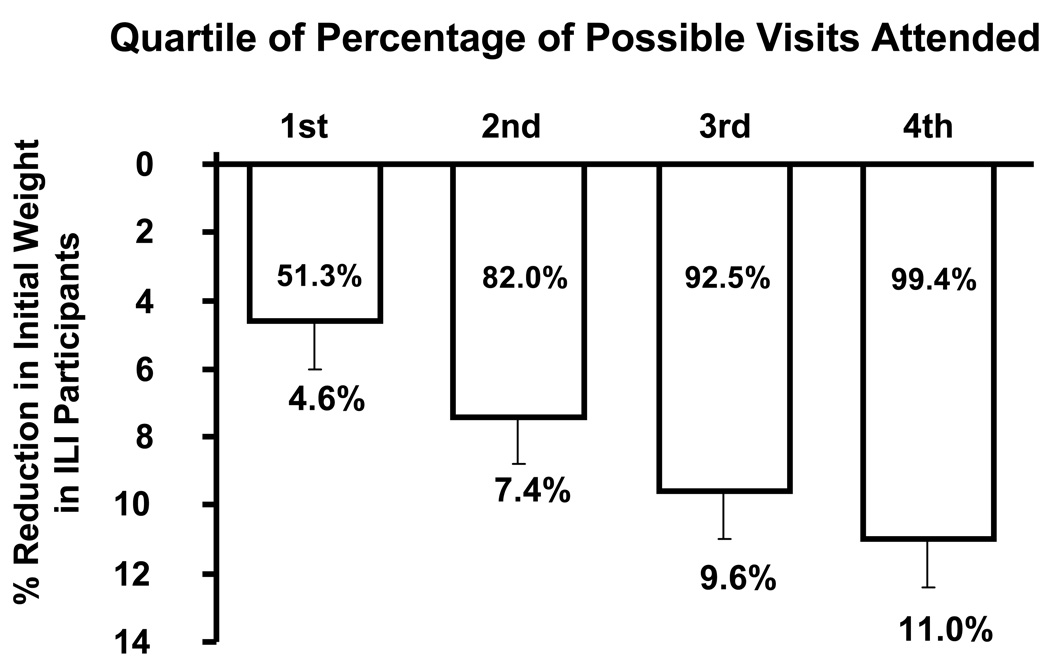
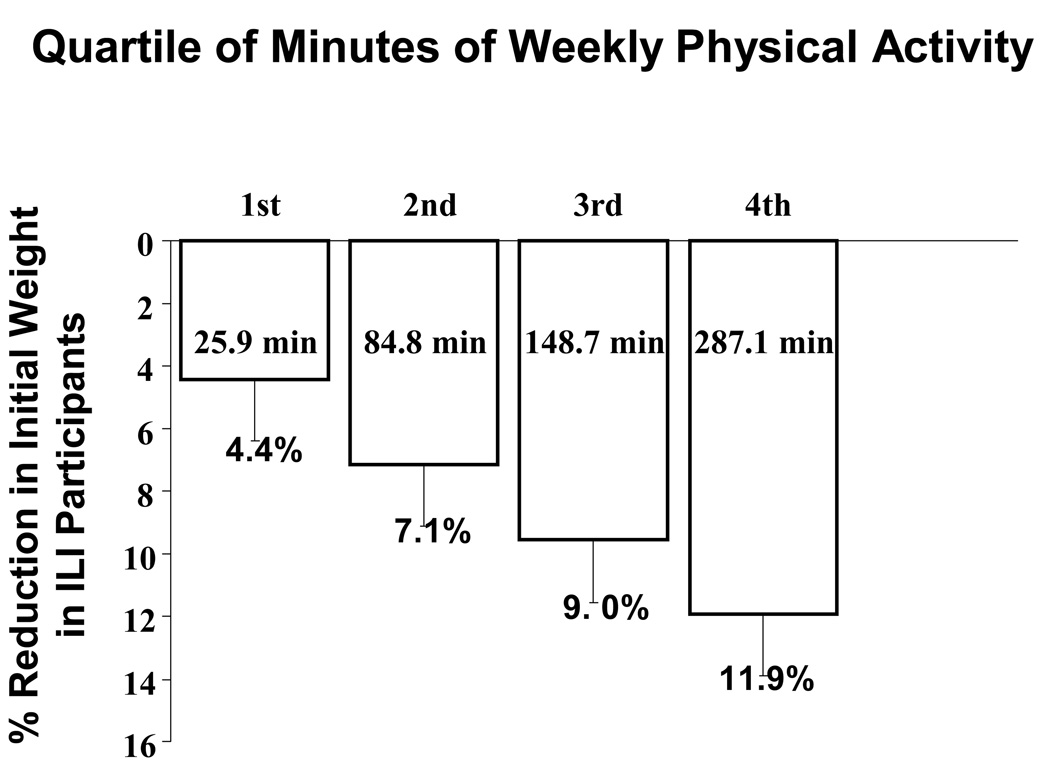
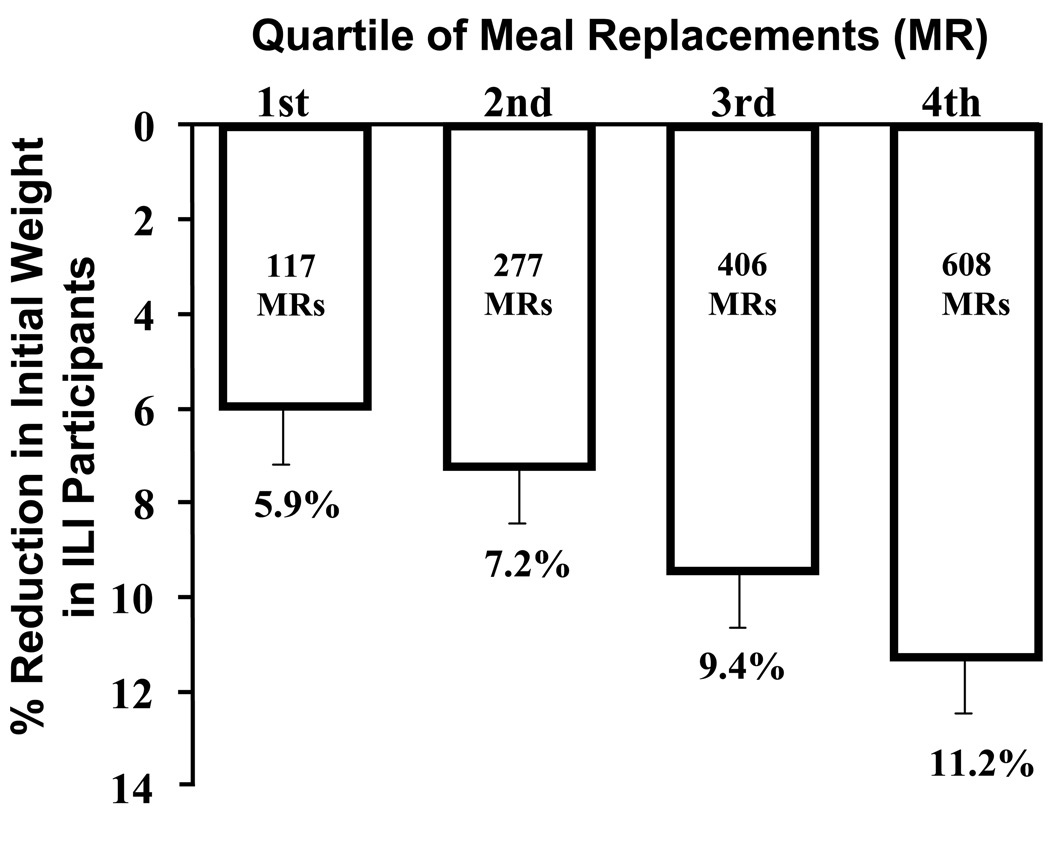
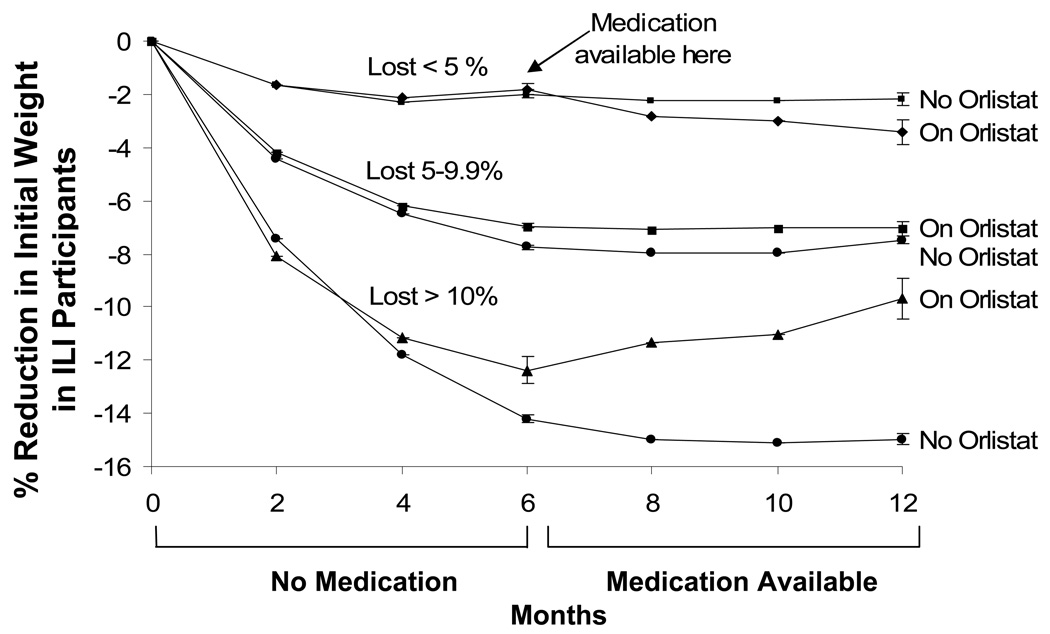
This report provides a further analysis of the first year weight losses in the Look AHEAD (Action for Health in Diabetes) study and identifies factors associated with success. Participants were a total of 5,145 men and women with type 2 diabetes who were recruited at 16 sites and randomly assigned to an intensive lifestyle intervention (ILI) or a control condition, Diabetes Support and Education (DSE). During year 1, participants in ILI received comprehensive diet and physical activity counseling in a total of 42 group and individual sessions, compared with three educational sessions for DSE participants. As reported previously, at the end of the year, ILI participants lost 8.6% of initial weight, compared to 0.7% for DSE (P < 0.001). Within the ILI group, all racial/ethnic groups achieved clinically significant weight losses (>5.5%), although there were significant differences among groups. For the year, ILI participants attended an average of 35.4 treatment sessions and reported exercising a mean of 136.6 min/week and consuming a total of 360.9 meal replacement products. Greater self-reported physical activity was the strongest correlate of weight loss, followed by treatment attendance and consumption of meal replacements. The use of orlistat, during the second half of the year, increased weight loss only marginally in those ILI participants who had lost <5% of initial weight during the first 6 months and chose to take the medication thereafter as a toolbox option. The lifestyle intervention was clinically effective in all subsets of an ethnically and demographically diverse population.
Figures
References
-
- The Look AHEAD Research Group. Look AHEAD (Action for Health in Diabetes): design and methods for a clinical trial of weight loss for the prevention of cardiovascular disease in type 2 diabetes. Controlled Clinical Trials. 2003;24:610–628. - PubMed
-
- Gregg EW, Williamson DF. Relationship of intentional weight loss to disease incidence and mortality. In: Wadden TA, Stunkard AJ, editors. Handbook of obesity treatment. New York: Guilford Press; 2002. pp. 125–143.
-
- Gregg EW, Gerzoff RB, Thompson TJ, Williamson DF. Intentional weight loss and death in overweight and obese U.S. adults 35 years of age and older. Ann Intern Med. 2003;138:383–389. - PubMed
-
- Wing RR, Hamman RF, Bray GA, Delahanty L, Edelstein SL, Hill JO, Horton ES, Hoskin MA, Kriska A, Lachin J, Mayer-Davis EJ, Pi-Sunyer X, Regensteiner JG, Venditti B, Wylie-Rosett J Diabetes Prevention Program Research Group. Achieving weight and activity goals among diabetes prevention program lifestyle participants. Obes Res. 2004;12:1426–1434. - PMC - PubMed
Publication types
MeSH terms
Grants and funding
- DK57078/DK/NIDDK NIH HHS/United States
- U01 DK057151/DK/NIDDK NIH HHS/United States
- DK57151/DK/NIDDK NIH HHS/United States
- U01 DK057154/DK/NIDDK NIH HHS/United States
- U01 DK057171/DK/NIDDK NIH HHS/United States
- U01 DK057182/DK/NIDDK NIH HHS/United States
- U01 DK057136/DK/NIDDK NIH HHS/United States
- U01 DK057002/DK/NIDDK NIH HHS/United States
- U01 DK057177/DK/NIDDK NIH HHS/United States
- M01 RR001066/RR/NCRR NIH HHS/United States
- U01 DK057078/DK/NIDDK NIH HHS/United States
- DK57008/DK/NIDDK NIH HHS/United States
- DK57135/DK/NIDDK NIH HHS/United States
- P30 DK048520/DK/NIDDK NIH HHS/United States
- U01 DK057135/DK/NIDDK NIH HHS/United States
- P30 DK046204/DK/NIDDK NIH HHS/United States
- DK57171/DK/NIDDK NIH HHS/United States
- M01 RR002719/RR/NCRR NIH HHS/United States
- DK57131/DK/NIDDK NIH HHS/United States
- M01 RR000056/RR/NCRR NIH HHS/United States
- U01 DK057219/DK/NIDDK NIH HHS/United States
- DK57149/DK/NIDDK NIH HHS/United States
- U01 DK056992/DK/NIDDK NIH HHS/United States
- P30 DK079637/DK/NIDDK NIH HHS/United States
- M01RR01066/RR/NCRR NIH HHS/United States
- DK57182/DK/NIDDK NIH HHS/United States
- DK57002/DK/NIDDK NIH HHS/United States
- M01RR01346/RR/NCRR NIH HHS/United States
- DK57178/DK/NIDDK NIH HHS/United States
- P30 DK48520/DK/NIDDK NIH HHS/United States
- U01 DK057131/DK/NIDDK NIH HHS/United States
- M01 RR000051/RR/NCRR NIH HHS/United States
- M01RR000056 44/RR/NCRR NIH HHS/United States
- ImNIH/Intramural NIH HHS/United States
- DK57136/DK/NIDDK NIH HHS/United States
- DK57154/DK/NIDDK NIH HHS/United States
- DK57219/DK/NIDDK NIH HHS/United States
- DK57177/DK/NIDDK NIH HHS/United States
- U01 DK056990/DK/NIDDK NIH HHS/United States
- U01 DK057178/DK/NIDDK NIH HHS/United States
- U01 DK057008/DK/NIDDK NIH HHS/United States
- DK56990/DK/NIDDK NIH HHS/United States
- M01RR0021140/RR/NCRR NIH HHS/United States
- DK 046204/DK/NIDDK NIH HHS/United States
- U01 DK057149/DK/NIDDK NIH HHS/United States
- M01RR02719/RR/NCRR NIH HHS/United States
- M01 RR001346/RR/NCRR NIH HHS/United States
- DK56992/DK/NIDDK NIH HHS/United States
- M01RR00051/RR/NCRR NIH HHS/United States
LinkOut - more resources
Full Text Sources
Other Literature Sources
Medical
Research Materials
