


Hearing-in-noise benefits after bilateral simultaneous cochlear implantation continue to improve 4 years after implantation
- PMID: 19180675
- PMCID: PMC3357061
- DOI: 10.1097/mao.0b013e3181925025
Hearing-in-noise benefits after bilateral simultaneous cochlear implantation continue to improve 4 years after implantation
Abstract
Objective: The purpose of this 4-year longitudinal study was to assess the stability of the binaural benefits of head shadow, summation, and squelch for bilateral cochlear implant recipients and to quantify these benefits for the understanding of speech in noise.
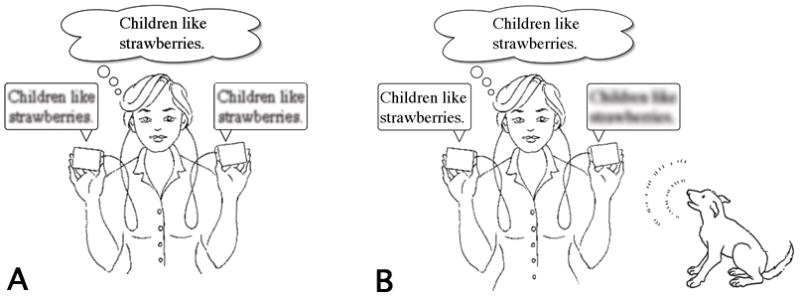
Design: This is a prospective study of 9 patients who received simultaneous bilateral insertion of MED-EL COMBI +40 cochlear implants in a single-stage operation at the University of North Carolina, Chapel Hill, NC. Each patient had postlingual deafness of short duration before insertion of the device. Each year, the patients were tested for word recognition using consonant-nucleus-consonant words in quiet and speech perception in noise using City University of New York sentences. These tests were administered using direct audio input to the implants. Head-related transfer functions were used to simulate speech in noise testing in a spatial environment. Speech was always presented at midline (0 degrees), and the noise masker was presented at either side or midline (-90, 0, +90 degrees).
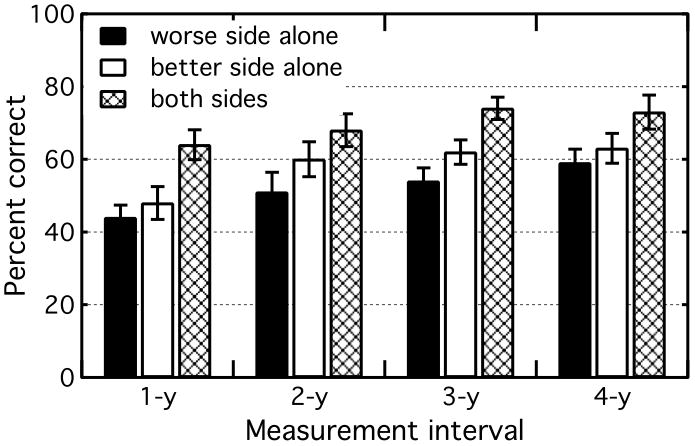
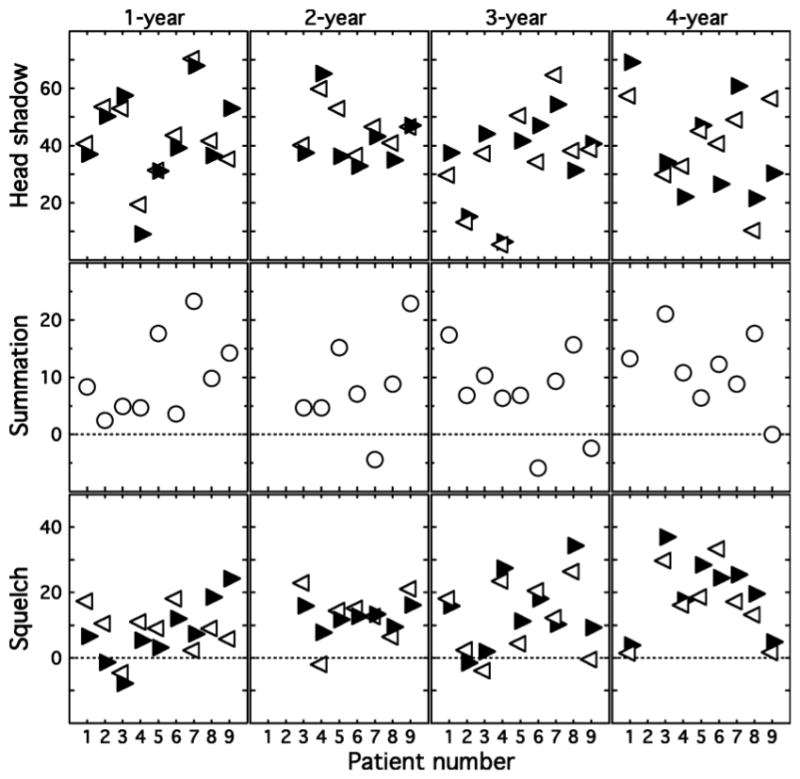
Results: The binaural benefits of head shadow and summation effects developed early in the postoperative period and remained stable throughout the follow-up period. Squelch developed more slowly and was first demonstrated at 12 months after implantation but continued to increase beyond the first year of follow-up.
Conclusion: Benefits of head shadow and summation emerge early and remain stable. However, squelch has the most protracted period of development, with increasing benefit after a year or more of implant experience. These data support the idea that binaural integration continues several years after insertion of bilateral cochlear implant devices.
Figures
Comment in
-
Bilateral cochlear implantation: advantages and disadvantages.Otol Neurotol. 2009 Aug;30(5):690. doi: 10.1097/MAO.0b013e3181a66d43. Otol Neurotol. 2009. PMID: 19503015 No abstract available.
References
-
- Byrne D. Clinical issues and options in binaural hearing aid fitting. Ear Hear. 1981;2:187–93. - PubMed
-
- Buss E, Pillsbury HC, Buchman CA, et al. Multicenter U.S. bilateral MED-EL cochlear implantation study: speech perception over the first year of use. Ear Hear. 2008;29:20–32. - PubMed
-
- Laszig R, Aschendorff A, Stecker M, et al. Benefits of bilateral electrical stimulation with the nucleus cochlear implant in adults: 6- month postoperative results. Otol Neurotol. 2004;25:958–68. - PubMed
-
- Muller J, Schon F, Helms J. Speech understanding in quiet and noise in bilateral users of the MED-EL COMBI 40/40+ cochlear implant system. Ear Hear. 2002;23:198–206. - PubMed
Publication types
MeSH terms
Grants and funding
LinkOut - more resources
Full Text Sources
Medical
