


Long-term effect on mortality of a home intervention that reduces functional difficulties in older adults: results from a randomized trial
- PMID: 19187417
- PMCID: PMC2712136
- DOI: 10.1111/j.1532-5415.2008.02147.x
Long-term effect on mortality of a home intervention that reduces functional difficulties in older adults: results from a randomized trial
Abstract
Objectives: To evaluate the long-term mortality effect of a home-based intervention previously shown to reduce functional difficulties and whether survivorship benefits differ according to initial mortality risk level.
Design: Two-group randomized trial with survivorship followed up to 4 years from study entry.
Setting: Homes of urban community-living elderly people.
Participants: Three hundred nineteen adults aged 70 and older with difficulties performing daily activities.
Intervention: Occupational and physical therapy sessions to instruct participants in compensatory strategies, home modifications, home safety, fall recovery techniques, and balance and muscle strength exercises.
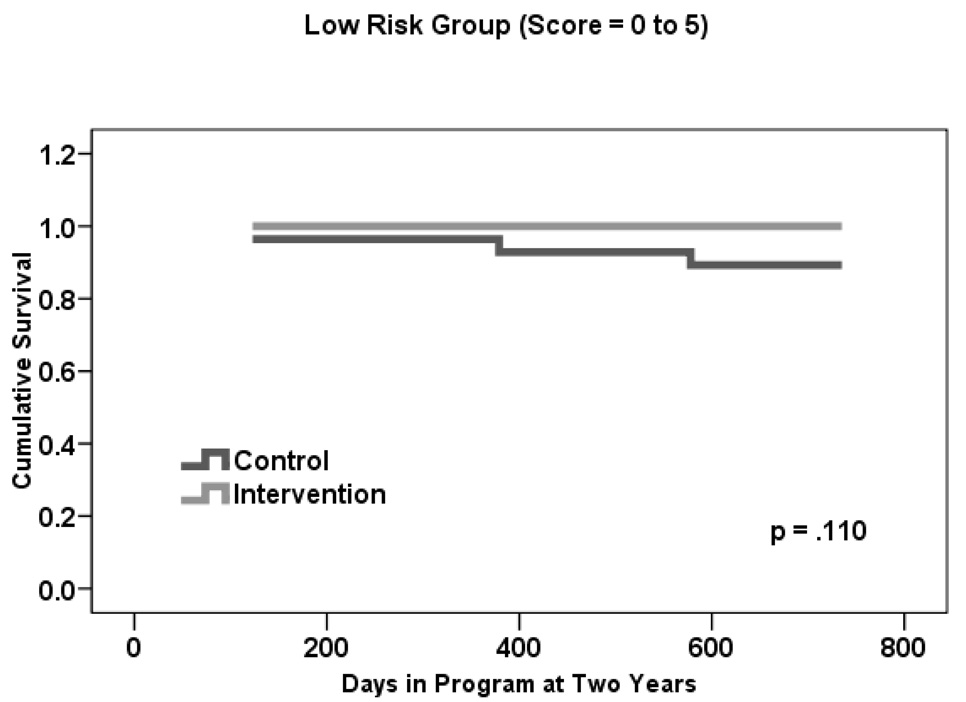
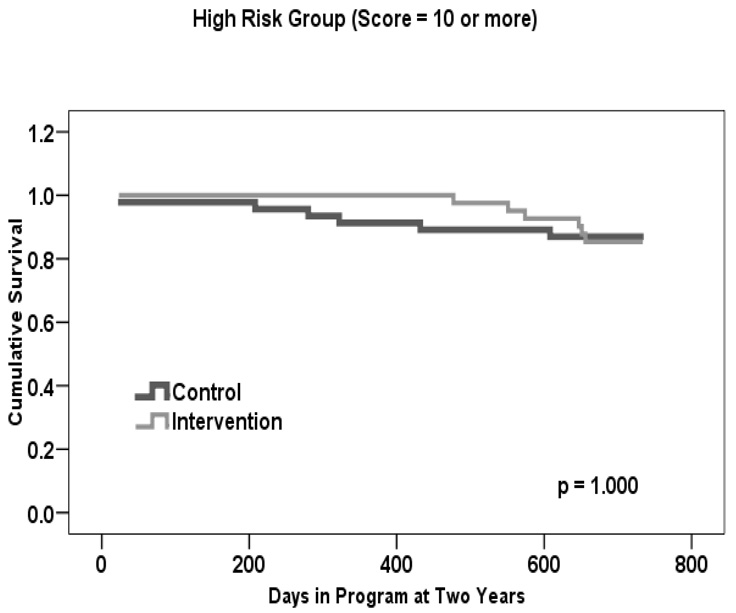
Measurements: Survival time was number of days between baseline interview and date of death, as determined using data from the National Death Index or December 31, 2005. Participants were stratified according to baseline mortality risk (low, moderate, high) using a prognostic indicator.
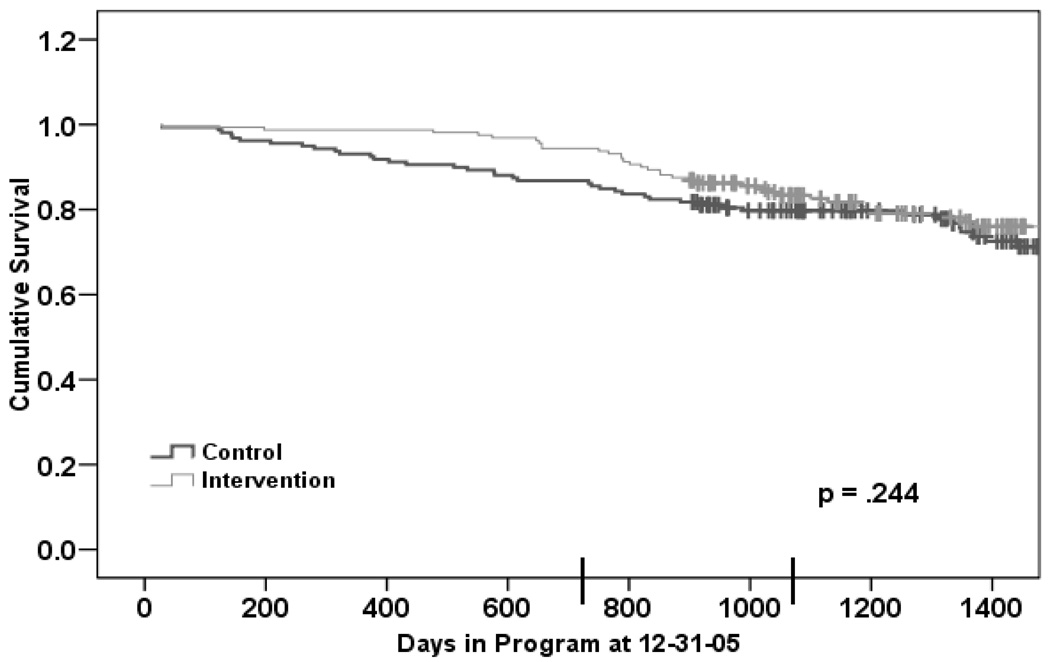
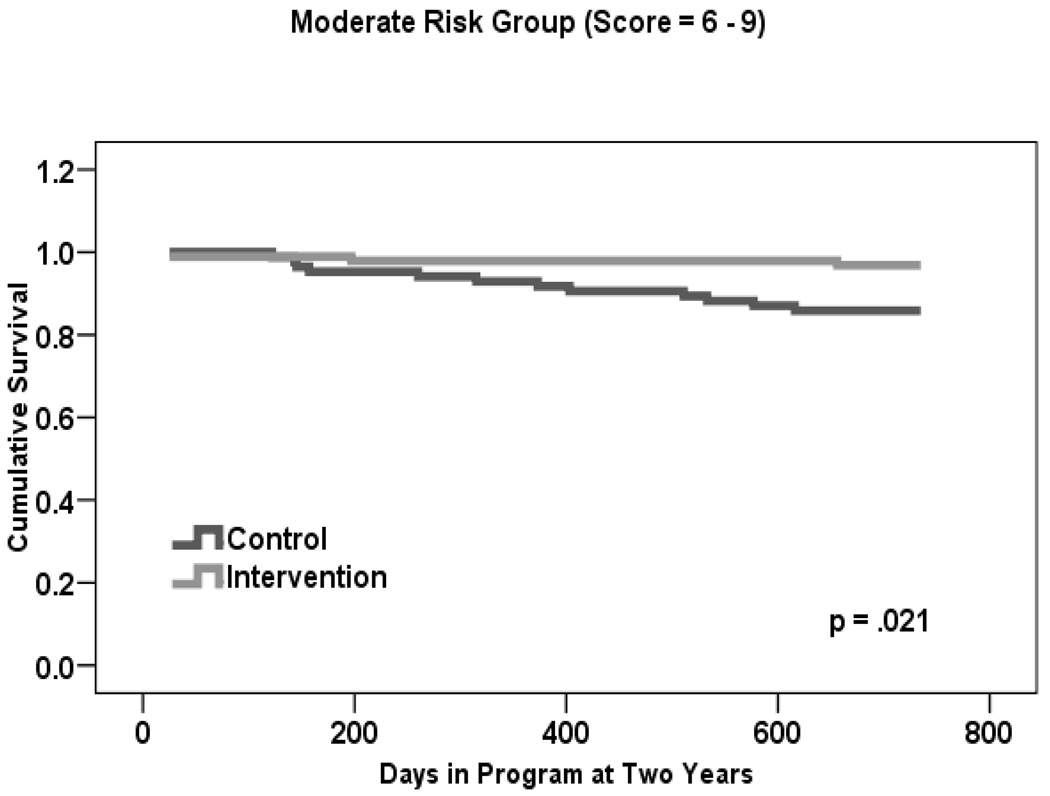
Results: At 2 years, intervention participants (n=160) had a 5.6% mortality rate (n=9 deaths) and controls (n=159) a 13.2% rate (n=21 deaths; P=.02). Mortality rates remained lower for intervention participants up to 3.5 years from study entry. At 2 years, intervention participants with moderate mortality risk had a 16.7% mortality rate (n=16 deaths/96), compared with 28.2% for equivalent control group participants (n=24 deaths/85; P=.02). By 3 years, mortality rates were not statistically significantly different between the experimental and control groups.
Conclusions: The intervention extended survivorship up to 3.5 years and maintained statistically significant differences for 2 years. Subjects at moderate mortality risk derived the most intervention benefit. Findings suggest that the intervention could be a low-cost clinical tool to delay functional decline and mortality.
Conflict of interest statement
Figures
Comment in
-
A home-based intervention resulted in lower mortality rates for up to two years in community-dwelling older people.Aust Occup Ther J. 2010 Oct;57(5):349-50. doi: 10.1111/j.1440-1630.2010.00892.x. Aust Occup Ther J. 2010. PMID: 20868424 No abstract available.
References
-
- Federal Interagency Forum on Aging-Related Statistics. Older Americans 2008: Key indicators of well-being. [Accessed April 15, 2008]. Available at: http://www.agingstats.gov/chartbook2000/OlderAmericans2000.pdf.
-
- Gill TM, Kurland B. The burden and patterns of disability in activities of daily living among community-living older persons. J Gerontol A Biol Sci Med Sci. 2003;58(1):M70–M75. - PubMed
-
- Carey EC, Covinsky KE, Lui LY, et al. Prediction of mortality in community-living frail elderly people with long-term care needs. J Am Geriatr Soc. 2008;56:68–75. - PubMed
Publication types
MeSH terms
Grants and funding
LinkOut - more resources
Full Text Sources
Medical
