


The economic burden of insomnia: direct and indirect costs for individuals with insomnia syndrome, insomnia symptoms, and good sleepers
- PMID: 19189779
- PMCID: PMC2625324
The economic burden of insomnia: direct and indirect costs for individuals with insomnia syndrome, insomnia symptoms, and good sleepers
Abstract
Background and purpose: Insomnia is a highly prevalent problem that is associated with increased use of health care services and products, as well as functional impairments. This study estimated from a societal perspective the direct and indirect costs of insomnia.
Participants and methods: A randomly selected sample of 948 adults (mean age = 43.7 years old; 60% female) from the province of Quebec, Canada completed questionnaires on sleep, health, use of health-care services and products, accidents, work absences, and reduced productivity. Data were also obtained from the Quebec government administered health insurance board regarding consultations and hospitalizations. Participants were categorized as having insomnia syndrome, insomnia symptoms or as being good sleepers using a standard algorithm. Frequencies of target cost variables were obtained and multiplied by unit costs to generate estimates of total costs for the adult population of the province of Quebec.
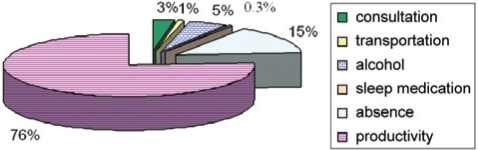
Results: The total annual cost of insomnia in the province of Quebec was estimated at $6.6 billion (Cdn$). This includes direct costs associated with insomnia-motivated health-care consultations ($191.2 million) and transportation for these consultations ($36.6 million), prescription medications ($16.5 million), over the-counter products ($1.8 million) and alcohol used as a sleep aid ($339.8 million). Annual indirect costs associated with insomnia-related absenteeism were estimated at $970.6 million, with insomnia-related productivity losses estimated at $5.0 billion. The average annual per-person costs (direct and indirect combined) were $5,010 for individuals with insomnia syndrome, $1431 for individuals presenting with symptoms, and $421 for good sleepers.
Conclusions: This study suggests that the economic burden of insomnia is very high, with the largest proportion of all expenses (76%) attributable to insomnia-related work absences and reduced productivity. As the economic burden of untreated insomnia is much higher than that of treating insomnia, future clinical trials should evaluate the cost-benefits, cost-utility, and cost-effectiveness of insomnia therapies.
Figures
References
-
- Ford DE, Kamerow DB. Epidemiologic study of sleep disturbances and psychiatric disorders. An opportunity for prevention. JAMA. 1989;262:1479–84. - PubMed
-
- Morin CM, LeBlanc M, Daley M, Grégoire JP, Mérette C. Epidemiology of insomnia: Prevalence, self-help treatments and consultations initiated, and determinants of help-seeking behaviors. Sleep Med. 2006;7:123–30. - PubMed
-
- Ohayon MM. Epidemiology of insomnia: what we know and what we still need to learn. Sleep Med Rev. 2002;6:97–111. - PubMed
-
- Drummond MF, McGuire A. Economic evaluation in health care. Oxford: Oxford University Press; 2001.
-
- Chilcott LA, Shapiro CM. The socioeconomic impact of insomnia. An overview. Pharmacoeconomics. 1996;10(Suppl 1):1–14. - PubMed