


The effects of the coverage gap on drug spending: a closer look at Medicare Part D
- PMID: 19189991
- PMCID: PMC2859617
- DOI: 10.1377/hlthaff.28.2.w317
The effects of the coverage gap on drug spending: a closer look at Medicare Part D
Abstract
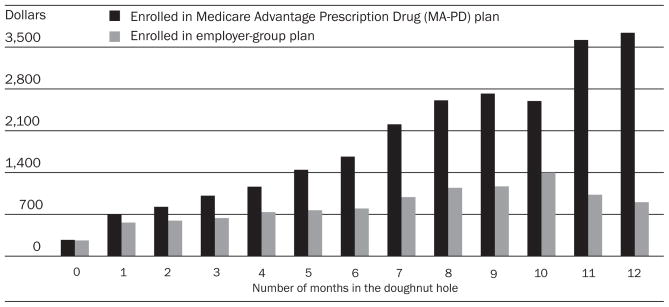
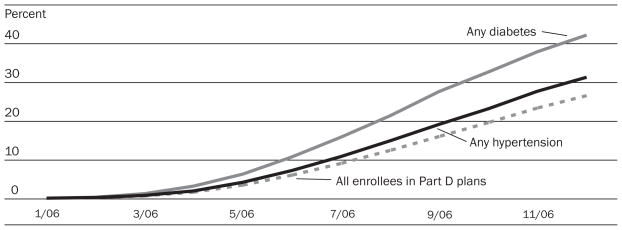
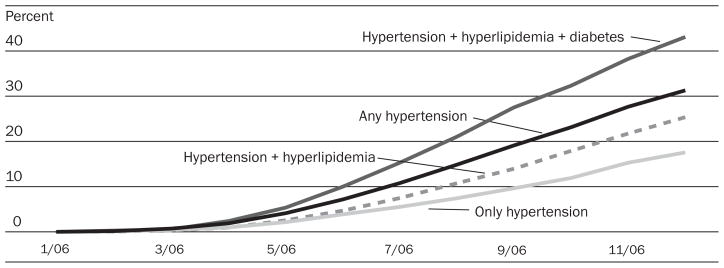
We calculated prescription drug usage in two groups of Medicare beneficiaries: employer group with no coverage gap, and individual Part D group with no coverage or some generic drug coverage in the coverage gap. Among those with employer coverage, 40 percent reached the doughnut hole, compared with 25 percent of those without such coverage. Overall, 5 percent went through the doughnut hole to reach the catastrophic coverage level. Those lacking coverage in the doughnut hole reduced their drug use by 14 percent; those with generic coverage reduced their use by 3 percent. Coverage of generic drugs with a $0-$10 copayment in the doughnut hole could be financed by, at most, a six-to-nine-percentage-point increase in initial coinsurance.
Figures
References
-
-
Dollar values for the coverage gap and catastrophic coverage region in subsequent years were indexed to increases in drug spending.
-
-
- Medicare Payment Advisory Commission. Report to the Congress: Increasing the Value of Medicare. Jun2006. [accessed 19 May 2008]. http://www.medpac.gov/publications/congressional_reports/Jun06_EntireRep....
-
- Hsu J, et al. Medicare Beneficiaries’ Knowledge of Part D Prescription Drug Program Benefits and Responses to Drug Costs. Journal of the American Medical Association. 2008;299(16):1929–1936. - PubMed
-
- MedPAC. A Data Book: Healthcare Spending and the Medicare Program. Jun2008. [accessed 1 December 2008]. http://www.medpac.gov/documents/Jun08DataBook_Entire_report.pdf.
-
- Henry J. Kaiser Family Foundation. Medicare Fact Sheet: The Medicare Prescription Drug Benefit. Nov2006. [accessed 1 December 2008]. http://www.kff.org/medicare/upload/7044-05.pdf.
Publication types
MeSH terms
Grants and funding
LinkOut - more resources
Full Text Sources
Medical
Miscellaneous
