


Developing a curriculum statement based on clinical practice: genetics in primary care
- PMID: 19192373
- PMCID: PMC2629823
- DOI: 10.3399/bjgp09X395094
Developing a curriculum statement based on clinical practice: genetics in primary care
Abstract
Background: Advances in medical genetics are increasingly being incorporated into clinical management outside specialist genetic services. This study was therefore undertaken to develop learning outcomes in genetics for general practice specialty training, using methods to ensure the knowledge, skills, and attitudes relevant to genetics in primary care were identified.
Aim: To identify key knowledge, skills, and attitudes in genetics and to synthesise these into learning outcomes to assist training in genetics for primary care.
Design of study: Delphi survey and review by expert group.
Setting: Primary care practices and Regional Genetics Centre in the West Midlands region of the UK.
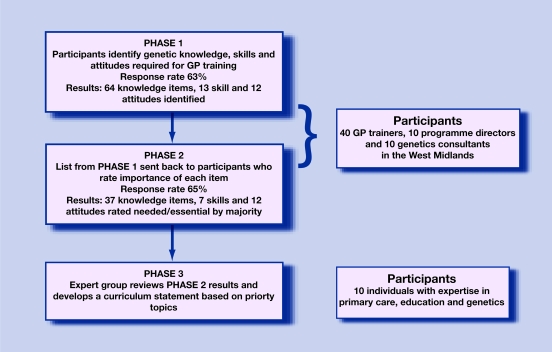
Method: A modified Delphi survey involved GP trainers, programme directors, and geneticists (n = 60). The results, along with results from a survey of GP registrars, were reviewed by an expert group, which included GPs, geneticists, and educationalists.
Results: Core genetics topics for GPs were identified, prioritised, and developed into competency statements in the style of the curriculum structure of the Royal College of General Practitioners.
Conclusion: The development of the GP curriculum statement Genetics in Primary Care was based on a study of educational needs, incorporating the views of practitioners (GP trainers, programme directors, and registrars) and specialists (clinical geneticists). This inclusive approach has enabled the identification of learning outcomes which directly reflect clinical practice.
Figures
Comment in
-
Learning specialist skills for a generalist discipline.Br J Gen Pract. 2009 Feb;59(559):79-80. doi: 10.3399/bjgp09X395058. Br J Gen Pract. 2009. PMID: 19192371 Free PMC article. No abstract available.
References
-
- Hopkinson I. Clinical context of genetics in primary care. Presentation at: Reality not hype: the new genetics in primary care; London: Royal College of Physicians; 2004. Jan 30, http://www.londonideas.org/internet/events/documents/hunterbooklet.pdf (accessed 11 Dec 2008)
-
- Watson EK, Shickle D, Qureshi N, et al. The ‘new genetics’ and primary care: GPs' views on their role and their educational needs. Fam Pract. 1999;16(4):420–425. - PubMed
-
- Hayflick SJ, Eiff MP. Will the learners be learned? Genet Med. 2002;4(2):43–44. - PubMed
-
- Burke S, Stone A, Bedward J, et al. A ‘neglected part of the curriculum’ or ‘of limited use’? Views on genetics training by nongenetics trainees and implications for delivery. Genet Med. 2006;8(2):109–5. - PubMed
-
- Burke S, Bennett C, Bedward J, et al. Birmingham: NHS National Genetics Education and Development Centre; 2007. The experiences and preferences of people receiving genetic information from healthcare professionals.
Publication types
MeSH terms
LinkOut - more resources
Full Text Sources
