


Review
doi: 10.1016/j.acthis.2008.11.002.
Epub 2009 Feb 3.
Sensory innervation of the Gills: O2-sensitive chemoreceptors and mechanoreceptors
Affiliations
- PMID: 19193399
- PMCID: PMC2736790
- DOI: 10.1016/j.acthis.2008.11.002
Item in Clipboard
Review
Sensory innervation of the Gills: O2-sensitive chemoreceptors and mechanoreceptors
Acta Histochem.
2009.
Abstract
Physical characteristics of water (O(2) solubility and capacitance) dictate that cardiovascular and ventilatory performance be controlled primarily by the need for oxygen uptake rather than carbon dioxide excretion, making O(2) receptors more important in fish than in terrestrial vertebrates. An understanding of the anatomy and physiology of mechanoreception and O(2) chemoreception in fishes is important, because water breathing is the primitive template upon which the forces of evolution have modified into the various cardioventilatory modalities we see in extant terrestrial species. Key to these changes are the O(2)-sensitive chemoreceptors and mechanoreceptors, their mechanisms and central pathways.
Figures
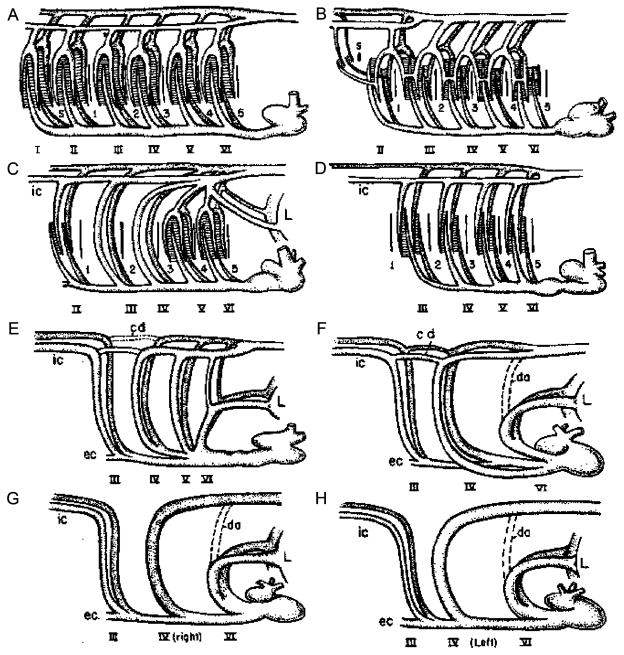
Evolution of the aortic arches in vertebrates from a hypothetical ancestor with six gill archers (A) through elasmobranchs (B), lungfish (C), teleosts (D), amphibians (E), reptiles (F), birds (G) and mammals (H). Corresponding with increasing degrees of terrestriality and air-breathing there is an internalization and reduction of the number of arches. (From Romer, 1962).
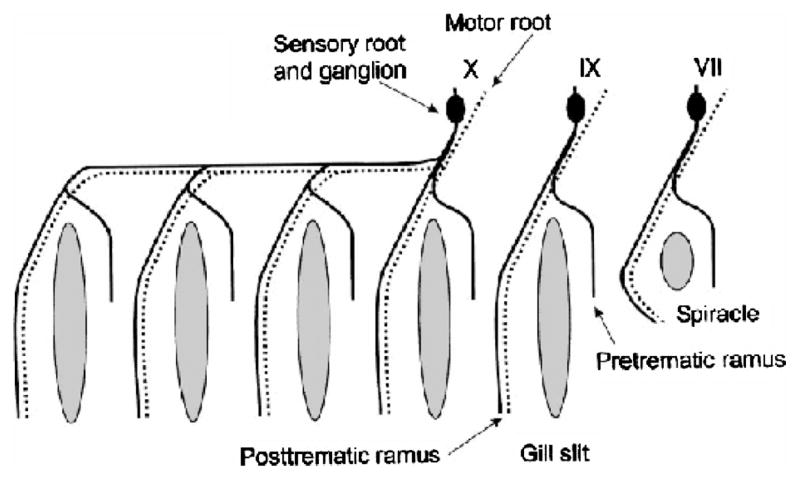
Diagram of innervation of the gills showing pre- and post-trematic branches and sensory (solid) and motor (dotted) pathways. (Reprinted with permission from Sundin and Nilsson, 2002).
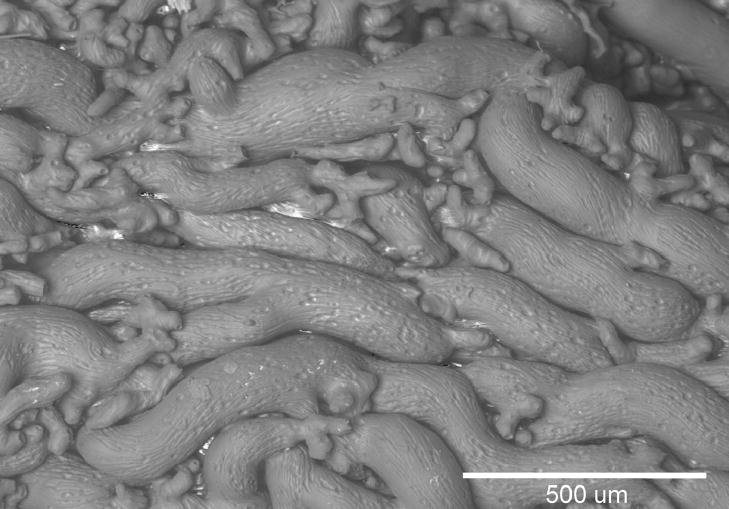
Scanning electron micrograph of vascular cast of carotid sinus from channel catfish. The catfish carotid sinus is between the first gill arch and brain and is formed when the first branchial artery anastomoses into a compact mass of capillaries. Its structure and location, similar to mammalian carotid sinus and amphibian carotid labyrinth, suggests a baro- or chemoreceptor function.

Diagram of dorsal view of brainstem of a dogfish shark showing cranial nerve roots (V–XI) and locations of the major motor and sensory nuclei. A transverse section of the medulla at T.S. is shown to the left. Relevant labels are motor nuclei of the branchial branches of the vagus (Xm1-4), vagal sensory nucleus (Xs), hypobranchial nucleus (hy), lateral vagal nucleus (XI), sulcus intermedius ventralis (siv) and sulcus limitans of His (slH). (Reprinted with permission from Taylor et al., 1999).
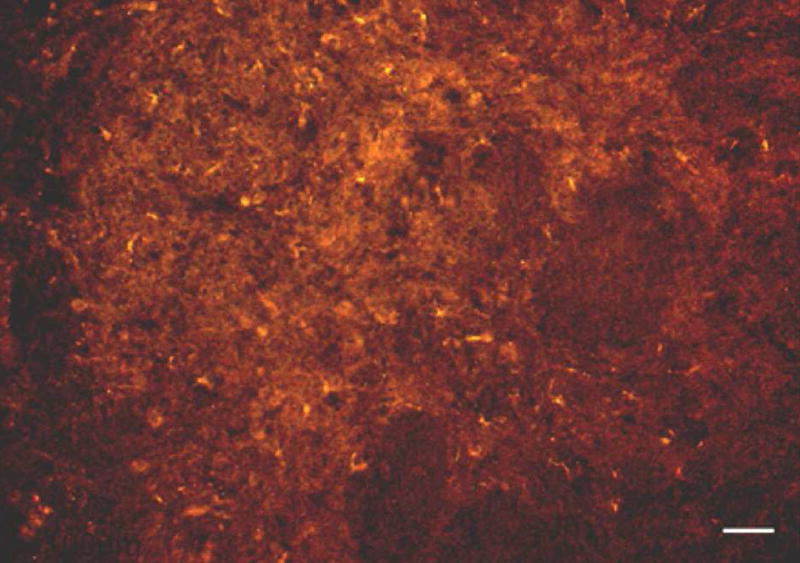
Micrograph showing NMDA Receptor 1-like immunoreactivity in the vagal sensory lobe of the channel catfish brain. Scale bar = 100μm. (From Sundin et al., 2003a)
References
-
- Adriaensen D, Brouns I, Van Genechten J, Timmermans J-P. Functional morphology of pulmonary neuroepithelial bodies: extremely complex airway receptors. Anat Rec. 2003;270A:25–40. - PubMed
-
- Andresen MC, Kunze DL. Nucleus tractus solitarius – gateway to circulatory control. Annu Rev Physiol. 1994;56:93–116. - PubMed
-
- Ballintijn CM, Bamford OS. Proprioceptive motor control in fish respiration. J Exp Biol. 1975;62:99–114. - PubMed
-
- Bianchi AL, Denavit-Saube M, Champagnat J. Central control of breathing in mammals: neuronal circuitry, membrane properties and neurotransmitters. Physiol Rev. 1995;75:1–45. - PubMed
-
- Boyd JD. Nerve supply to the branchial arch arteries of vertebrates. J Anat Lond. 1936;71:157–158.
Publication types
MeSH terms
Substances
Grants and funding
LinkOut - more resources
Full Text Sources
