


Variation in oxytocin receptor density in the nucleus accumbens has differential effects on affiliative behaviors in monogamous and polygamous voles
- PMID: 19193878
- PMCID: PMC2768419
- DOI: 10.1523/JNEUROSCI.5039-08.2009
Variation in oxytocin receptor density in the nucleus accumbens has differential effects on affiliative behaviors in monogamous and polygamous voles
Abstract
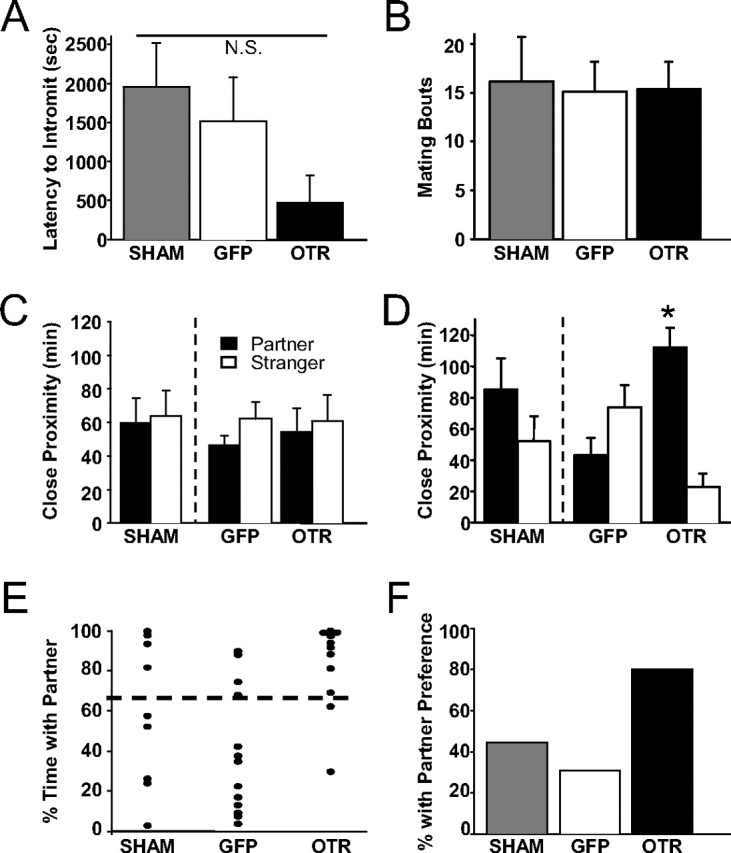
Oxytocin receptors in the nucleus accumbens have been implicated in the regulation of alloparental behavior and pair bond formation in the socially monogamous prairie vole. Oxytocin receptor density in the nucleus accumbens is positively correlated with alloparenting in juvenile and adult female prairie voles, and oxytocin receptor antagonist infused into the nucleus accumbens blocks this behavior. Furthermore, prairie voles have higher densities of oxytocin receptors in the accumbens than nonmonogamous rodent species, and blocking accumbal oxytocin receptors prevents mating-induced partner preference formation. Here we used adeno-associated viral vector gene transfer to examine the functional relationship between accumbal oxytocin receptor density and social behavior in prairie and meadow voles. Adult female prairie voles that overexpress oxytocin receptor in the nucleus accumbens displayed accelerated partner preference formation after cohabitation with a male, but did not display enhanced alloparental behavior. However, partner preference was not facilitated in nonmonogamous meadow voles by introducing oxytocin receptor into the nucleus accumbens. These data confirm a role for oxytocin receptor in the accumbens in the regulation of partner preferences in female prairie voles, and suggest that oxytocin receptor expression in the accumbens is not sufficient to promote partner preferences in nonmonogamous species. These data are the first to demonstrate a direct relationship between oxytocin receptor density in the nucleus accumbens and variation in social attachment behaviors. Thus, individual variation in oxytocin receptor expression in the striatum may contribute to natural diversity in social behaviors.
Figures



References
-
- Bales KL, Carter CS. Sex differences and developmental effects of oxytocin on aggression and social behavior in prairie voles (Microtus ochrogaster) Horm Behav. 2003;44:178–184. - PubMed
-
- Curtis JT, Wang Z. Ventral tegmental area involvement in pair bonding in male prairie voles. Physiol Behav. 2005a;86:338–346. - PubMed
-
- Curtis JT, Wang Z. Glucocorticoid receptor involvement in pair bonding in female prairie voles: the effects of acute blockade and interactions with central dopamine reward systems. Neuroscience. 2005b;134:369–376. - PubMed
-
- Dantzer R, Bluthe RM, Koob GF, Le Moal M. Modulation of social memory in male rats by neurohypophyseal peptides. Psychopharmacology. 1987;91:363–368. - PubMed
Publication types
MeSH terms
Substances
Grants and funding
LinkOut - more resources
Full Text Sources
