


Molecular fingerprinting by PCR-denaturing gradient gel electrophoresis reveals differences in the levels of microbial diversity for musty-earthy tainted corks
- PMID: 19201983
- PMCID: PMC2663217
- DOI: 10.1128/AEM.02758-08
Molecular fingerprinting by PCR-denaturing gradient gel electrophoresis reveals differences in the levels of microbial diversity for musty-earthy tainted corks
Abstract
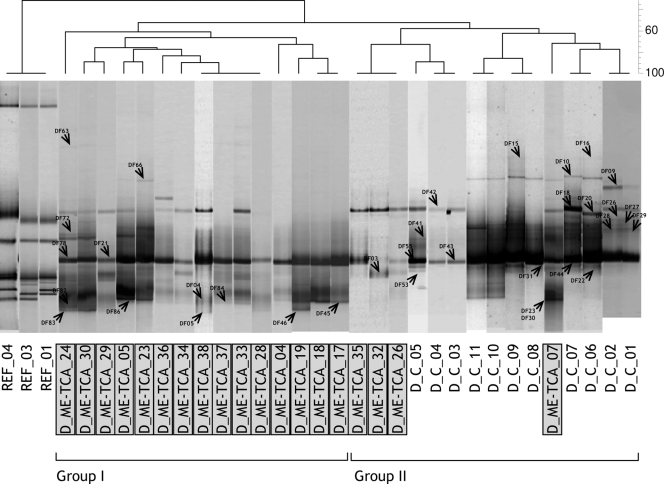
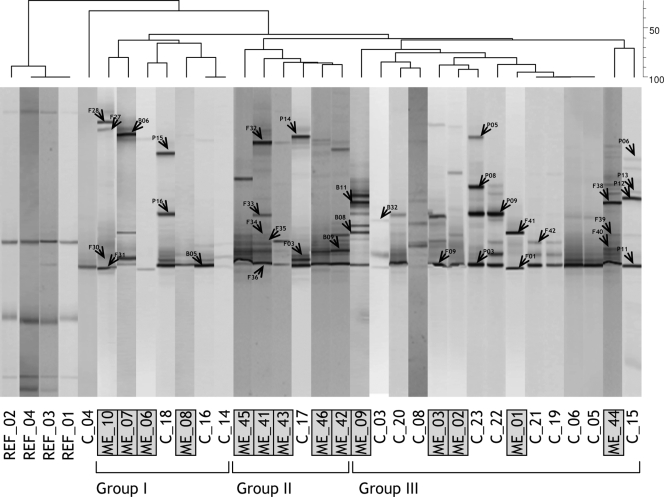
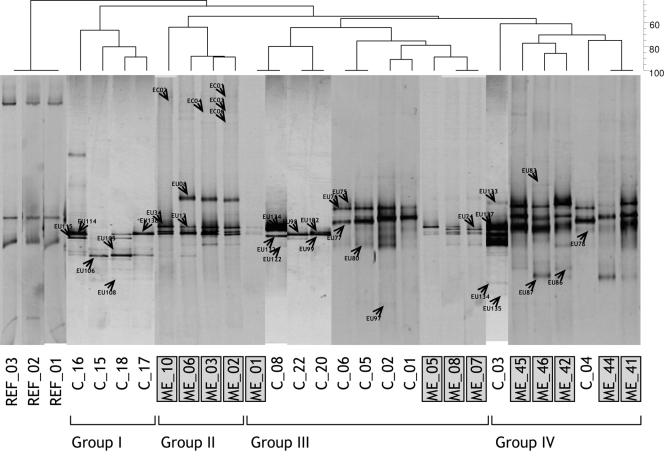
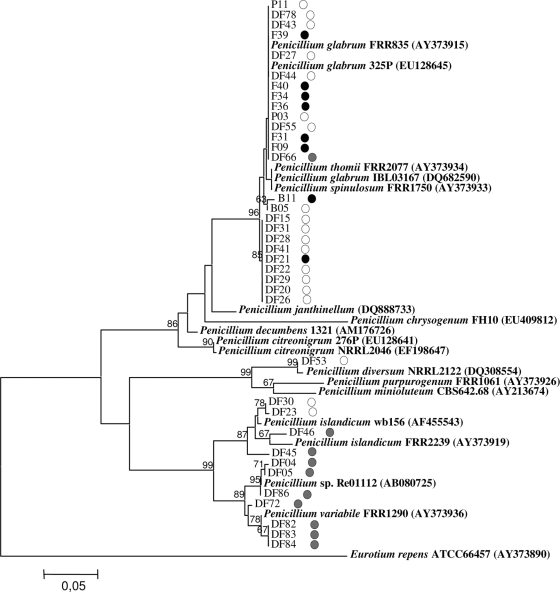
The microbial community structure of cork with marked musty-earthy aromas was analyzed using denaturing gradient gel electrophoresis of amplified ribosomal DNA. Cork stoppers and discs were used for DNA extraction and were analyzed by using selective primers for bacteria and fungi. Stoppers clearly differed from discs harboring a different fungal community. Moreover, musty-earthy samples of both types were shown to have a specific microbiota. The fungi Penicillium glabrum and Neurospora spp. were present in all samples and were assumed to make only a small contribution to off-odor development. In contrast, Penicillium islandicum and Penicillium variabile were found almost exclusively in 2,4,6-trichloroanisole (TCA) tainted discs. Conversely, Rhodotorula minuta and Rhodotorula sloofiae were most common in cork stoppers, where only small amounts of TCA were detected. Alpha- and gammaproteobacteria were the most commonly found bacteria in either control or tainted cork stoppers. Specific Pseudomonas and Actinobacteria were detected in stoppers with low amounts of TCA and 2-methoxy-3,5-dimethylpyrazine. These results are discussed in terms of biological degradation of taint compounds by specific microorganisms. Reliable and straightforward microbial identification methods based on a molecular approach provided useful data to determine and evaluate the risk of taint formation in cork.
Figures
References
-
- Adams, A., and N. De Kimpe. 2007. Formation of pyrazines and 2-acetyl-1-pyrroline by Bacillus cereus. Food Chem. 101:1230-1238.
-
- Álvarez-Rodríguez, M. L., C. Belloch, M. Villa, F. Uruburu, G. Larriba, and J. J. R. Coque. 2003. Degradation of vanillic acid and production of guaiacol by microorganisms isolated from cork samples. FEMS Microbiol. Lett. 220:49-55. - PubMed
-
- Álvarez-Rodríguez, M. L., L. López-Ocaña, J. M. López-Coronado, E. Rodríguez, M. J. Martínez, G. Larriba, and J. J. R. Coque. 2002. Cork taint of wines: role of the filamentous fungi isolated from cork in the formation of 2,4,6-trichloroanisole by O methylation of 2,4,6-trichlorophenol. Appl. Environ. Microbiol. 68:5860-5869. - PMC - PubMed
-
- Amon, J. M., J. M. Vandepeer, and R. F. Simpson. 1989. Compounds responsible for cork taint in wine. Aust. N. Z. Wine Ind. J. 4:62-69.
-
- Anderson, I. C., C. D. Campbell, and J. I. Prosser. 2003. Diversity of fungi in organic soils under a moorland-Scots pine (Pinus sylvestris L.) gradient. Environ. Microbiol. 5:1121-1132. - PubMed
Publication types
MeSH terms
Substances
Associated data
- Actions
- Actions
- Actions
- Actions
- Actions
- Actions
- Actions
- Actions
- Actions
- Actions
- Actions
- Actions
- Actions
- Actions
- Actions
- Actions
- Actions
- Actions
- Actions
- Actions
- Actions
- Actions
- Actions
- Actions
- Actions
- Actions
- Actions
- Actions
- Actions
- Actions
- Actions
- Actions
- Actions
- Actions
- Actions
- Actions
- Actions
- Actions
- Actions
- Actions
- Actions
- Actions
- Actions
- Actions
- Actions
- Actions
- Actions
- Actions
- Actions
- Actions
- Actions
- Actions
- Actions
- Actions
- Actions
- Actions
- Actions
- Actions
- Actions
- Actions
- Actions
- Actions
- Actions
- Actions
- Actions
- Actions
- Actions
- Actions
- Actions
- Actions
- Actions
- Actions
- Actions
- Actions
- Actions
- Actions
- Actions
- Actions
- Actions
- Actions
- Actions
- Actions
- Actions
- Actions
- Actions
- Actions
- Actions
- Actions
- Actions
- Actions
- Actions
- Actions
- Actions
- Actions
- Actions
- Actions
- Actions
- Actions
- Actions
- Actions
- Actions
- Actions
- Actions
- Actions
- Actions
- Actions
LinkOut - more resources
Full Text Sources
Medical
Molecular Biology Databases
Miscellaneous
